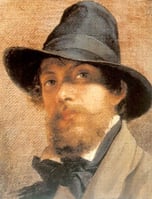
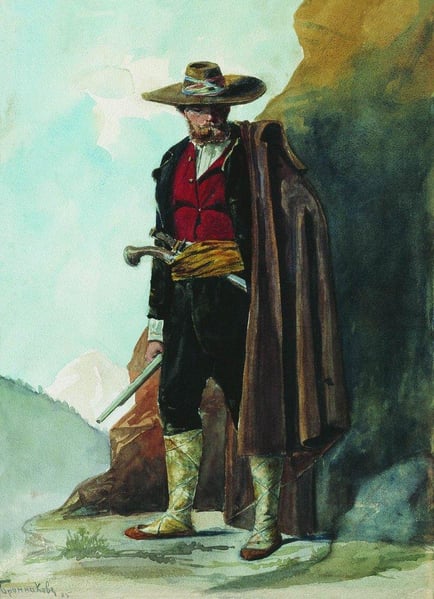
Expert analysis of Fyodor Bronnikov’s Rebel
Style: Romanticism · Genre: portrait
Expert Analysis of "Rebel" by Fyodor Bronnikov
As a portrait within the Romantic style, Bronnikov's "Rebel" is significant for its embodiment of the movement's core tenets: intense emotional expression, celebration of individualism, and a dramatic, often defiant, human spirit. Romantic portraiture moved beyond mere likeness to explore the subject's inner psychology and personal struggle. Here, the title "Rebel" directly signals a departure from societal norms or authority, making the portrait a vehicle for romanticizing nonconformity and heroic solitude. The genre of portraiture, when filtered through Romanticism, elevates a specific individual's identity into a universal statement about personal freedom and resistance. Bronnikov’s work thus stands as a testament to how a single portrait can encapsulate the Romantic fascination with the power of the individual will against the backdrop of a conformist world.
Visually similar
20 works with related composition and palette
Brigand of the Roman Campagna
Louis Léopold Robert
An Italian peasant
Carl Haag
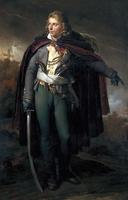
Jacques Cathelineau (1759-1793), généralissime vendéen
Anne-Louis Girodet
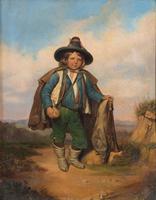
Shepherd boy from Abruzzo
Filippo Palizzi
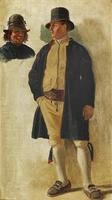
A standing man and the head of a farmer
Wilhelm Marstrand
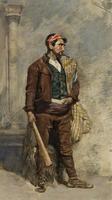
Spanish guy
Eduardo Zamacois
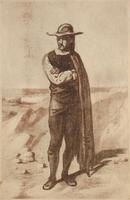
Catalan Fernand Mondego in Marseille in 1815
Paul Gavarni
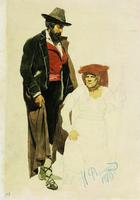
Italian models
Ilya Repin
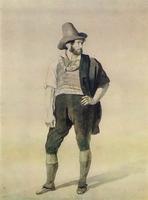
Young Italian
Orest Kiprensky
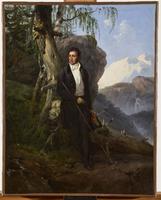
Louis-Philippe, Duke of Orléans, in a Swiss landscape
Horace Vernet
Marie Joseph Paul Yves Roche Gilbert Motier, The Marquis de Lafayette
Thomas Sully
Gustave Courbet
Gustave Courbet
Spaniard
Grigoriy Myasoyedov
Il brigante De Cesaris
Francesco Podesti
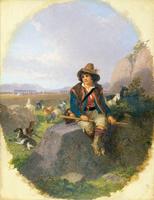
A Goatherd on the Roman Campagna
Penry Williams
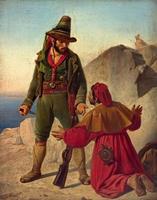
The Neapolitan brigand robbing a pilgrim of Santiago
Jean-Claude Bonnefond
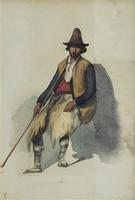
Shepherd
Federico Faruffini
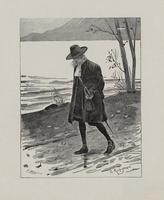
Lord Clancharlie
Georges Rochegrosse
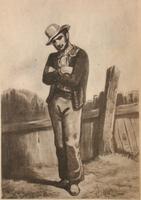
Corsican Bertuccio - before he became steward of the Count of Monte Cristo
Paul Gavarni
Young Man with a Gun
George Harvey