
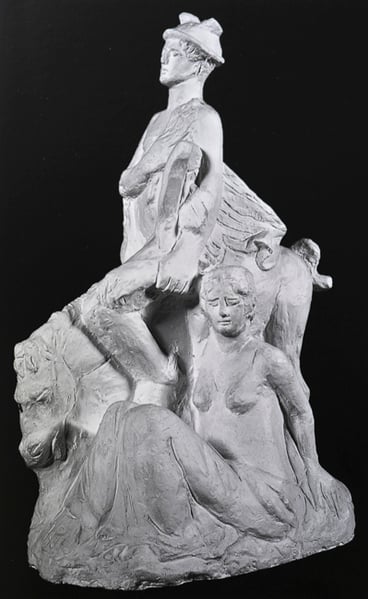
Yannoulis Chalepas sanatçısının Mercury, Venus and Pegasus eseri hakkında uzman analizi
Tarz: Neoclassicism · Tür: sculpture
Expert Analysis: "Mercury, Venus and Pegasus" by Yannoulis Chalepas
Executed in the Neoclassical style, Yannoulis Chalepas’s Mercury, Venus and Pegasus is a sculpture that exemplifies the period’s reverence for classical mythology, idealized forms, and balanced composition. The work’s significance lies in its synthesis of three iconic mythological figures—the messenger god Mercury, the goddess of love Venus, and the winged horse Pegasus—into a single cohesive narrative that embodies Neoclassicism’s core principles of order, harmony, and moral allegory.
As a sculpture, the piece engages with the classical tradition of marble or bronze statuary, likely emphasizing smooth, refined surfaces and contrapposto-inspired poses that evoke ancient Greek and Roman prototypes. Chalepas’s choice to group these particular figures is deliberate: Mercury (Hermes) represents swiftness and communication, Venus (Aphrodite) embodies beauty and desire, and Pegasus symbolizes inspiration and poetic flight. Together, they create a visual dialogue about the interplay of divine attributes—love guided by intellect and elevated by imagination—a theme central to Neoclassical art’s didactic and idealizing aims.
Within the Neoclassical movement, which flourished in the late 18th and early 19th centuries, artists sought to revive the clarity and virtue of antiquity. Chalepas’s work stands out for its dynamic yet restrained arrangement; the figures are likely interlocked in a rhythmic grouping that suggests movement without sacrificing compositional stability. This balance between action and repose is a hallmark of the style, reflecting the Enlightenment belief in reason and order.
The inclusion of Pegasus—a creature from myth rather than a standard Olympian deity—adds a layer of poetic fantasy, demonstrating Neoclassicism’s capacity to merge realistic anatomy with allegorical invention. By rendering these characters with classical idealization, Chalepas elevates the sculpture beyond mere decoration to a meditation on timeless human ideals: love, intellect, and creative ambition.
In the context of Greek Neoclassicism, Chalepas is often celebrated as a pioneer who brought European academic rigor to his native tradition. Mercury, Venus and Pegasus thus serves as a cultural bridge, fusing Western classicism with Greek heritage, and affirming the enduring relevance of mythological allegory in the modern era. Its significance endures as a masterful example of how Neoclassical sculpture can distill complex narratives into serene, eternal forms.
Tür
Stil
Görsel olarak benzer
İlişkili kompozisyon ve renk paletine sahip 20 eser
Detail from the work "The Tale of Beauty"
Yannoulis Chalepas
Medea
Yannoulis Chalepas
Little relaxer
Yannoulis Chalepas
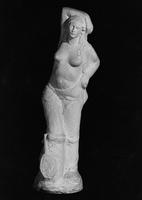
Venus
Yannoulis Chalepas
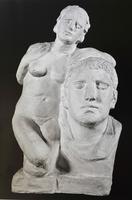
Thought
Yannoulis Chalepas
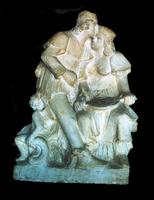
The tale of Beauty
Yannoulis Chalepas
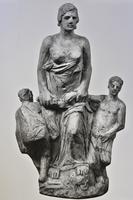
Medea III
Yannoulis Chalepas
Resting
Yannoulis Chalepas
Seating nude
Pablo Picasso
The Hunter
Yannoulis Chalepas
Monument to Victor Hugo (First Project)
Auguste Rodin
St. Haralambos and Mercury
Yannoulis Chalepas
Oedipus and Antigone
Yannoulis Chalepas
St. Varvara and Mercury
Yannoulis Chalepas
The reaper
Yannoulis Chalepas
Psyche
Auguste Rodin
The Secret
Yannoulis Chalepas
Pieta Rondanini (unfinished)
Michelangelo
Family of brigands
Achille Pinelli
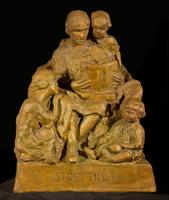
Storytime
Meta Vaux Warrick Fuller