Expertenanalyse zu Henri Martins Muse
Stil: Symbolism · Genre: allegorical painting
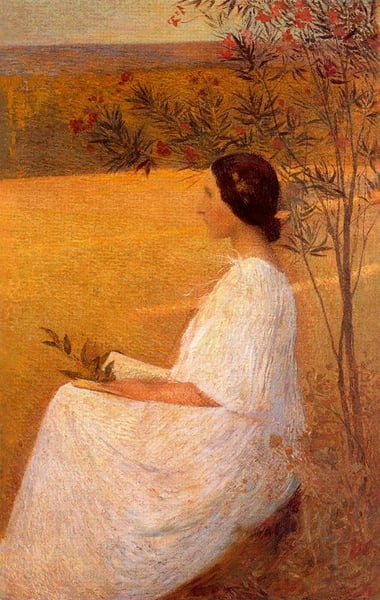
"Muse" by Henri Martin is a significant allegorical painting within the Symbolist movement. Symbolism sought to convey emotions, dreams, and metaphysical ideas through suggestive imagery rather than direct representation. Martin’s work exemplifies this by depicting the Muse—a classical figure of artistic inspiration—as an ethereal, idealized presence. The painting’s allegorical nature allows it to transcend literal narrative, focusing instead on the inner world of creativity and the transcendent power of art. Martin’s use of a soft, luminous palette and gentle, rhythmic brushwork (often associated with his Divisionist technique) enhances the dreamlike atmosphere, making the Muse appear both tangible and otherworldly. This approach aligns with Symbolism’s rejection of realist conventions in favor of subjective, often poetic expression. For its period, “Muse” stands out as a refined synthesis of technical mastery and symbolic depth, capturing the late 19th-century fascination with the spiritual and the sublime.
Visuell ähnlich
20 Werke mit ähnlicher Komposition und Farbpalette
The Rose Robe
Henri Martin
Chapelle Rose
Henri Martin
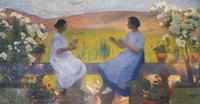
The Weaving Women
Henri Martin
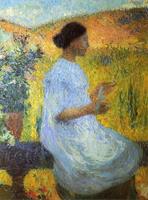
The Blue Dress
Henri Martin
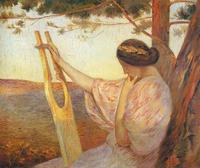
Lady with Lyre by Pine Trees
Henri Martin
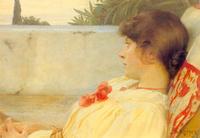
Marie in Ravello
Peder Severin Kroyer
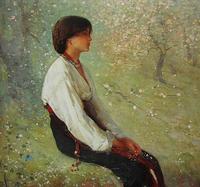
The Spring (Detail)
Nicolae Grigorescu
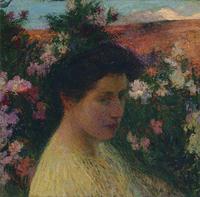
In Flowers
Henri Martin
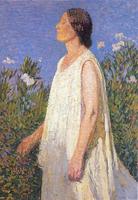
The Muse
Henri Martin
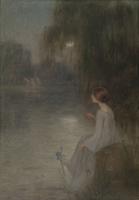
Dream
Joan Brull
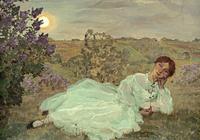
Repose at Sunset
Konstantin Somov
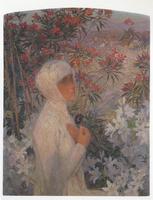
Young Woman with Flowers
Henri Martin
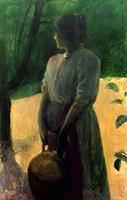
Woman with jug
Alejandro Cabeza
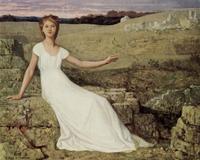
Hope
Pierre Puvis de Chavannes

Girl reading
Noè Bordignon
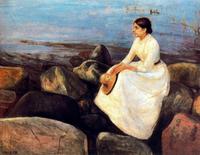
Summer Night (Inger on the Shore)
Edvard Munch
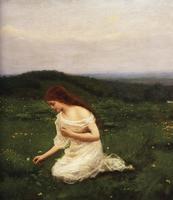
Spring
Noè Bordignon
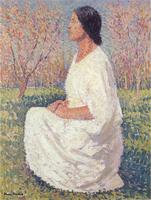
The Muse
Henri Martin
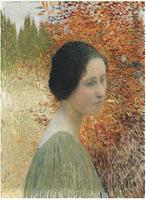
Portrait of a woman
Henri Martin
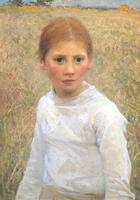
Brown Eyes
George Clausen