Expert analysis of Toshi Yoshida’s Hope Bay
Style: Sōsaku hanga · Genre: landscape
Expert Analysis of "Hope Bay" by Toshi Yoshida
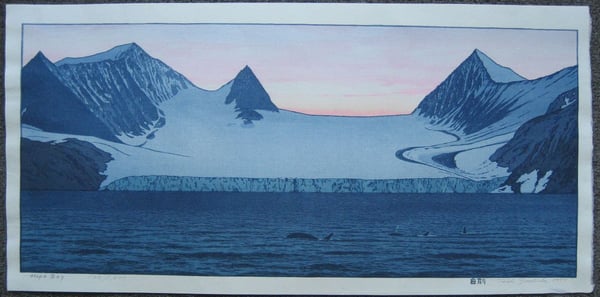
Toshi Yoshida’s Hope Bay is a striking example of the Sōsaku hanga (creative print) movement, a style that revolutionized Japanese printmaking in the 20th century by emphasizing the artist’s direct and complete control over the entire creative process—from design to carving to printing. As a landscape, the work carries forward the genre’s long tradition in Japanese art but redefines it through the lens of modernist, individual expression.
Significance within the Sōsaku hanga style:
-
Unlike the earlier ukiyo-e and shin-hanga traditions (which relied on a division of labor among artist, carver, and printer), Sōsaku hanga insisted on the artist as the sole creator. Toshi Yoshida, despite coming from a family deeply rooted in the shin-hanga movement (his father was the famed Hiroshi Yoshida), transitioned to Sōsaku hanga later in his career. Hope Bay exemplifies this shift: the print’s bold, simplified forms, textural carving, and atmospheric layering of color are direct manifestations of the artist’s hand and personal vision.
-
The subject—Hope Bay, likely inspired by Yoshida’s travels to Antarctica in the 1950s—is significant for its departure from the traditional Japanese landscape subjects (mountains, rivers, temples). By choosing an icy, remote polar scene, Yoshida expands the boundaries of the landscape genre, infusing it with a sense of exploration and modernity. The stark, almost abstract composition of ice and water reflects the Sōsaku hanga ethos of subjective interpretation over mere representation.
Artistic and historical importance:
-
Hope Bay stands as a testament to the global reach of Japanese printmaking in the postwar era. Yoshida’s ability to meld Western perspective with Japanese woodblock techniques—through sharp angles, flat color planes, and expressive grain—demonstrates the versatility of Sōsaku hanga in capturing non-traditional vistas.
-
The work is also significant for its technical mastery: the subtle gradations of blue and white, the varied textures of ice and snow, and the deliberate use of negative space all showcase the artist’s complete command of the medium. In the context of Sōsaku hanga, such prints affirmed the movement’s commitment to art as an authentic, individual statement, free from commercial or collaborative constraints.
In summary, Hope Bay is not merely a landscape; it is a bold declaration of artistic autonomy, a bridge between Eastern and Western traditions, and a hallmark of Toshi Yoshida’s mature Sōsaku hanga style. Its significance lies in how it reimagines a classic genre through the lens of personal, hands-on creativity, and how it expands the thematic possibilities of Japanese printmaking into the global, modern world.
Visually similar
20 works with related composition and palette
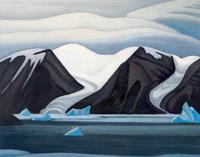
Nerke, Greenland
Lawren Harris
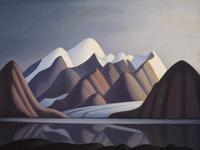
Mount Thule, Bylot Island
Lawren Harris
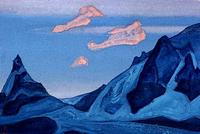
Himalayas
Nicholas Roerich
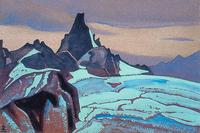
Himalayas
Nicholas Roerich
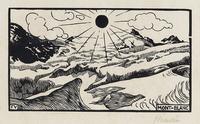
Mont Blanc
Felix Vallotton
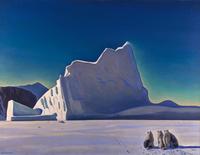
Seal Hunter, North Greenland
Rockwell Kent
The Davidson Glacier
Thomas Hill
Lake Nag
Nicholas Roerich
Breithorn
Hiroshi Yoshida
Himalayas (study)
Nicholas Roerich
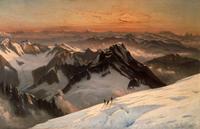
View from Mont Blanc Summit, Sunrise
Gabriel Loppe
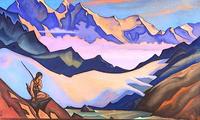
Snow maiden
Nicholas Roerich
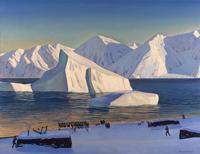
Early November, North Greenland
Rockwell Kent
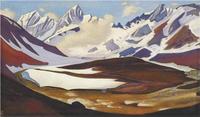
Himalayas
Nicholas Roerich
Sunset over Malana
Nicholas Roerich
Himalayas
Nicholas Roerich
Eis 5 (Nature)
Daniel Sambo-Richter
Himalayas. Everest.
Nicholas Roerich
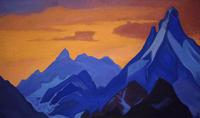
Evening
Nicholas Roerich
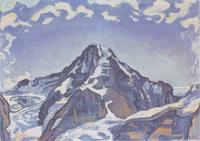
The Monk with clouds
Ferdinand Hodler