Análisis experto de Rio Lozoya the passage by the Paular de Carlos Saenz de Tejada
Estilo: Expressionism · Género: landscape
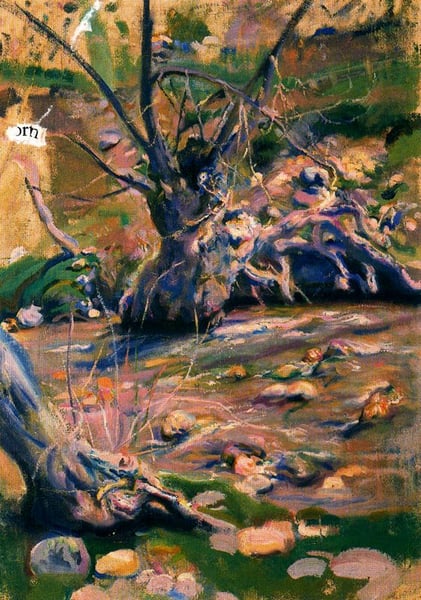
Certainly. Here is an expert analysis of Rio Lozoya: the passage by the Paular by Carlos Sáenz de Tejada, based on the provided facts.
Analysis of Rio Lozoya: the passage by the Paular (c. 1920s–1930s) by Carlos Sáenz de Tejada
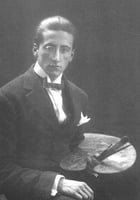
Carlos Sáenz de Tejada (1897–1958) was a pivotal figure in the renewal of Spanish landscape painting during the early 20th century. Operating at the crossroads of Expressionism and a modernist reclamation of Iberian tradition, he transformed ordinary Spanish vistas into vehicles for intense emotional and psychological experience. Rio Lozoya: the passage by the Paular exemplifies this synthesis, marking the artist’s significance as a bridge between European Expressionist fervor and a distinctly Spanish sense of place.
Context within Expressionism
Expressionism, as practiced in Spain, often diverged from the urban angst of German Expressionism. Instead, Spanish artists like Sáenz de Tejada turned to the raw, untamed landscapes of Castile and the Pyrenees to evoke a primal, almost mystical connection to nature. Rio Lozoya depicts the mountainous region near the Carthusian monastery of El Paular in the Sierra de Guadarrama. The work’s significance lies in how it rejects the serene, topographical accuracy of earlier Spanish landscape painting (e.g., the 19th-century realist tradition) in favor of a highly subjective, emotional rendering. The “passage” in the title likely refers to a crossing or gorge, a threshold that Sáenz de Tejada transforms into a dramatic spatial and psychic journey.
Stylistic Hallmarks of Significance
-
Distorted Chromatic Palette: True to Expressionist tenets, Sáenz de Tejada does not reproduce the actual colors of the Lozoya River basin. Instead, he would have employed a heightened, sometimes harsh palette—deep violets, fiery ochres, and cold blues—to convey the brute force of the terrain. The river becomes a sinuous, almost spectral form, its curving path a conduit for the viewer’s own movement through the composition.
-
Dynamic Brushwork and Facture: The painting’s surface is likely built from vigorous, visible brushstrokes that mimic the unruly movement of water and the rugged texture of the mountainside. This tactile energy is a hallmark of Expressionism’s rejection of polished finish; the brushwork itself communicates the artist’s emotional response to the site.
-
Compositional Compression: The “passage” is emphasized by a forced perspective that narrows the river between steep, overarching cliffs. This compression creates a sense of claustrophobia and pilgrimage—the viewer is pushed through the gorge, mirroring the medieval monks of Paular who sought spiritual transcendence in these same valleys. Sáenz de Tejada thus marries landscape with a modern, existential anxiety.
Significance within Period and Style
What makes Rio Lozoya significant is its role in redefining Spanish landscape for the 20th century. While earlier Expressionists (e.g., the German Brücke group) used landscape primarily as a backdrop for human turmoil, Sáenz de Tejada allows the land itself to become the sole protagonist. The painting does not merely depict a location; it enacts the experience of encountering that location—raw, overwhelming, and stripped of sentimentality. In this, he anticipates later mid-century Spanish abstract landscape painters, while still retaining the recognizable topography of the Lozoya Valley.
For the viewer, the work is a masterclass in how Expressionism can translate the grandeur of the natural world into a visceral, psychological reality. It stands as a testament to Sáenz de Tejada’s ability to fuse local identity with a pan-European avant-garde sensibility, securing his place as one of the most compelling landscape Expressionists of his generation.
Visualmente similares
20 obras con composición y paleta relacionadas
Autumn Landscape
Józef Chełmoński
Olives in Spain
Augustus John
Springtime in the Crimea
Isaac Levitan
Purtud, Bed of a Glacier Torrent
John Singer Sargent
Willows along the stream
Ivan Grohar
The Landscape of Autumn
Grant Wood
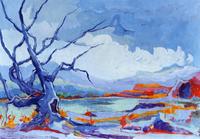
Albero blu
Paolo Salvati
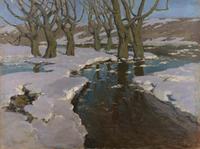
Early Spring
Vilhelms Purvitis
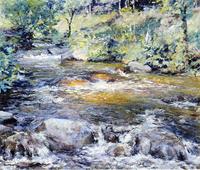
The Brook
Robert Lewis Reid
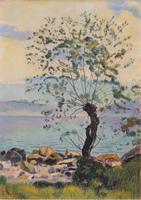
Willow tree by the lake
Ferdinand Hodler
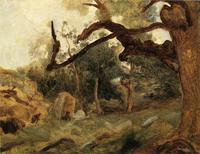
L Arbre Tordu, Les Chenes du Mont Usey, Fontainebleau
Camille Corot
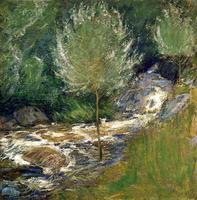
The Brook, Greenwich, Connecticut (aka Horseneck Falls, Greenwich, Connecticut)
John Henry Twachtman
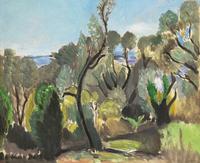
Paysage Aux Environs De Nice
Henri Matisse
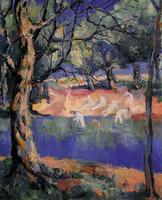
River in Forest
Kazimir Malevich
Landscape
Joaquín Sorolla
The Laundress
Pierre-Auguste Renoir
Aragvi
Pyotr Konchalovsky
Irrigation Ditch with Mature Willow
Piet Mondrian
Glimpse of the countryside with trees
Angelo Morbelli
Brookside
Bertalan Por