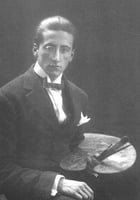
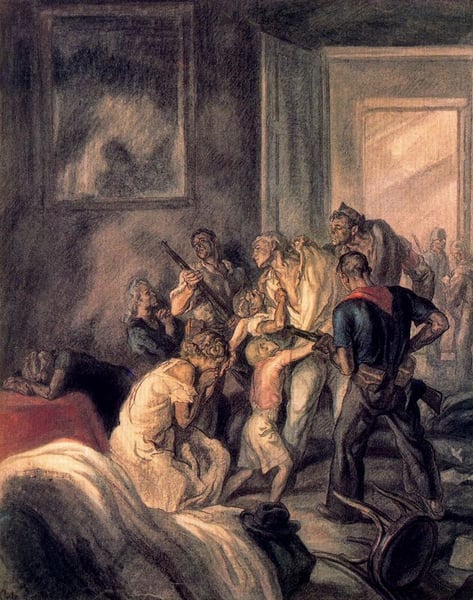
Expert analysis of Carlos Saenz de Tejada’s The brigades of dawn
Style: Expressionism, Social Realism · Genre: genre painting
Carlos Saenz de Tejada’s “The brigades of dawn” is a compelling example of how Expressionism and Social Realism can merge in a single genre painting. As a genre work, it depicts an everyday scene—likely workers or laborers starting their day at dawn—but the combination of stylistic cues elevates it beyond mere documentation.
Significance within Expressionism and Social Realism
Saenz de Tejada uses Expressionist techniques—bold, distorted forms, heightened color contrasts, and emotional intensity—to convey the physical and psychological weight of manual labor. The dawn setting is not just a time of day but a symbol of hope, renewal, and the collective struggle of the working class. This aligns with Social Realism’s mission to highlight the dignity and hardship of ordinary people, often with a political edge. By fusing personal, emotive expression with a social message, the work avoids the dry didacticism of some Social Realist art, instead creating an immersive, visceral experience.
Artistic Context
Saenz de Tejada was active in mid-20th-century Spain, a period of political turbulence and social change. “The brigades of dawn” likely reflects the artist’s engagement with rural or industrial labor communities, portraying them not as passive subjects but as active, heroic figures. The use of “brigades” suggests organized collective effort, and “dawn” implies a fresh start—a motif common in Social Realist art that celebrates the worker’s role in building a better future. The Expressionist handling of form and color (perhaps exaggerated angles, harsh light, or somber earthy tones punctuated by bright accents) underscores the emotional resonance of their toil.
Why It Matters
The painting is significant for its successful synthesis of two often conflicting approaches: the raw, subjective emotions of Expressionism and the objective, narrative-driven concerns of Social Realism. It demonstrates that genre painting can carry profound political and psychological weight without sacrificing aesthetic power. In the broader canon, works like this challenge the misconception that Social Realism is mere propaganda, revealing it instead as a vital, artistic language capable of capturing the human spirit amid daily struggle.
Visually similar
20 works with related composition and palette
Absurdity funeral
Francisco Goya
Loyalty
Francisco Goya
Fools Have the Most Fun
Adriaen van de Venne
Festival of the Aissawah
Jean-François Portaels
El sacamuelas
Leonardo Alenza
Altogether too stupid!
Adriaen van de Venne
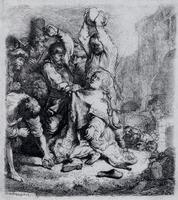
The Stoning Of St. Stephen
Rembrandt
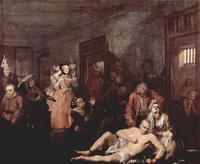
The Madhouse
William Hogarth
Le Libertin à Bedlam
William Hogarth
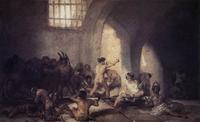
The Madhouse
Francisco Goya
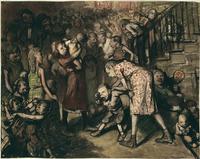
Cliff Dwellers
George Bellows
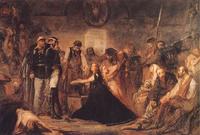
Polonia
Jan Matejko
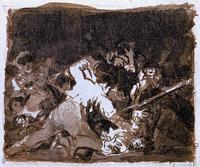
War scene
Francisco Goya
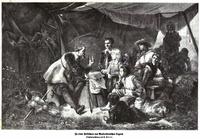
In a field school of the Wallenstein camp
Adolf Eberle
The Martyrdom of the Holy Innocents
Gustave Dore
Raising of the Son of Theophilus and St Peter Enthroned
Nils Forsberg
Disparate furioso
Francisco Goya
Beggars Fighting
Adriaen van de Venne
The brawl
Adriaen Brouwer
Algiers
Frantisek Kupka