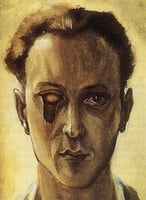
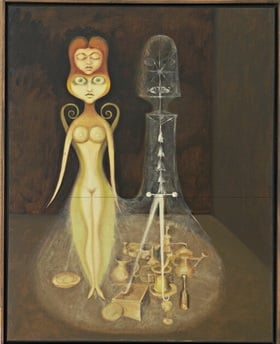
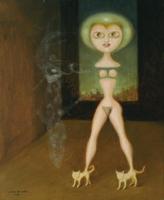
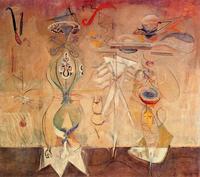
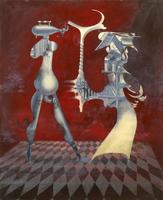
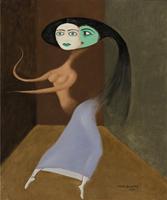
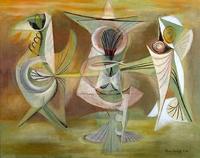
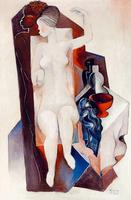
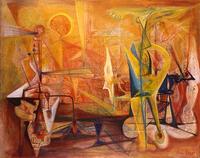
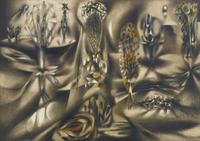
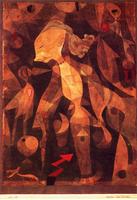
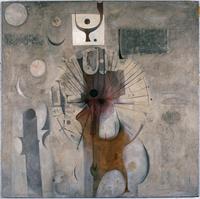
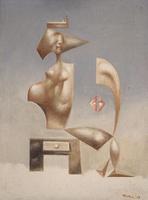
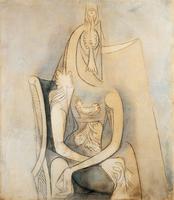
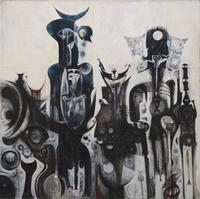
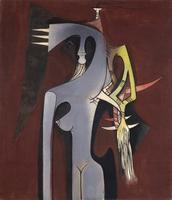
Victor Brauner’s The Inner Life (Nude and Spectral Still Life) stands as a quintessential example of Surrealist ambition to merge the tangible with the unconscious. As a nude painting, it operates within a traditional genre, but Brauner subverts expectation by intertwining the human form with a “spectral still life”—an arrangement of objects rendered as ghostly, intangible presences. This fusion embodies the Surrealist preoccupation with dissolving boundaries between the living body and inanimate matter, the visible and the invisible, the erotic and the eerie. Brauner, deeply influenced by esoteric symbolism and psychoanalysis, often depicted figures in states of metamorphosis or inner vision. Here, the nude likely becomes a conduit for psychological interiority, while the spectral still life suggests memories or premonitions hovering at the edge of perception. The work’s significance lies in its refusal to distinguish between flesh and object, thereby challenging conventional representation and inviting viewers into a dreamlike space where inner life materializes as both body and ghostly thing.