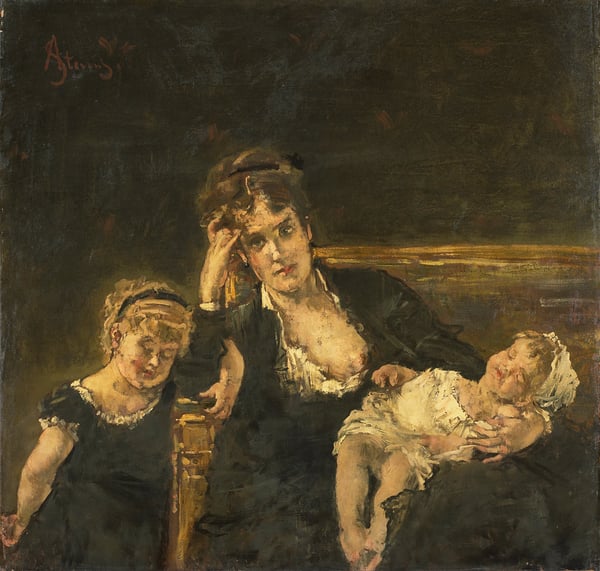
Alfred Stevens’s The Widow stands as a compelling testament to Realism’s commitment to portraying the unvarnished truths of contemporary life. While Stevens was celebrated for his depictions of fashionable Parisian women in luxurious interiors, this portrait shifts the focus from opulence to emotional restraint and social ritual. The widow’s black attire—a strict marker of 19th-century mourning etiquette—is rendered with meticulous attention to fabric and texture, grounding the work in the tangible details of everyday reality. Yet the true significance lies in Stevens’s psychological insight: the subject’s averted gaze and composed posture convey private grief without melodrama, allowing the viewer to sense the weight of loss beneath the surface of social propriety. In rejecting both sentimental idealization and theatrical sorrow, The Widow epitomizes Realism’s goal of dignifying ordinary human experience—capturing a moment of profound personal meaning within the shared codes of its era.