Analyse experte de 1950-K-No. 1 de Clyfford Still
Style : Color Field Painting · Genre : abstract
Expert Analysis of 1950-K-No. 1 by Clyfford Still
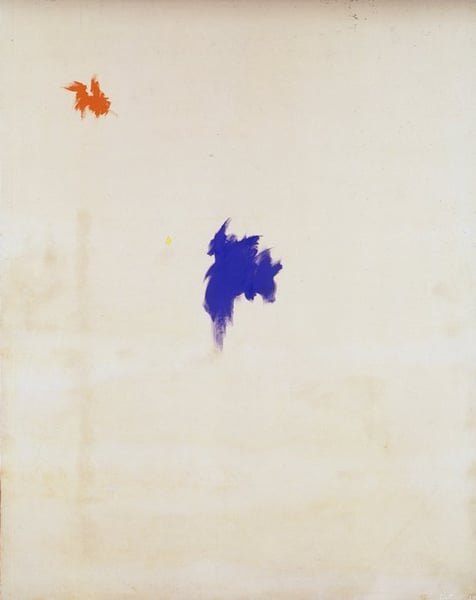
As a seminal work within the Color Field Painting movement and an exemplar of abstract expressionist ambition, 1950-K-No. 1 holds a crucial position in the evolution of postwar American painting. The facts provided—artist Clyfford Still, style Color Field, genre abstract—point directly to the qualities that make this piece significant:
1. Radical Reduction and Expansive Scale
Like many of Still’s canvases from 1950, this work embodies the Color Field ethos of large, unmodulated areas of color that seem to breathe and engulf the viewer. Instead of gestural brushwork or figurative allusions, Still relies on stark, jagged fields of dark and light—often black, deep red, or ochre—that create a sense of monumental, almost geological presence. The “K” in the title likely refers to a specific series or compositional variant, underscoring his systematic exploration of pure chromatic tension.
2. Still’s Distinctive Palette and Edge Work
Within the broader Color Field category, Still stands apart for his vertical, rippling “flames” or “tears” of color that pierce through vast, flat backgrounds. In 1950-K-No. 1, these irregular, jagged forms—neither fully organic nor geometric—generate a dramatic push-and-pull between surface and depth, a hallmark that distinguishes his work from the more serene color washes of Rothko or Newman. The title’s date (1950) places it at the peak of Still’s mature period, when he had fully renounced representation in favor of a sublime, existential abstraction rooted in the American landscape and personal mythos.
3. Significance to the Movement
- A bridge between Abstract Expressionism and Color Field: Still’s emphasis on flat, undifferentiated color fields presaged the later, more purely chromatic work of Helen Frankenthaler and Morris Louis, yet his aggressive, torn edges retain the emotional volatility of action painting.
- Rejection of European influence: Unlike many of his peers, Still eschewed Cubist structure or Surrealist automatism. 1950-K-No. 1 is a purely American declaration of freedom—color as raw, self-sufficient experience, unmediated by narrative or symbol.
- Influence on Minimalism and the sublime: The painting’s sheer scale and dramatic light-dark opposition anticipate the “zero-degree” abstraction of later artists, while its awe-inspiring, almost cathedral-like presence aligns with Still’s famous claim that his works were meant to be “silent, implacable, and yet relentlessly alive.”
In sum, 1950-K-No. 1 is not merely a typical Color Field painting; it is a foundational statement that helped define the movement’s emotional and spatial possibilities. Still’s refusal to soften his edges or dilute his palette makes this work a landmark of radical, irreducible abstraction—a testament to the power of color alone to convey the most profound human experiences.
Visuellement similaire
20 œuvres à la composition et à la palette proches
Distillation
Helen Frankenthaler
Untitled
Clyfford Still
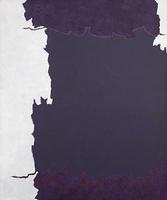
Infinity Field, Creten Series Rizitika #4
Theodoros Stamos
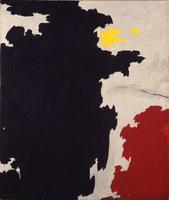
1947-S
Clyfford Still
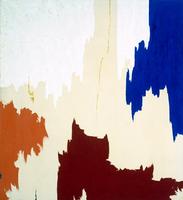
Untitled
Clyfford Still
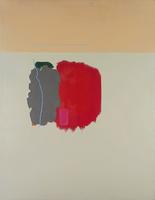
Red Spot
John Ferren
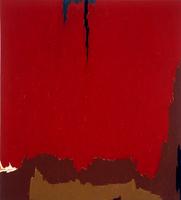
Untitled
Clyfford Still
Nauplie
Olivier Debre
Untitled
Helen Frankenthaler
Zwart
Eugene Brands

Ghana
Friedel Dzubas
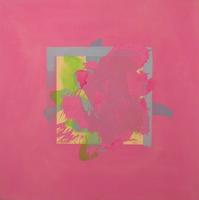
Blossom
Marc Vaux
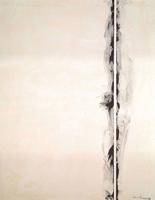
The Station of the Cross - First Station
Barnett Newman
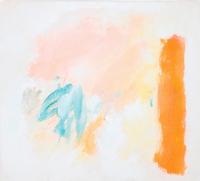
Vroeg in de morgen
Eugene Brands
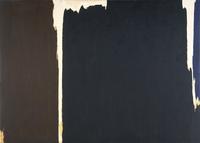
1956-D
Clyfford Still

Red Across
Esteban Vicente
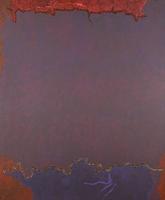
Infinity Field
Theodoros Stamos
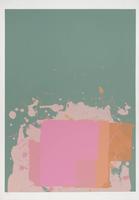
Green, Orange, Pink
John Hoyland
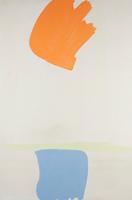
Sartoris
Friedel Dzubas
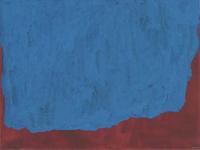
Irregular Form
Sol LeWitt