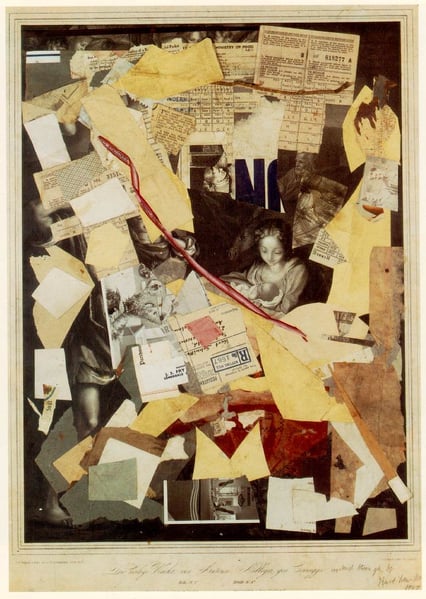
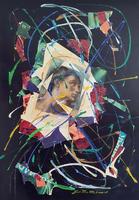
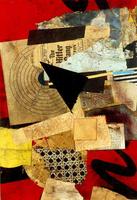
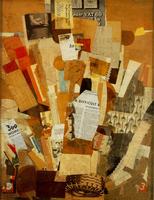
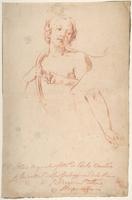
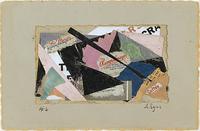
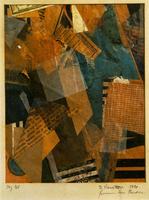
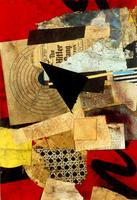
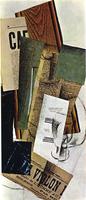
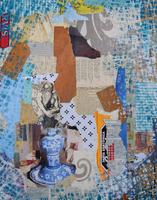
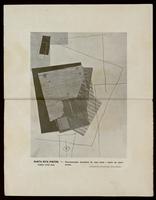
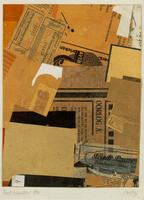
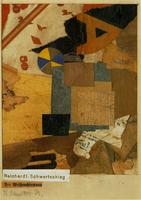
In Kurt Schwitters’s “The Holy Night by Antoni Allegri, known as Correggio…,” the artist applies the destabilizing logic of Dada to a canonical religious subject. While the genre remains figurative, the work’s significance lies in its deliberate misalignment of form and content: a traditional Renaissance composition is re-presented through Schwitters’s signature collage and assemblage techniques, typically reserved for his abstract Merz constructions. By isolating and recontextualizing a fragment of art history, Schwitters challenges the authority of both the original painting and the concept of a fixed, sacred image. The very title, which reads as a detached scholarly note, underscores the Dadaist impulse to disrupt hierarchies—mixing high art with the mundane, the devotional with the absurd. In this way, the piece exemplifies Dada’s critical role: it does not simply mock tradition, but re-frames it as one more fragment in a chaotic, modern world, forcing the viewer to question what constitutes art and meaning.