Analisi esperta di Volendam di Camille Bryen
Stile: Tachisme · Genere: abstract
Expert Analysis: "Volendam" by Camille Bryen
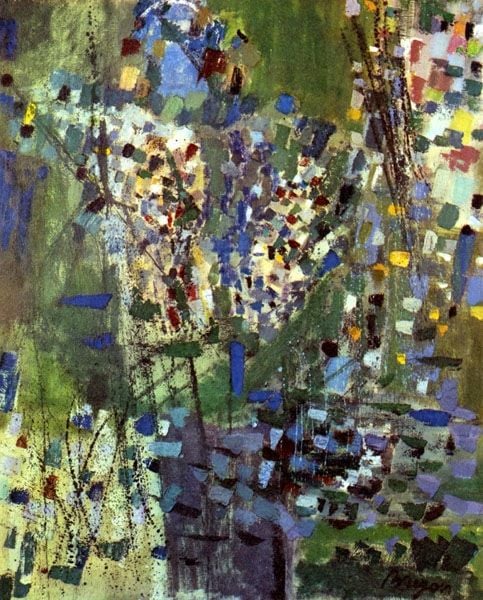
Camille Bryen’s Volendam is a quintessential work of Tachisme, the French counterpart to Abstract Expressionism that emerged in the 1940s–1950s. As a co-founder of the abstract movement in Paris and a poet-painter, Bryen championed a radical break from geometric abstraction, instead valorizing spontaneous gesture, fluid stain, and emotional immediacy.
Significance within Tachisme
-
Rejection of Form: Tachisme—from the French tache (stain/blot)—privileges accidental effects, automatic drawing, and the unpredictable flow of paint. In Volendam, Bryen deploys loose, gestural brushstrokes and organic color fields that dissolve any clear figure-ground relationship, embodying the movement’s core tenet: that meaning arises from the act of painting itself, not from premeditated composition.
-
Lyrical Abstraction: Unlike the aggressive mark-making of American Abstract Expressionism, Bryen’s Tachisme is often more poetic and introspective. Volendam likely channels a sensation of place (the title references a Dutch fishing village) through color and atmosphere rather than descriptive form. This aligns with Tachisme’s interest in evoking memory and mood through pure painterly sensation—a “lyrical abstraction” that prioritizes the emotional resonance of pigment over representation.
-
Antidote to Constructivism: In the post-war Paris art scene, Tachisme stood in deliberate opposition to the rigid geometry of Constructivism and the rationalism of earlier abstraction. Bryen’s work, with its soft, dissolving shapes and non-linear energy, helped define this art informel—a looser, more existential approach to abstraction that mirrored the uncertainty of the era.
Conclusion
Volendam is significant not as a depiction of a town but as a document of process and presence. Through Bryen’s tachiste method, the canvas becomes a record of spontaneous action and subjective feeling—a core achievement of the style. The work exemplifies how European abstraction after World War II turned inward, using the stain and the smear to explore a personal, non-rational landscape, making Bryen a pivotal figure in the shift toward gestural, informal art.
Visivamente simili
20 opere con composizione e palette affini
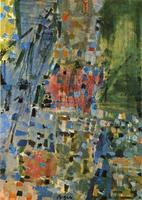
Untitled #208
Camille Bryen
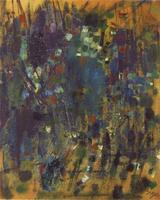
Eclactique éclaté
Camille Bryen
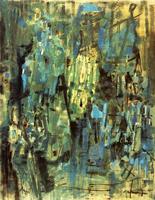
New York
Camille Bryen
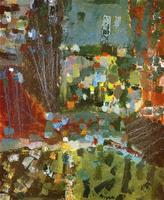
Univéronique
Camille Bryen
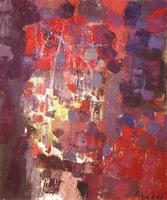
Incendix
Camille Bryen
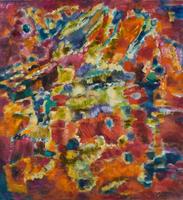
Eclats
Jean Le Moal
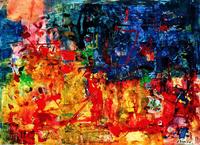
Composition in Blue and Yellow
Alexander Bogen
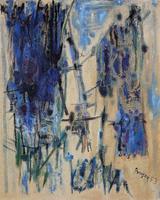
Sable de bois
Camille Bryen
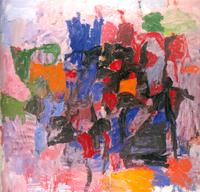
To Fellini
Philip Guston
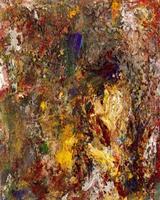
Yellow portrait
Eugene Leroy
Clock
Philip Guston
Untitled
Friedel Dzubas
Earth
Artin Demirci
Plein poids dans le rêve
Endre Rozsda
Earth
Artin Demirci
Détachement
Camille Bryen
Fusée diffusée
Camille Bryen
Untitled
Joan Mitchell
Courbet
Gerhard Richter
Composition
Francis Bott