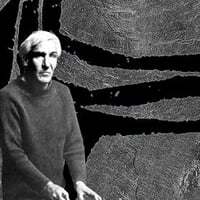
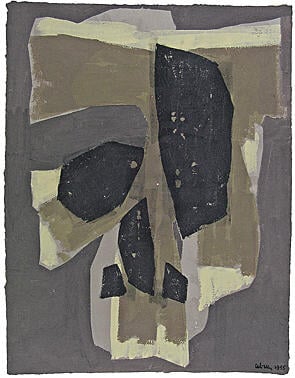
Expert analysis of Raoul Ubac’s Kreuzweg
Style: Abstract Expressionism · Genre: abstract
Analysis of "Kreuzweg" by Raoul Ubac
As an abstract work within the Abstract Expressionist style, "Kreuzweg" exemplifies the movement’s core emphasis on non-representational form as a vehicle for emotional and existential expression. The title—meaning "Stations of the Cross" in German—suggests a thematic undercurrent of suffering, journey, or spiritual passage, yet the abstract genre deliberately eschews literal narrative. Instead, the work’s significance lies in its ability to translate such profound concepts into purely visual, gestural language: bold brushstrokes, stark contrasts, and a raw, visceral surface that invite the viewer to confront the work on a subjective, psychological level. Within Abstract Expressionism’s canon, Ubac’s piece stands out for its fusion of European symbolic resonance with the movement’s hallmark spontaneity, marking a cross-cultural moment where existential gravity meets painterly freedom. The abstraction itself becomes the experience—a direct, unmediated encounter with intensity and ambiguity, characteristic of the period’s quest for universal, primal meaning beyond representation.
Genre
Visually similar
20 works with related composition and palette
Muscle Memory V
Jammie Holmes
Grand Maitre of the Outsider
Jean Dubuffet
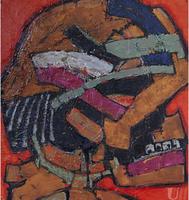
Samurai Skull
Vilen Barsky
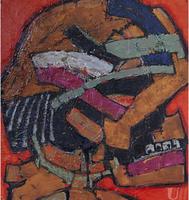
Samurai Skull
Vilen Barsky
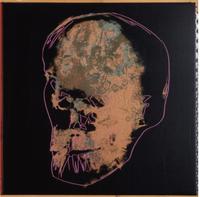
Philip's Skull
Andy Warhol
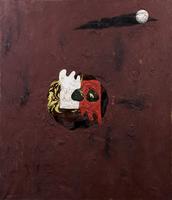
Red Glove and White Glove
Georges Papazoff
Skull
Vincent van Gogh
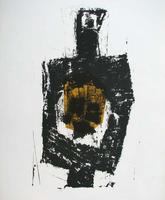
Composition 56
Raoul Ubac
Muscle Memory III
Jammie Holmes
Vajda Lajos Grean Head 1938, Pastell on Paper, 50.5x35cm
Vajda Lajos
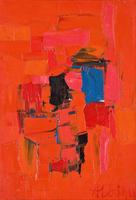
Untitled
Olga Albizu
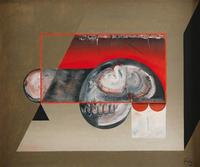
Untitled
Manuel Felguérez
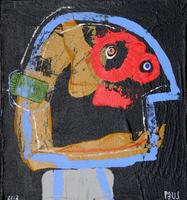
Untitled
Paul du Toit
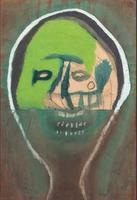
Vajda Lajos Pasztell Masz 1938. 440x300 Mm Kollázs, Papír
Vajda Lajos
Senza titolo (senza titolo 39/59)
Antonio Sanfilippo
An Emptiness, A Silence
Toyen
In this Case
Jean-Michel Basquiat
Skull
M.C. Escher
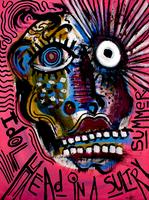
Idol Head in a Sultry Summer
Mikey William Cheung
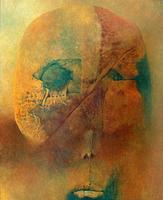
Untitled
Zdzislaw Beksinski