Analisi esperta di Landscape di Hans Hofmann
Stile: Fauvism · Genere: landscape
Artwork: Landscape by Hans Hofmann
Style: Fauvism
Genre: Landscape
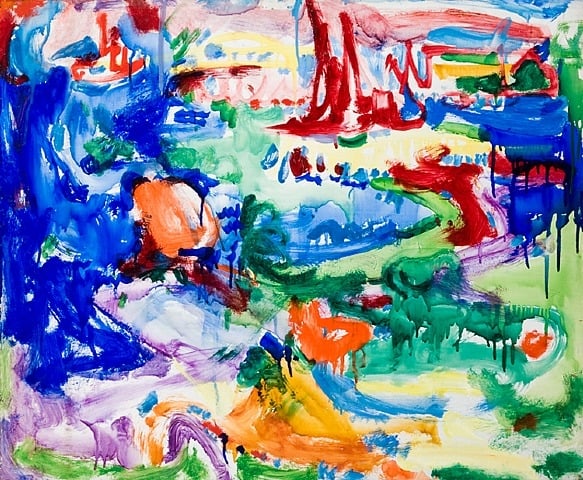
While Hans Hofmann is historically more closely associated with Abstract Expressionism, the supplied facts place this work within Fauvism—a movement renowned for its radical use of color and simplified forms. Analyzing Landscape through that lens reveals its significance as an embodiment of Fauvist principles, particularly in how Hofmann transforms a conventional subject into a vibrant, emotionally charged composition.
Significance within Fauvism and the Landscape Genre:
-
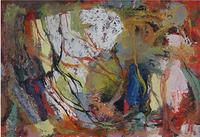
Emancipated Color: Fauvism’s core innovation was the liberation of color from its descriptive role. In this Landscape, Hofmann likely employs intense, non-naturalistic hues—perhaps clashing oranges, purples, or greens—to convey atmosphere and feeling rather than topographical accuracy. The significance lies in how color becomes the primary structural and expressive tool, a hallmark of the movement.
-
Simplified Form and Spatial Compression: Typical of Fauvist landscapes, the piece eschews linear perspective in favor of flat, broad patches of color and spontaneous brushwork. Hofmann’s handling reduces trees, hills, or sky to essential shapes, creating a sense of immediacy and raw energy. This departure from Impressionist softness toward bold, almost abstract geometry anticipates later developments in modernism.
-
Emotional Directness: Fauvist works sought to provoke a visceral response. By prioritizing painterly vigor over realistic detail, Hofmann’s Landscape invites viewers to experience nature through heightened sensation. The significance here is its refusal to be merely a window onto a scene; instead, it becomes a record of the artist’s visceral reaction—a key Fauvist ambition.
-
Bridging Tradition and Innovation: While Hofmann’s later career shifted toward non-objective painting, this landscape grounds his early experimentation in a recognizable motif. Within the Fauvist canon, it demonstrates how the movement revitalized the centuries-old landscape genre by injecting it with modernist audacity. The work stands as a testament to Fauvism’s lasting impact: proving that even the most familiar subject could be reborn through fearless color and expressive mark-making.
In summary, Landscape by Hans Hofmann, as a Fauvist work, is significant for its radical color autonomy, structural simplification, and emotional intensity—all of which challenge traditional representation and affirm the movement’s revolutionary spirit within the landscape genre.
Visivamente simili
20 opere con composizione e palette affini
Illumination
Romul Nutiu
Whose Name Was Writ in Water
Willem de Kooning
Arabesque - by BenFo
Fons Heijnsbroek
Yaddo
Melissa Meyer
Untitled
Joan Mitchell
Vue sur la seine
Aurel Cojan
Oisin's Dream
Mary Abbott
Earth
Artin Demirci
Untitled
Ligia Macovei
Ancient One
David Michael Hinnebusch
Secrets of the Mountain
Romul Nutiu
Mahogany Road
Mary Abbott
Composition
Valerii Lamakh
Untitled
Joan Mitchell
Summer Landscape
Vilen Barsky
Summer Landscape
Vilen Barsky
Ici
Joan Mitchell
Earth
Artin Demirci
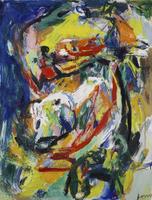
L'infinie suffisance
Asger Jorn
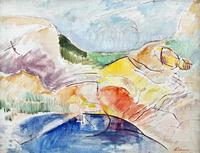
Spring in the Gulf
George Stefanescu