Expertenanalyse zu Serge Poliakoffs Composition
Stil: Tachisme · Genre: abstract
Expert Analysis of Serge Poliakoff's "Composition"
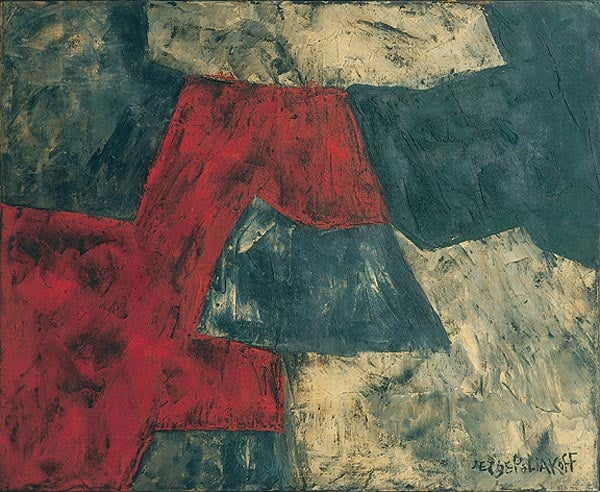
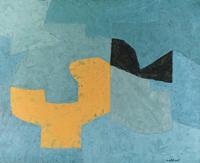
Serge Poliakoff’s Composition is a quintessential example of Tachisme, the French postwar abstract movement that paralleled Abstract Expressionism but emphasized spontaneity, color, and the materiality of paint. Yet Poliakoff’s work stands apart within this style for its disciplined, architectonic structure—a hallmark that made him one of the most significant abstraccionists of the School of Paris.
Significance within Tachisme
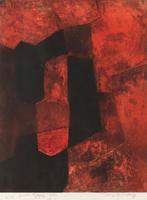
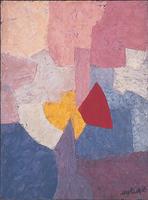
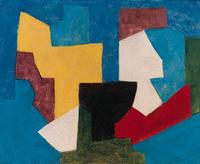
While many Tachiste artists (e.g., Pierre Soulages, Hans Hartung) pursued gestural, calligraphic marks, Poliakoff’s Composition reveals a dialogue between controlled geometry and expressive color. He builds the canvas from interlocking, irregular color planes—often described as “stained” or “stained-glass” blocks—that are neither fully hard-edged nor fully organic. This creates a sense of monumental stillness and harmonic tension: the forms seem to float and lock simultaneously, evoking a meditative, almost musical rhythm.
Key Artistic Achievements
- Color as Form: Poliakoff reduces his palette to a few deep, resonant hues (typically earths, blues, greens, and reds), applying them in flat, matte layers. The boundaries between color zones are softened or deliberately blurred, so that no shape dominates; each color-field modulates into its neighbor like a chord progression.
- Space without Depth: The painting rejects traditional perspective or illusionistic space. Instead, the shapes nestle together on a single pictorial plane, compressing the composition into a shallow, vibrating field—a hallmark of his mature style (1940s–1960s).
- Balance of Opposites: Poliakoff balances the Tachiste emphasis on improvisation with a rigorous sense of order. The patches may appear casually placed, but their scale, proportion, and adjacency are carefully calibrated to achieve a pure, non-representational equilibrium.
Why It Matters
Composition embodies Poliakoff’s lifelong search for a “spiritual” abstraction—a universal, silent language of form and color. His work bridged the earlier geometric abstraction of Mondrian with the postwar lyrical abstraction of the École de Paris. Today, these paintings are celebrated for their serene, contemplative power and their ability to hold the viewer’s gaze without narrative, inviting a pure visual experience. In the context of Tachisme, Poliakoff’s Composition demonstrates that abstraction can be both sensuous and disciplined, making him a pivotal figure in the movement’s evolution.
Visuell ähnlich
20 Werke mit ähnlicher Komposition und Farbpalette
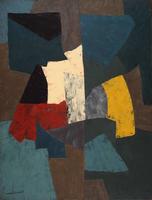
Abstract Composition
Serge Poliakoff
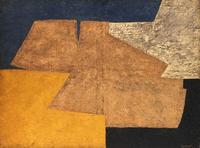
Composition jaune, mauve, bleu et noir (La table d'or)
Serge Poliakoff
Composition
Serge Poliakoff
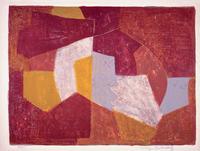
Composition carmin, brune, jaune et grise
Serge Poliakoff
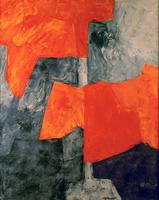
Composition grise et rouge
Serge Poliakoff
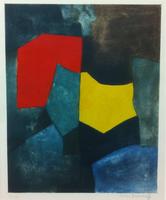
XVI
Serge Poliakoff
Composition brune et rouge
Serge Poliakoff
Composition
Serge Poliakoff
Composition multicolore à dominante bleue
Serge Poliakoff
Evening
Vilen Barsky
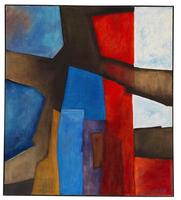
Rot-vertikal
Fritz Winter
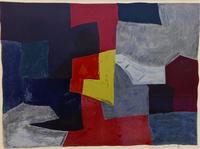
Composition grise, rouge et jaune
Serge Poliakoff
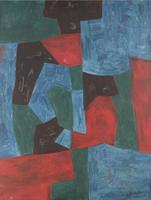
Composition abstraite
Serge Poliakoff
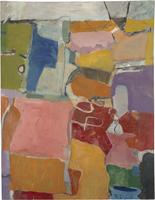
Urbana
Richard Diebenkorn
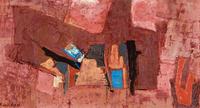
Composition
Francis Bott
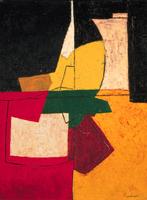
Composition abstraite aux traits
Serge Poliakoff
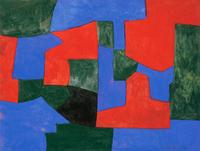
Composition abstraite
Serge Poliakoff
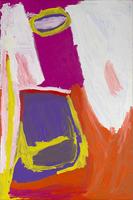
Dibirdibi Country – Topway
Sally Gabori
Dibirdibi Country
Sally Gabori
Wandering breath
Avigdor Arikha