Expert analysis of Betty Parsons’s Untitled
Style: Abstract Expressionism · Genre: sculpture
Expert Art Historical Analysis: "Untitled" by Betty Parsons
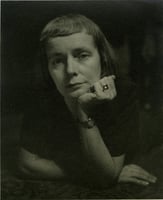
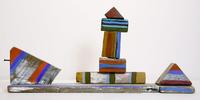
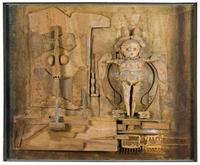
Betty Parsons is best remembered as the visionary gallerist who championed the New York School—representing artists like Jackson Pollock, Mark Rothko, and Barnett Newman. Yet her own practice as a sculptor, operating within the Abstract Expressionist idiom, deserves equal attention. This untitled sculpture exemplifies how Abstract Expressionism’s gestural and material concerns could be translated into three dimensions, moving beyond the canvas into physical space.
Significance within Abstract Expressionism
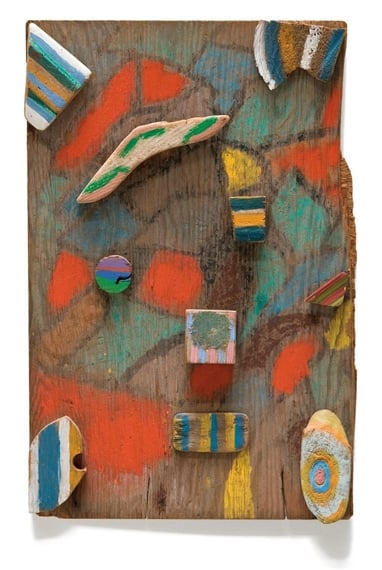
While Abstract Expressionism is overwhelmingly associated with painting, Parsons’ sculpture expands the movement’s core principles. Here, the work embodies the key tenets of action and materiality – the direct, unmediated manipulation of matter that parallels the “all-over” compositions and drip techniques of Pollock or the color fields of Rothko. The sculpture’s lack of a title is itself a statement: it refuses narrative or symbolic reference, forcing viewers to confront pure form, texture, and the artist’s physical gesture.
Parsons often worked with found materials, wood, and stone, assembling them in improvisational, additive ways. In this piece, the organic, asymmetrical shapes and rough-hewn surfaces reveal the hand of the artist, echoing the spontaneity and “automatic” processes central to Abstract Expressionism. The sculpture’s balance between raw material and composed structure speaks to a core tension in the movement – between chaos and control, accident and intention.
Genre and Formal Innovation
As a sculpture, Parsons’ work challenges the traditional boundaries of the medium. It is not carved from a single block nor modeled in clay; instead, it is constructed, often from painted wood or found objects, aligning it with the era’s turn toward assemblage. The use of color – possibly unmodulated, flat, or applied gesturally – bridges painting and sculpture, creating a hybrid object. This integration of painterly gesture with three-dimensional form was radical for its time, predating later developments in post-minimalism and process art.
Parsons’ significance also lies in her role as a woman artist working within a male-dominated movement. Her sculptures, though less celebrated than her gallery’s stars, demonstrate that Abstract Expressionism was not solely a painter’s language. By applying its ethos – emotional directness, existential weight, and the primacy of the artist’s mark – to sculpture, she expanded the movement’s reach and proved its principles could inhabit any medium.
Conclusion
“Untitled” by Betty Parsons is a testament to the cross-pollination of painting and sculpture in mid-century American art. It is significant not only as an artifact of a legendary dealer’s own creativity, but as a work that embodies Abstract Expressionism’s commitment to material, gesture, and the liberation from representation. In its rawness and abstract vitality, it stands as a quiet but powerful counterpart to the canvases of her more famous contemporaries.
Visually similar
20 works with related composition and palette
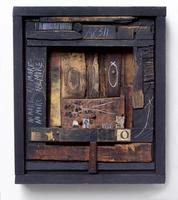
Box
Hannelore Baron
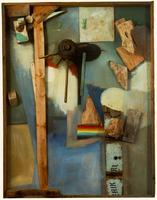
Merzpicture with Rainbow
Kurt Schwitters
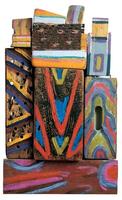
Totem Materia-R
Betty Parsons
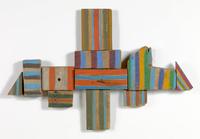
Yield
Betty Parsons
Relief in Relief
Kurt Schwitters
Heavy Relief
Kurt Schwitters
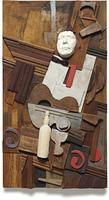
Café Still Life with Bow Tie (Braque)
George Segal
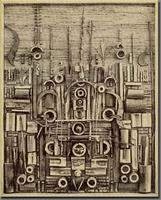
Ma ville
Louis Pons
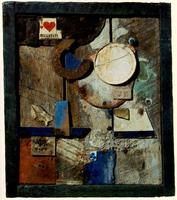
Merzbild Rossfett
Kurt Schwitters
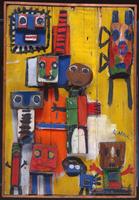
Questioning Children
Karel Appel
Plum Point
Jane Frank
Head of a Woman
Henri Laurens
Untitled
Betty Parsons
Guitar and bottle
Pablo Picasso
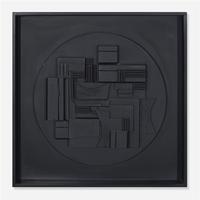
Full Moon
Louise Nevelson
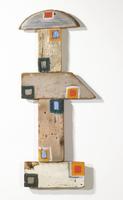
St. Martin's Eye of the Road
Betty Parsons
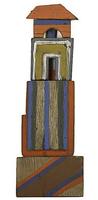
The Tower
Betty Parsons
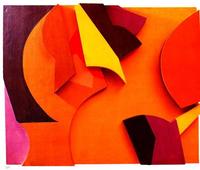
Abstract Composition
Jean Arp
Le jeu du croquet
Louis Pons
Well Informed Ancestors
El Anatsui