
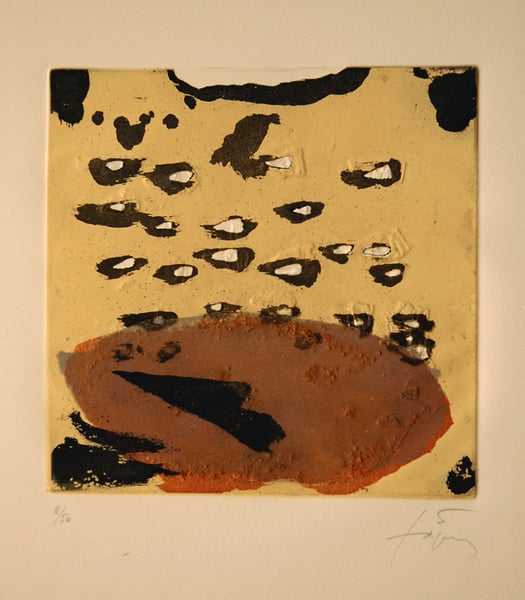
Expert analysis of Antoni Tapies’s Repliquer II
Style: Art Informel · Genre: abstract
Expert Analysis of "Repliquer II" by Antoni Tàpies
Antoni Tàpies’ "Repliquer II" is a paradigmatic work of Art Informel, the European post-war movement that rejected formal composition in favor of raw materiality, gesture, and the expressive power of the artistic surface itself. As an abstract piece, it embodies the core concerns of Tàpies’ practice: the transformation of humble, everyday materials into a profound meditation on time, matter, and existence.
Significance within Art Informel
Tàpies was a leading figure of Art Informel, which emerged in Europe as a counterpart to American Abstract Expressionism yet with a distinct philosophical and tactile sensibility. While Abstract Expressionists often emphasized energetic brushwork and emotional spontaneity, Tàpies and his European peers foregrounded matter itself—sand, marble dust, cloth, and earth—applied in thick, crusty layers. In "Repliquer II", this approach is evident in the work’s dense, weathered surface, which resembles a fragment of a decaying wall or archaeological relic. The title, “Repliquer” (French for “to reply” or “to replicate”), suggests a dialogue with the medium: the artwork “answers” the artist’s gestures through its own scarred, almost geological presence.
Tàpies’ Distinctive Contribution
What makes "Repliquer II" significant is its fusion of sculptural materiality with abstract imagery. Tàpies intentionally blurs the boundary between painting and relief, creating a surface that is both a flat picture plane and a textured object. Cuts, scratches, and incised lines—often resembling graffiti or primal signs—puncture the thick paste, evoking a sense of wounding or archaeological excavation. This technique reflects Tàpies’ interest in Zen philosophy and the concept of wabi-sabi (the beauty of imperfection), as well as his response to the trauma of the Spanish Civil War and post-war existential anxiety. The work’s monochromatic palette—earthy browns, grays, and blacks—reinforces its gravity, avoiding decorative appeal in favor of stark presence.
Legacy and Influence
"Repliquer II" exemplifies how Art Informel moved beyond mere abstraction into a poetics of the abject—where the artwork’s rough, imperfect surface becomes a metaphor for human vulnerability, memory, and the passage of time. Tàpies’ use of “poor” materials elevated the everyday into the sublime, influencing later movements like Arte Povera and Neo-Expressionism. In this piece, the viewer is not asked to recognize a figure or symbol, but to confront matter itself—its density, its history, its silent “reply” to the artist’s hand. It stands as a masterwork of material abstraction, where the surface is not a window but a wall worn by experience.
Genre
Style
Visually similar
20 works with related composition and palette
Blue Aquarium
Georges Braque
According to the Laws of Chance
Jean Arp
Untitled
Ilse D'Hollander
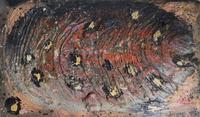
Bathrobe sign
Christo Coetzee
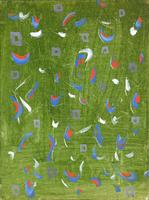
Aspen, Colorado
Betty Parsons
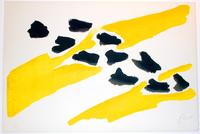
Vol d'oiseaux I
Pierre Tal-Coat
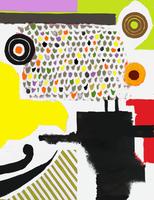
The Fisherman's Dream
Nicholaas Chiao
Daughter in Her Mother's Garden
Samia Halaby
Komposition Eli
Carl Buchheister
Painting
Joan Miro
Poème No. 7: Landscape of May
Koshiro Onchi
Capturestheheartland
Stanley Boxer
Untitled
Yuri Zlotnikov
SB-34
Roger Weik
Koktebel
Yuri Zlotnikov
Kaakaratintja
Makinti Napanangka
Von Goldfarben und Blau
Ernst Wilhelm Nay
Paysage
Enrico Baj
Big Thumb. Beach. Moon and Decaying Bird
Salvador Dali
Composition
Hryhorii Havrylenko