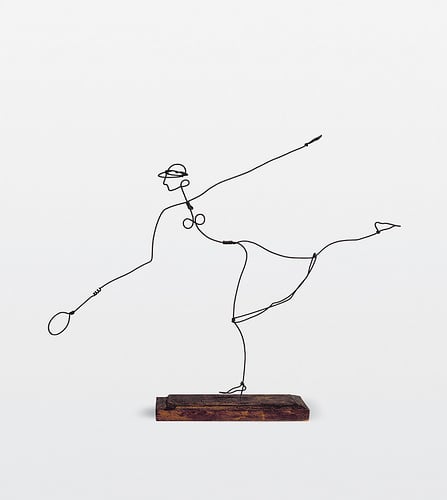
Helen Wills
Details
Expert analysis of Alexander Calder’s Helen Wills
Style: Expressionism · Genre: sculpture
Expert Analysis: "Helen Wills" by Alexander Calder (c. 1927–1928)
Context and Period Significance
Created during Calder’s formative Wire Sculpture and the Circus period (1926–1930), this work exemplifies his revolutionary shift from traditional sculptural mass to linear, open-form construction. Calder transformed the medium by treating wire as a continuous, energetic line in space—a technique he called “drawing in three dimensions.” This approach aligns with Expressionism not through overt emotional distortion, but through the simplification and dynamic elongation of form, capturing the essence of movement and personality with minimal means.
Subject and Formal Innovation
The subject, Helen Wills, was the world’s top female tennis player in the 1920s, renowned for her athletic grace and focused intensity. Calder’s wire portrait reduces her to a few continuous, looping strands: a poised, reaching figure with her racket, the wire mimicking the fluid action of a serve or volley. The sculpture’s openness allows negative space to become an active participant, suggesting motion and the air around the athlete. This is a hallmark of Calder’s significance—he freed sculpture from weight, making it kinetic even when static.
Why It Matters
- Pioneering “Drawings in Space”: Calder’s wire works directly influenced his later mobiles, where balance and movement became central. “Helen Wills” showcases his ability to capture a sport’s energy and a person’s character without gravity or bulk.
- Expressionist Essence: Rather than realistic representation, Calder exaggerates gesture—the outstretched arm, the tilt of the head—to evoke Wills’ competitive spirit. The wire’s linearity parallels expressionist drawing, but in three dimensions.
- Cultural Snapshot: The piece reflects the 1920s’ fascination with sports celebrities and modern dynamism. Calder’s playful, elegant treatment of a contemporary icon contrasts with the heavy, monumental sculpture of the era, marking a shift toward modernism’s lightness and wit.
In short, “Helen Wills” is significant as a bridge between drawing and sculpture, a key expressionist experiment in wire, and a testament to Calder’s genius for capturing life in a single, suspended line.
Visually similar
20 works with related composition and palette
HELEN WILLS II
Alexander Calder
BALL PLAYER
Alexander Calder
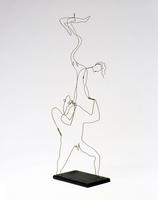
ACROBATS
Alexander Calder
JOSEPHINE BAKER I
Alexander Calder
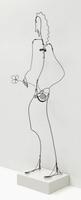
Spring
Alexander Calder
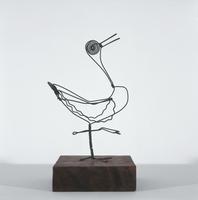
SEA GULL
Alexander Calder
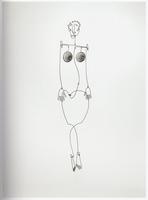
Aztec Josephine Baker
Alexander Calder
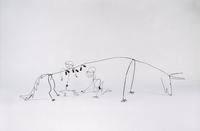
Romulus and Remus
Alexander Calder
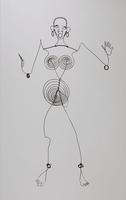
Josephine Baker (III)
Alexander Calder
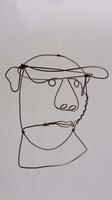
BABE RUTH
Alexander Calder
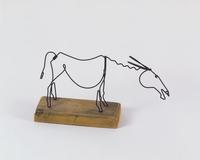
MULE
Alexander Calder
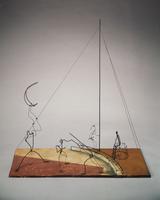
CIRCUS SCENE
Alexander Calder
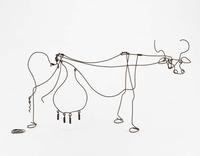
Cow
Alexander Calder
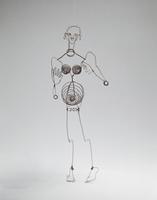
JOSEPHINE BAKER II
Alexander Calder
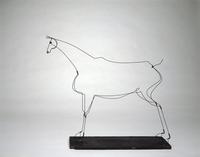
HORSE
Alexander Calder
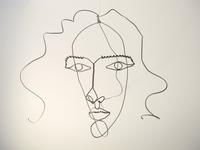
MEDUSA
Alexander Calder
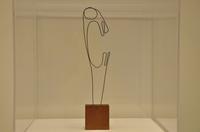
Homo
Mario Ballocco
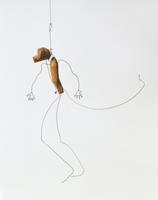
SINGE
Alexander Calder
HERCULES AND LION
Alexander Calder
Triangle
Nancy Graves