Expert analysis of Alexander Calder’s La Grande Vitesse
Style: Abstract Expressionism · Genre: sculpture
Expert Analysis: "La Grande Vitesse" by Alexander Calder
Significance within Abstract Expressionism and the Monumental Works Period
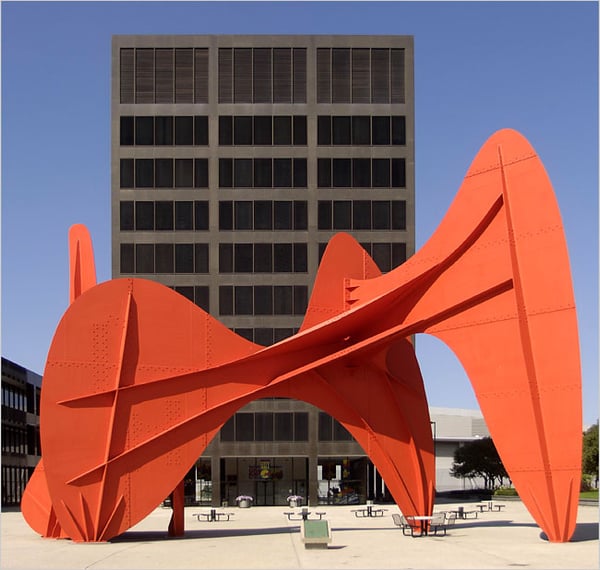
Alexander Calder’s “La Grande Vitesse” (1969) stands as a pivotal achievement in both the artist’s career and the broader trajectory of Abstract Expressionist sculpture. Executed during his MONUMENTAL WORKS: 1963–1976 period, this large-scale stabile—a fixed, non-moving metal sculpture—translates the gestural energy and raw emotional power of Abstract Expressionist painting into three-dimensional form, while redefining the relationship between public art and urban space.
Key Significance:
-
Abstract Expressionism in Sculpture – Though Abstract Expressionism is primarily associated with painting, Calder’s “La Grande Vitesse” exemplifies the movement’s core tenets: spontaneity, directness of material, and the expression of inner vitality. The sculpture’s sweeping, biomorphic red arcs and jagged planes appear to be captured mid-gesture, as if the artist’s hand had frozen a dynamic brushstroke in steel. This work demonstrates that Abstract Expressionism could transcend the canvas, using industrial materials to embody the same sense of urgent, improvised mark-making that defined painters like Franz Kline or Willem de Kooning.
-
Monumental Scale and Public Engagement – Created in Calder’s late monumental period, “La Grande Vitesse” was one of the first major public sculptures commissioned with support from the National Endowment for the Arts (1967). Its sheer size—over 43 feet long and weighing several tons—commands the urban plaza in Grand Rapids, Michigan, transforming a civic space into an immersive encounter with abstract forms. Unlike traditional monuments, it does not depict a person or event; instead, it invites viewers to walk around and through its open structure, experiencing shifting silhouettes and shadows. This interactive quality aligns with the Abstract Expressionist goal of creating a “field” of energy that envelops the spectator.
-
Signature Formal Language – The work’s vivid red hue (Calder’s signature color) and bold, organic silhouette are hallmarks of his mature style. The title, French for “the great speed,” evokes a sense of motion arrested in metal, referencing both the kinetic potential of Calder’s earlier mobiles and the rapid urban life of the city. The sculpture’s flat, painted steel plates are cut and welded to suggest balance and tension—a dialogue between mass and lightness that is distinctly Calder.
-
Legacy as a Landmark – “La Grande Vitesse” is not only a masterpiece of mid-century public art but also a symbol of how Abstract Expressionist principles could be scaled to the urban environment. It exemplifies Calder’s ability to make monumental works feel spontaneous and alive, bridging the gap between fine art and everyday experience. Today, it remains a beloved icon of Grand Rapids and a touchstone for later public sculpture by artists such as Richard Serra and Mark di Suvero.
In sum, “La Grande Vitesse” is significant for bringing the spontaneous, emotive force of Abstract Expressionism into the public realm, asserting that sculpture can be as expressive and dynamic as painting, and establishing Calder as a pioneer of monumental abstraction in the Modernist era.
Visually similar
20 works with related composition and palette
Flamingo
Alexander Calder
LA GRANDE VOILE (THE BIG SAIL)
Alexander Calder
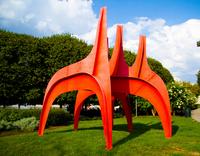
CHEVAL ROUGE
Alexander Calder
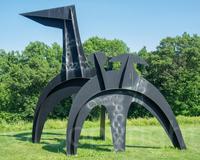
BLACK FLAG
Alexander Calder
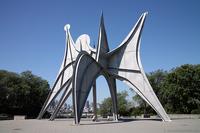
Three Discs (The Man)
Alexander Calder
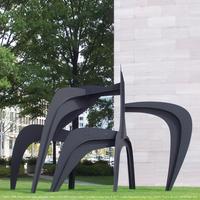
TOM'S
Alexander Calder
Trois Pics (intermediate Maquette)
Alexander Calder
THE ARCH
Alexander Calder
LE GUICHET
Alexander Calder
Teodelapio
Alexander Calder
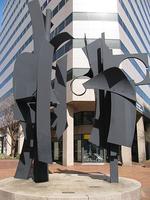
Sky Landscape
Louise Nevelson
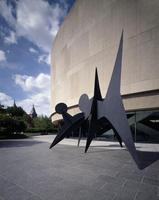
Two Discs
Alexander Calder
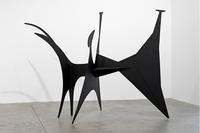
BLACK BEAST
Alexander Calder
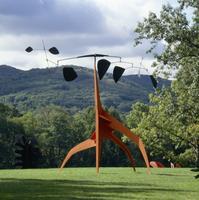
SOUTHERN CROSS
Alexander Calder
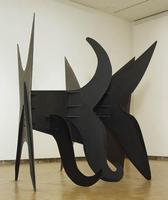
The X and Its Tails
Alexander Calder
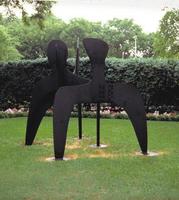
Three Bollards
Alexander Calder
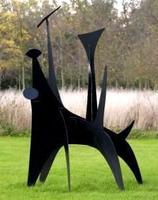
The Dog
Alexander Calder
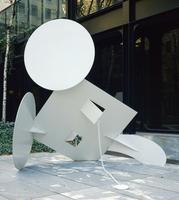
Geometric Mouse, Scale A
Claes Oldenburg
Tokyo Brushstrokes (I and II)
Roy Lichtenstein
POLYGONS ON TRIANGLES
Alexander Calder