
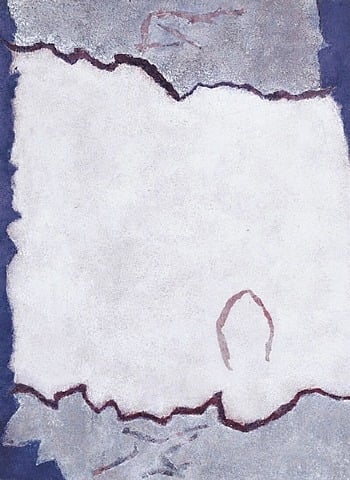
Expertenanalyse zu Theodoros Stamoss Edge of White Dawn #1
Stil: Abstract Expressionism · Genre: abstract
"Edge of White Dawn #1" – Theodoros Stamos (Abstract Expressionism, c. early 1950s)
Theodoros Stamos, the youngest member of the famed "Irascibles" who defined Abstract Expressionism, created works that bridge the movement’s raw emotional force with a deeply personal, organic vision. Edge of White Dawn #1 exemplifies his signature synthesis of biomorphic abstraction and luminous color fields, marking a pivotal moment in the development of second-generation Abstract Expressionism.
Visual and Stylistic Analysis:
Stamos’s canvas is dominated by a vast, glowing expanse of white and near-white tones—a palpable, almost ethereal light that evokes the title’s “dawn.” Floating within this radiance are soft, rounded organic shapes that recall cellular structures, primordial organisms, or the subtler contours of landscape forms (such as shorelines or cloud edges). The paint is applied in varied densities: thin washes of pigment suggest atmospheric depth, while more opaque swaths create tactile, almost flesh-like surfaces. Unlike the violent gestures of Jackson Pollock or Willem de Kooning, Stamos’s brushwork is deliberate and restrained, yet still deeply expressive. The composition feels suspended between emergence and dissolution—a liminal state typical of his best work.
Significance within Abstract Expressionism:
-
Second-Generation Innovation: Stamos was part of the cohort that expanded Abstract Expressionism beyond its heroic, angst-ridden beginnings. While first-generation artists (Pollock, Rothko, Newman) often pursued the sublime or the tragic, Stamos introduced a quieter, more meditative lyricism. Edge of White Dawn #1 demonstrates how Abstract Expressionism could convey not just existential drama, but also a sense of renewal, light, and natural wonder.
-
Biomorphism and Nature: Stamos was deeply influenced by natural forms—particularly the landscapes of his Greek heritage and the seascapes of his adopted Long Island. His shapes are neither purely abstract nor representational, but occupy a fluid threshold. This work’s title directly evokes a natural phenomenon (dawn at the edge of the sea or sky), yet the painting resists direct depiction. Instead, it channels the experience of dawn: the gradual brightening, the emergence of form from darkness, the quiet intensity of first light.
-
Color as Atmosphere: Stamos’s use of white and near-white is radical for its time. While many Abstract Expressionists favored bold primaries or dark, brooding palettes, Stamos’s whites are not empty; they are built from subtle gradations (ivory, pearl, cream) that create a palpable luminosity. This anticipates the later Color Field work of artists like Helen Frankenthaler—Stamos helped pioneer the idea that color alone, without strong drawing or gesture, could carry profound emotional weight.
-
The “Edge” as Conceptual Focus: The word “edge” in the title is crucial. Stamos was fascinated by boundaries—between light and dark, sea and land, consciousness and dream. The painting’s composition seems to hover at a threshold, where forms are not fully solidified but caught in a state of becoming. This liminal quality aligns with the Abstract Expressionist interest in the unconscious and the process of creation itself.
Historical Context:
Painted during the height of the Cold War, Edge of White Dawn #1 offers a counterpoint to the era’s anxiety. While many Abstract Expressionists wrestled with existential dread, Stamos’s work suggests possibility and rebirth. It also reflects his interest in philosophy (particularly Eastern thought) and his belief that abstraction could access universal, pre-verbal truths. The painting was exhibited at Betty Parsons Gallery—the crucible of Abstract Expressionism—and later acquired by the National Gallery of Art, cementing Stamos’s place among the movement’s most lyrical innovators.
Conclusion:
Edge of White Dawn #1 is significant not only as a masterwork of Stamos’s oeuvre but as a key document of Abstract Expressionism’s evolution. It demonstrates that the movement could be gentle, luminous, and intimate—equally powerful when whispering as when shouting. By merging the organic with the abstract, the natural with the transcendental, Stamos expanded the vocabulary of American abstraction and left a quiet, enduring influence on later painters of light and atmosphere.
Visuell ähnlich
20 Werke mit ähnlicher Komposition und Farbpalette
Infinity Field, Lefkada Series
Theodoros Stamos
Infinity Field, Lefkada Series I
Theodoros Stamos
Untitled
Raoul De Keyser
Infinity Field, Lefkada Series (For C.D. Friedrich)
Theodoros Stamos
Infinity Field, Lefkada Series
Theodoros Stamos
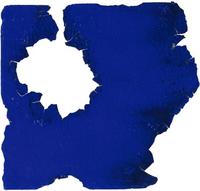
Blue Monochrome Pierced by Fire
Yves Klein
Safer 5
Willi Baumeister
Infinity Field #2 (Lefkada Series)
Theodoros Stamos
Infinity Field, Lefkada Series
Theodoros Stamos
Artificial Flower with Falling Leaves
Ilka Gedo
Infinity Field, Lefkada Series
Theodoros Stamos
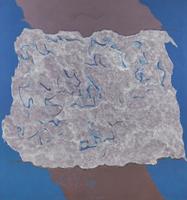
Infinity Field, Jerusalem Series
Theodoros Stamos
Infinity Field, Lefkada Series
Theodoros Stamos
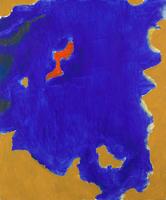
Moonlight, Maine
Betty Parsons
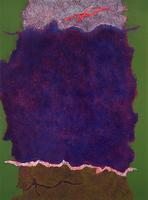
Infinity Field, Lefkada Series
Theodoros Stamos
Infinity Field, Creten Series Rizitika #4
Theodoros Stamos
TMC 053
MF ARLO
60-T-18
Martin Barre
Aerial View No. 1
Jane Frank

Untitled (Torn Sky)
Joe Goode