Expert analysis of Theodoros Stamos’s High Snow Low Sun
Style: Abstract Expressionism · Genre: abstract
Expert Analysis of "High Snow Low Sun" by Theodoros Stamos
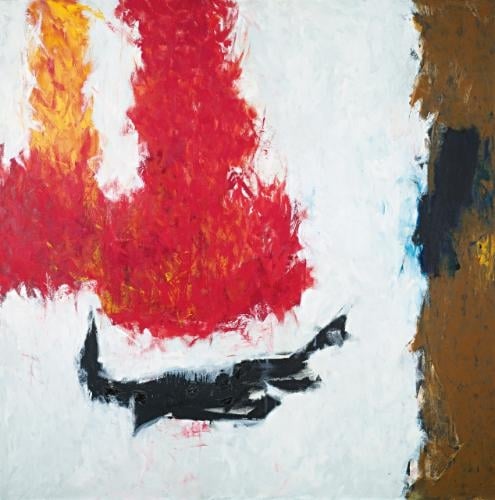
Theodoros Stamos’s High Snow Low Sun exemplifies a distinctive strain of Abstract Expressionism that merges the movement’s emphasis on spontaneous, non-representational form with a deep sensitivity to natural phenomena. As a work within this genre, the painting’s significance lies in how it translates the physical experience of light, atmosphere, and landscape into purely abstract visual language—bridging the heroic scale and emotional intensity of Abstract Expressionism with a lyrical, organic quality that sets Stamos apart from many of his peers.
Within the context of the period, Abstract Expressionism was largely defined by gestural brushwork and existential content. Stamos, however, infused his canvases with biomorphic shapes and muted, earthy palettes that evoke the interplay of snow and low winter sun without directly depicting it. The title itself—High Snow Low Sun—suggests a specific natural condition: a stark, silent landscape where the sun’s weak light casts long shadows over deep snow. Stamos translates this into a composition of layered, fluid color fields and soft, floating forms, creating a sense of atmospheric compression and luminous stillness. The “high snow” may be implied by pale, icy tones that dominate the upper register, while the “low sun” is gestured toward with warm, subdued accents that seem to sink or hover near the bottom edge.
What makes this artwork significant is its contribution to the more contemplative, nature-oriented branch of Abstract Expressionism. While artists like Pollock and de Kooning channeled chaotic energy, Stamos channeled the quietude and sublimity of the natural world. High Snow Low Sun demonstrates how Abstract Expressionism could be not only a vehicle for raw emotion but also for a meditative, almost transcendental dialogue with environmental forces. This work thus expands the movement’s vocabulary, proving that abstraction could capture not just the internal turmoil of the human psyche, but also the serene, elemental power of the earth itself.
Genre
Visually similar
20 works with related composition and palette
Summer No. 3
Jack Bush
Slate
Friedel Dzubas
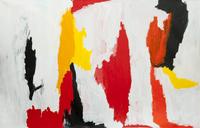
Dibirdibi Country
Sally Gabori
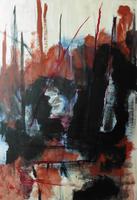
Sacrifice 1.
Ben Vollers
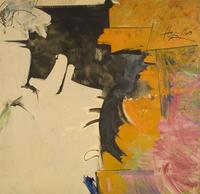
Psychoseismorama II
Hassel Smith
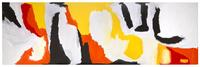
Outside Dibirdibi
Sally Gabori
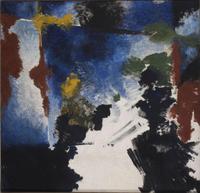
Abstraction (Rupture)
Alexander Rodchenko
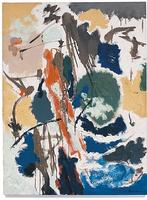
Outdoors
John Ferren
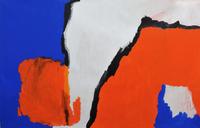
Dibirdibi Country
Sally Gabori
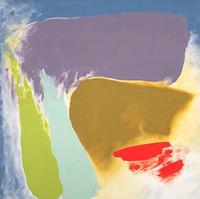
San Bivar Signal
Friedel Dzubas
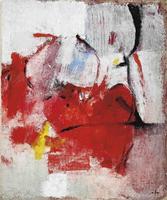
Figure
Afro
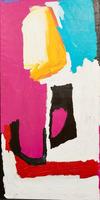
My Grandfather's Country / Dingkarri
Sally Gabori
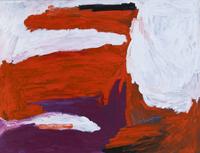
Dibirdibi Country
Sally Gabori
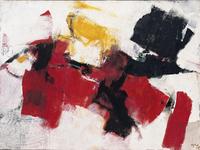
Porto delle galere
Afro
Untitled
Joan Mitchell
West Wind
Helen Frankenthaler
The Lark
Hans Hofmann
Merci
Joan Mitchell
1949-A-No.1
Clyfford Still
La clessidra
Afro