

Expertenanalyse zu Theodoros Stamoss Infinity Field, Lefkada Series
Stil: Color Field Painting · Genre: abstract
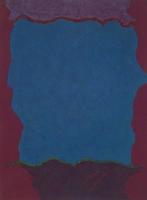
Expert Analysis: "Infinity Field, Lefkada Series" by Theodoros Stamos
Style & Period Context
Theodoros Stamos (1922–1997) was a key figure in the New York School, straddling the transition from Abstract Expressionism to Color Field painting. "Infinity Field, Lefkada Series" exemplifies the mature phase of his career, where he moved away from the gestural, mythic imagery of his earlier work toward the lyrical, meditative expanses of Color Field painting. Painted in the early 1970s, this work belongs to Stamos's long-running "Infinity Field" series—a body of work that channels the luminous, atmospheric qualities of the Greek island of Lefkada (his ancestral home) into pure color and form.
Significance Within Color Field Painting
Color Field painting, pioneered by artists such as Mark Rothko, Barnett Newman, and Helen Frankenthaler, prioritized large, flat areas of color as the primary vehicle for emotional and spiritual expression. Stamos’s "Infinity Field, Lefkada Series" is significant for the way it fuses the genre’s core principles with a deeply personal, landscape-inspired sensibility.
- Color as Subject: The painting consists of broad, softly modulated fields of color—often earthy ochres, deep blues, and luminous whites—that suggest the horizon, sea, and sky without depicting them literally. Stamos achieved a translucent, stained effect by thinning oil paint and allowing it to soak into unprimed canvas, a technique he adopted after witnessing Helen Frankenthaler’s soak-stain innovations.
- Atmospheric Space: Unlike the hard-edged color fields of Ellsworth Kelly or the symmetrical blocks of Rothko, Stamos’s compositions are asymmetrical, often with a single vertical or horizontal band of lighter color floating against a darker ground. This creates a sense of breathing, organic space—an infinite, horizonless vista that feels both calm and vast.
- Lyrical Abstraction: The title “Lefkada” ties the work to a specific place, yet the painting remains resolutely abstract. Stamos described his aim to capture the “essence” of light and water, not their likeness. In doing so, he contributed to Color Field’s evolution toward a more intuitive, meditative abstraction—one where color itself becomes a stand-in for memory, landscape, and the sublime.
Why It Matters
"Infinity Field, Lefkada Series" stands out because it represents a synthesis of the Abstract Expressionist concern for the artist’s hand (the subtle brushwork and stained edges) with Color Field’s pursuit of pure optical experience. Stamos never abandoned the natural world as his starting point, yet he pushed its imagery into a realm of pure sensation. This work exemplifies how Color Field painting, at its most refined, could evoke both the specific (a Greek island’s light) and the universal (the sensation of infinite space). Today, it is celebrated as a mature statement by an artist who helped redefine American abstraction in the post-war era.
Genre
Visuell ähnlich
20 Werke mit ähnlicher Komposition und Farbpalette
China Series A, ”Flamingo”
Doug Ohlson
Clavis
Jules Olitski
Istria V
Gotthard Graubner

Ocean Blue #6
Joe Goode
Farbraum
Gotthard Graubner

Monochrome vert
Yves Klein

Townscape M8 (Grey)
Gerhard Richter
Sarda I
Gotthard Graubner
Infinity Field
Theodoros Stamos
Paisajo
Albert Rafols-Casamada
Avondrood (evening Glow)
Raoul De Keyser

Infinity Field, Nemea Series #4
Theodoros Stamos
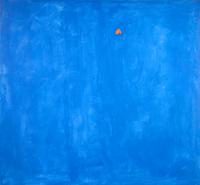
The Moth
Betty Parsons

Untitled (Cat #257)
Phil Sims
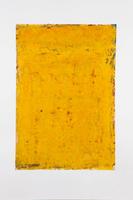
Untitled
Tiberiy Szilvashi
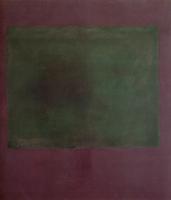
Untitled (Green on Maroon)
Mark Rothko

Infinity Field, Olympia II
Theodoros Stamos
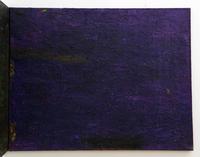
Untitled
Tiberiy Szilvashi
Infinity Field, Lefkada Series
Theodoros Stamos
1400740
Kosakov Dimitrij