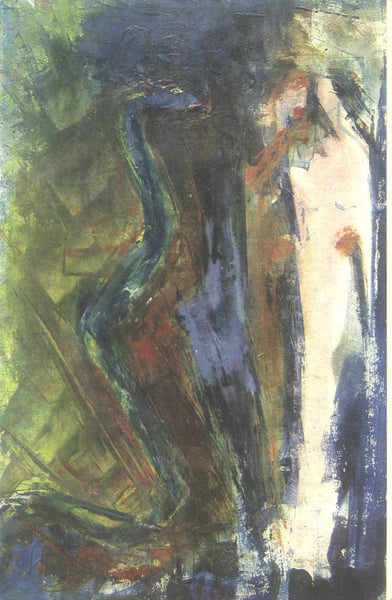
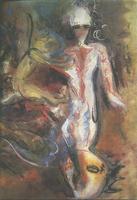
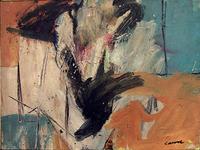
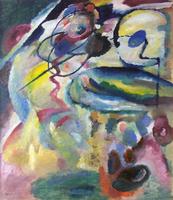
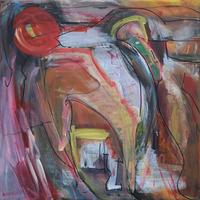
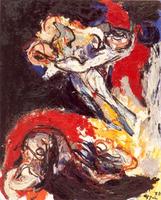
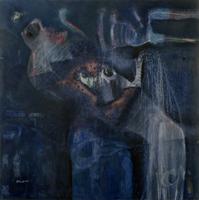
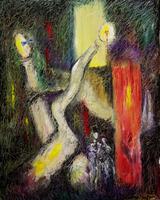
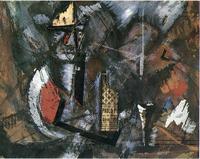
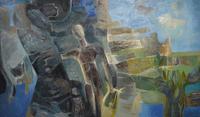
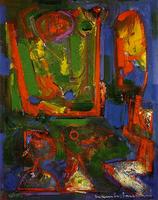
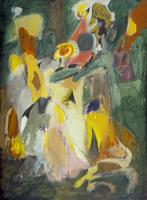
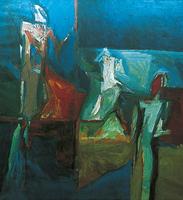
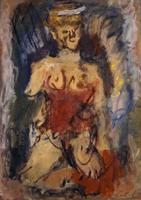
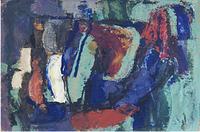
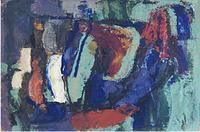
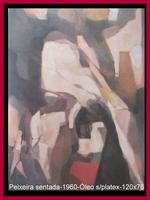
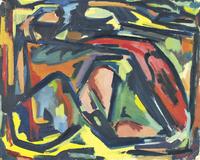
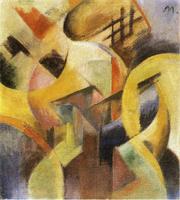
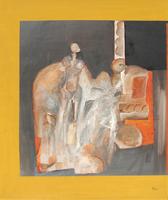
This illustration by Margareta Sterian is a compelling example of Expressionist visual translation of literary text. Created to accompany V. Voiculescu’s Last Shakespearean Sonnets, the work transcends mere decoration to become an emotional and interpretive parallel to the poetry.
Significance within Expressionism: Sterian likely employs the hallmarks of the style—distorted forms, heightened contrast, and subjective color—to capture the raw, introspective tension of Shakespeare’s sonnets as refracted through Voiculescu’s Romanian verse. The illustration does not simply depict a scene but renders the psychological weight of love, time, and mortality central to the sonnets. Its significance lies in how it bridges two distinct artistic sensibilities: the universal pathos of Shakespeare and the modernist, anti-naturalistic language of Expressionism, filtered through a mid-20th-century Eastern European lens.
Context and Legacy: As an illustration, it occupies a liminal space between high art and book design, affirming Sterian’s skill in synthesizing narrative and visual emotion. For the period, this work would have been part of a broader movement by Romanian modernists to reinterpret Western classics through a personal, emotionally charged aesthetic, marking the artist as a key figure in bringing Expressionist sensibilities to the illustrated book genre.