
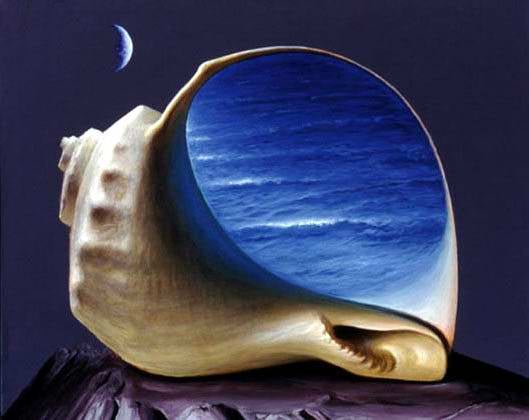
Sound of the Sea
Expert analysis of Sabin Balasa’s Sound of the Sea
Style: Surrealism · Genre: symbolic painting
Expert Analysis: "Sound of the Sea" by Sabin Balasa
Stylistic Context & Significance
Sabin Balasa (1932–2016) is celebrated for his distinctive brand of surrealism, often described as "visionary" or "dreamlike," which merges meticulous Renaissance-style draftsmanship with otherworldly symbolic imagery. "Sound of the Sea" exemplifies his unique ability to render the intangible—sound, emotion, and the subconscious—through meticulous, almost ethereal visual metaphors.
What Makes the Work Significant
Within the surrealist tradition, Balasa diverges from the jarring, Freudian disjointedness of Dalí or Magritte. Instead, he creates a harmonious, meditative surrealism where nature and human feeling are intertwined. "Sound of the Sea" likely depicts a tranquil yet uncanny seascape—perhaps floating islands, suspended droplets, or sea creatures transformed into musical elements—where the auditory experience of the ocean becomes a visual, symbolic language.
The painting’s significance lies in its symbolic synesthesia: Balasa translates the sound of waves into a visual symphony of form and color, inviting the viewer to "hear" with their eyes. The sea, a classic symbol of the unconscious, is rendered not as chaotic but as a source of sublime, mysterious order. This aligns with Balasa’s broader oeuvre, where he often uses birds, crystalline forms, and floating architecture to evoke spiritual transcendence.
Genre & Iconography
As a symbolic painting, "Sound of the Sea" functions like a visual poem. Typical Balasa motifs—such as floating spheres, inverted reflections, or a lone figure—would serve here as anchors for interpreting the relationship between humanity and nature’s eternal rhythms. The work’s power comes from its ability to make the viewer feel the pulse of the sea as a living, audible presence, blending surrealist ambition with a deeply personal, almost mystical reverence for the natural world.
In the broader art historical canon, Balasa’s work occupies a niche that bridges late surrealism with the visionary symbolism of the 1960s–80s, offering a singular, contemplative alternative to mainstream surrealist shock. "Sound of the Sea" thus stands as a masterful example of how surrealism can evoke not just the weird, but the wondrously quiet and resonant.
Visually similar
20 works with related composition and palette
Shell
Salvador Dali
Marine Relics
Eleonora Brigalda Barbas
Solitude
Sven Jonson
Still Life With Shell
Clovis Trouille
Deserted Island
Jacek Yerka
At Sunset
Eleonora Brigalda Barbas
The Shell (Conus marmoreus)
Rembrandt
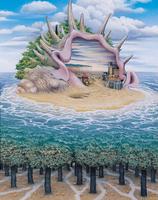
Two worlds and one more
Jacek Yerka
The Seashell
Odilon Redon
The Seashell
Odilon Redon
Natura Morta
Mario Tozzi
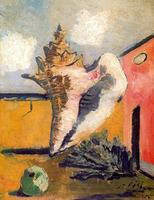
La Grande Conchiglia
Filippo De Pisis
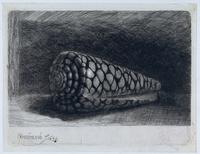
The shell 'Conus Marmoreus'
Rembrandt
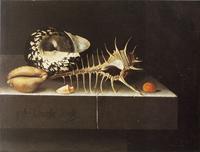
Shells
Adriaen Coorte
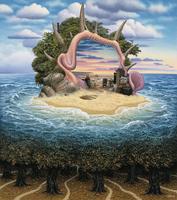
Desert Island
Jacek Yerka
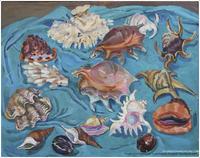
The fairy-tales of Indian Ocean
Mariam Aslamazian
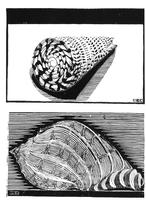
Sea Shells
M.C. Escher
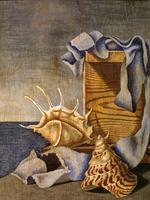
Still Life
Edward Wadsworth
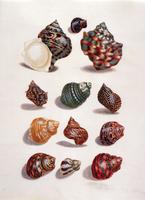
Untitled
Maria Sibylla Merian
Still Life With Seashell and Fruit
Ion Pacea