Expert analysis of Richard Pousette-Dart’s White Gothic No. 5
Style: Abstract Expressionism · Genre: abstract
Expert Analysis: "White Gothic No. 5" by Richard Pousette-Dart
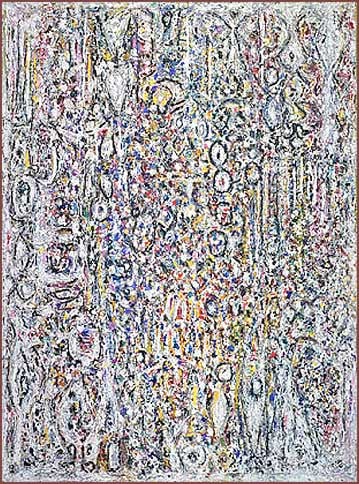
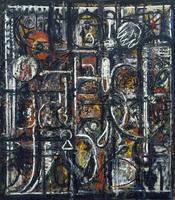
Richard Pousette-Dart’s White Gothic No. 5 stands as a seminal work within the first generation of Abstract Expressionism, yet it resists the gestural bravado often associated with the movement. Instead, the painting exemplifies the artist’s lifelong pursuit of a meditative, transcendent abstraction—a path that sets him apart from his New York School peers.
Formal Significance
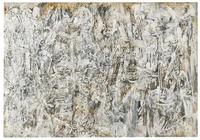
Executed largely in monochromatic whites, creams, and pale grays, White Gothic No. 5 achieves its density not through explosive brushwork but through meticulous layering and incised marks. The surface is built up like a wall—or a manuscript page—with fine, calligraphic lines and small glyph-like shapes emerging from the luminous ground. This technique anticipates the “all-over” compositions of later Abstract Expressionists, yet Pousette-Dart’s approach is more austere and architectonic. The title’s reference to “Gothic” evokes the verticality and spiritual aspiration of medieval cathedrals; the painting’s central axis and stained-glass-like fragments of color (hints of gold, blue, or red buried beneath the white) reinforce this sacred, structural quality.
Context within Abstract Expressionism
While Pollock and de Kooning emphasized raw emotion and physical process, Pousette-Dart insisted on symbolism and order. White Gothic No. 5 bridges the European tradition of spiritual abstraction (Mondrian, Kandinsky) with the American painterly impulse. The work’s significance lies in its demonstration that Abstract Expressionism could be both deeply personal and rigorously compositional—a quiet alternative to the heroic, muscular gesturalism. Pousette-Dart’s use of white as a foundation, rather than an absence, prefigures later Minimalist and color-field experiments, yet retains a mystical, handmade intimacy.
Legacy
White Gothic No. 5 is distinguished by its synthesis of the ancient and the modern: it channels Romanesque manuscript illumination, Gothic architecture, and archaic symbols through the lens of mid-century American abstraction. In its insistence on light as both medium and subject, the work affirms Pousette-Dart’s belief that abstract art could serve as a form of spiritual contemplation—a core tenet that makes this piece a touchstone for understanding the full range of Abstract Expressionist ambition.
Genre
Visually similar
20 works with related composition and palette
Travel Tobey
Mark Tobey
Illumination Gothic
Richard Pousette-Dart
Composition
Enrico Castellani
Chavade
Richard Pousette-Dart
Symphony No. 1, The Transcendental
Richard Pousette-Dart
White Gothic #3
Richard Pousette-Dart
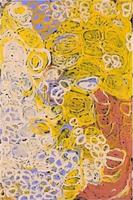
Two Women’s Travels to the Site South of Lake Macdonald
Makinti Napanangka
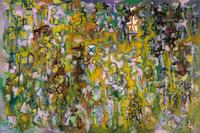
Number 6
Ad Reinhardt
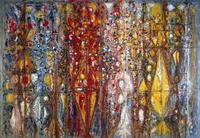
Blood Wedding
Richard Pousette-Dart
Las musas inconformes
Alice Rahon
Number 43 (Abstract Painting, Yellow)
Ad Reinhardt
Composition grise
Roger Bissière
The Magnificent
Richard Pousette-Dart
Les hautes herbes
Pierre Alechinsky
Axum
Alexander Boghossian

Number 10
Jackson Pollock
Talladega Three II, from the Circuits series
Frank Stella
Untitled
Richard Pousette-Dart
Number 1
Richard Pousette-Dart
Palimpsest
Richard Pousette-Dart