
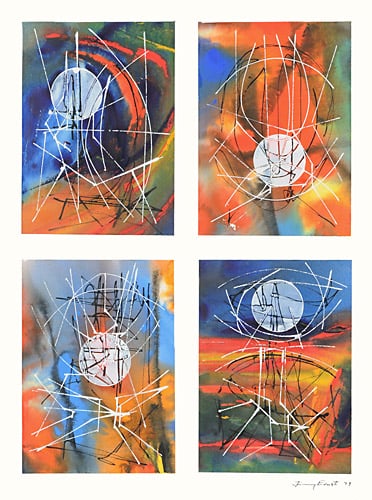
Analisi esperta di Four Days di Jimmy Ernst
Stile: Abstract Expressionism · Genere: abstract
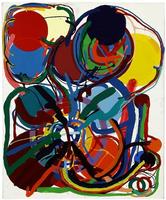
"Four Days" by Jimmy Ernst stands as a significant work within the Abstract Expressionist movement, a style that dominated American art in the mid-20th century. As an abstract piece, it eschews recognizable subject matter in favor of a direct, emotive impact through form, color, and gesture. The work’s importance lies in how it embodies the core tenets of Abstract Expressionism: spontaneity, the expression of inner emotional states, and a rejection of traditional compositional structure. Jimmy Ernst, the son of Surrealist pioneer Max Ernst, uniquely bridged European Surrealism and American Abstract Expressionism, and "Four Days" likely reflects this synthesis—combining Surrealist biomorphic or automatic tendencies with the large-scale, gestural energy characteristic of the New York School. Its title suggests a temporal, perhaps fleeting quality, inviting viewers to experience the painting as a record of the artist’s direct, unmediated creative process over a specific period. In this context, "Four Days" is significant as an example of how Abstract Expressionism transformed the act of painting into a powerful, existential statement.
Visivamente simili
20 opere con composizione e palette affini
Untitled
Artin Demirci
Abstraction in Green and Black
Jimmy Ernst
Alba/Dawn
Antonio Corpora
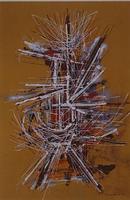
Southwest Image
Jimmy Ernst
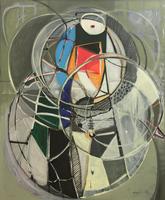
The Cathedral
Artin Demirci
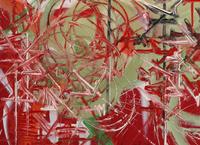
Le seuil monotone
Georges Mathieu
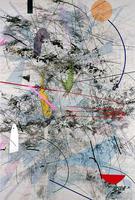
Easy Dark
Julie Mehretu
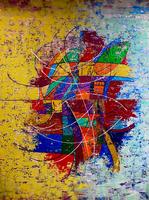
Epiphany
Evelina Dillon
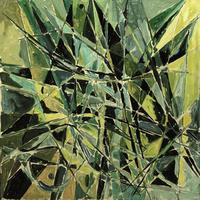
Untitled
Else Alfelt
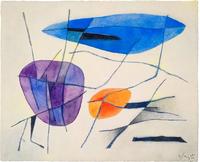
Soleil/Maree basse I
Gustave Singier
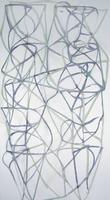
Couplet III
Brice Marden
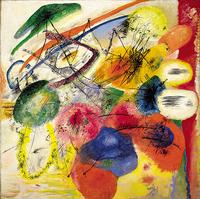
Black strokes I
Wassily Kandinsky
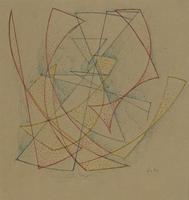
Untitled
Leo Leuppi
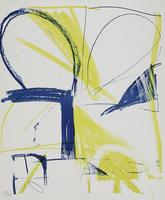
Untitled
Samuel Buri
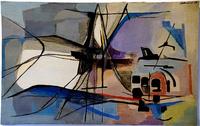
Dai concerti di Arzignano (Strawinsky)
Giuseppe Santomaso
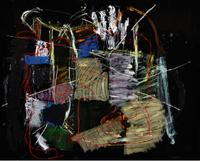
Magician’s Hand
Gary Wragg
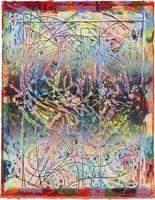
Talladega Three II, from the Circuits series
Frank Stella
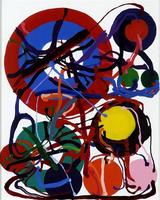
Work
Atsuko Tanaka
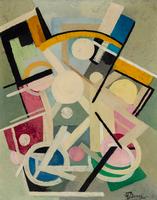
Doubles (Cyclist)
Marthe Donas
Untitled
Atsuko Tanaka