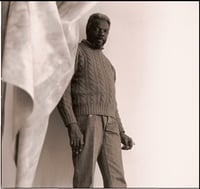
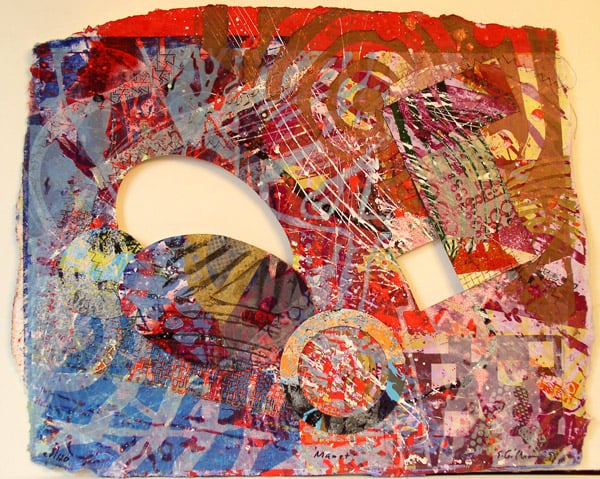
Sam Gilliam sanatçısının Manet III eseri hakkında uzman analizi
Tarz: Abstract Expressionism · Tür: abstract
Expert Analysis of "Manet III" by Sam Gilliam
Sam Gilliam’s Manet III stands as a pivotal work within the lineage of Abstract Expressionism, pushing the movement’s core tenets into radical new territory. While the painting is abstract and firmly rooted in the gestural and color-driven ethos of the style, its significance lies in how Gilliam subverts traditional painterly conventions.
Key Innovations: Unlike many second-generation Abstract Expressionists who remained tied to the rectangular canvas, Gilliam is celebrated for his invention of the “draped” or “beveled-edge” painting. Manet III likely exemplifies this approach: the canvas is unstretched, stained with vibrant, fluid acrylics, and folded or draped off the wall. This transforms the painting from a flat illusionistic surface into a sculptural, three-dimensional object that interacts with ambient space and light.
Relation to Color Field: Gilliam’s technique of staining raw canvas (pioneered by Helen Frankenthaler and Morris Louis) allowed pigment to soak into the weave, creating luminous, airy fields of color. In Manet III, these stained hues—often bold yet atmospheric—are no longer confined to a rigid support. By releasing the canvas from its stretcher, Gilliam frees color itself from planar constraints, making the pigment’s physical presence as important as its optical effect.
Art-Historical Dialogue: The title Manet III explicitly references Édouard Manet, the 19th-century realist who challenged academic painting with flattened space and confrontational directness. Gilliam’s work echoes this rebellious spirit: just as Manet broke the illusion of depth, Gilliam breaks the illusion of the wall as a neutral support. The painting becomes a dynamic object that hangs, sags, and casts shadows, forcing viewers to reconsider the boundary between painting and sculpture.
Cultural and Formal Significance: As an African American artist emerging during the Civil Rights era, Gilliam’s innovations also carry a subtle political charge. By refusing the fixed, rectangular format—the traditional “window” of Western painting—he asserts a new, fluid identity for abstraction, one that is both personal and universal. Manet III thus embodies a synthesis of Abstract Expressionism’s emotional intensity, Color Field’s chromatic purity, and a pioneering physicality that would influence future generations of installation and process artists.
In summary, Manet III is significant because it expands Abstract Expressionism beyond the canvas frame, transforming painting into an environmental, almost architectural experience. It exemplifies Gilliam’s unique ability to marry color, gesture, and material innovation, securing his place as a visionary who reinvented what a painted artwork could be.
Görsel olarak benzer
İlişkili kompozisyon ve renk paletine sahip 20 eser
Manet I
Sam Gilliam
Manet II
Sam Gilliam
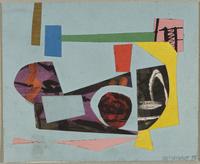
Study for a Painting
Ad Reinhardt
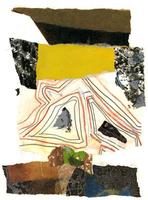
Collage
Andre-Pierre Arnal
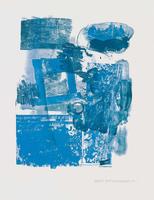
Stunt Man I
Robert Rauschenberg
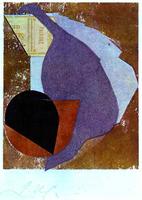
Before my Birth
Jean Arp
Cat's Eye, 97B-5
Larry Poons
Green
Edward Avedisian
Perífrase
André Merez
Untitled
Hannelore Baron
Collage
Andre-Pierre Arnal
ÍNDIA - 90
Zupo
Fraction No. 4369
Larry Bell
Cap d'Ail
Conrad Marca-Relli
Red composition
Horia Damian
Number 236
Anne Ryan
Collage
Andre-Pierre Arnal
Tyranny of Space
Perle Fine
Serendipity
Evelina Dillon
Untitled (34-8)
Balcomb Greene