
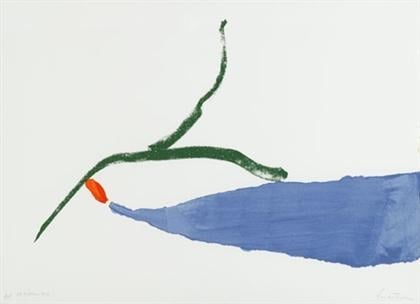
Analisi esperta di A Little Zen di Helen Frankenthaler
Stile: Color Field Painting, Lyrical Abstraction · Genere: abstract
Expert Analysis of A Little Zen by Helen Frankenthaler
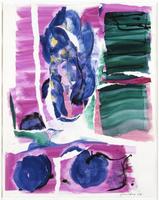
Helen Frankenthaler’s A Little Zen stands as a quintessential example of Color Field Painting and Lyrical Abstraction, two movements that redefined abstract art in the mid-20th century. Within this context, the work’s significance lies in its masterful synthesis of spontaneity and controlled color, embodying Frankenthaler’s pioneering “soak-stain” technique. By pouring thinned paint onto unprimed canvas, she allowed pigment to permeate the fabric, creating luminous, atmospheric fields that dissolve the boundary between figure and ground. This method, which she introduced in the early 1950s, bridged the gestural energy of Abstract Expressionism with the expansive, meditative calm of Color Field painting.
A Little Zen exemplifies the lyrical branch of Color Field abstraction—a more personal, emotive approach that prioritizes soft-edged, organic forms over the hard-edge geometry of other practitioners. The title itself hints at a philosophical depth: “Zen” evokes the principles of mindfulness, simplicity, and the paradoxical beauty of the incomplete or asymmetrical. Frankenthaler channels these ideas through washes of color that appear both effortless and deliberate, inviting a contemplative viewing experience. The painting’s significance is further amplified by its historical moment—emerging during a period when many avant-garde artists sought to infuse Western abstraction with Eastern spirituality, a dialogue Frankenthaler engaged with but transcended through her uniquely American, post-painterly sensibility.
In the broader arc of her career, A Little Zen reaffirms Frankenthaler’s role as a catalyst for the next generation of colorists, including Morris Louis and Kenneth Noland. It demonstrates how lyrical abstraction can achieve a quiet monumentality—not through bombast, but through the sheer power of color, space, and the artist’s faith in the medium’s ability to speak directly to emotion. The work remains a touchstone for understanding how Abstract Expressionism evolved into the more reflective, chromatic explorations of the 1960s and beyond.
Visivamente simili
20 opere con composizione e palette affini
Composizione arancione
Afro
Niagara Series
Larry Zox
Sacrifice
Friedel Dzubas
Lunario
Afro
Renewal
Friedel Dzubas
John
Walter Battiss
Jaillir
Jean Miotte
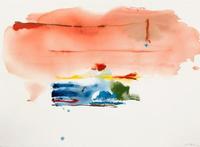
Santa Fe II
Helen Frankenthaler
Untitled
Fritz Winter
Untitled
Afro
Screen I (diptych)
Kenzo Okada
Adam and Eve (4)
Pietro Lazzari
Free Simulation Consciousness #5050W7
SHIH,SIAO-MO
Choir
Jack Tworkov
Nalon
James Brooks
Free Simulation Consciousness #5050W13
SHIH,SIAO-MO
Aldon
James Brooks
Brimrock
Friedel Dzubas
Yugen III
Jean Degottex
Variations I on Clark's Cove
Grace Hartigan