
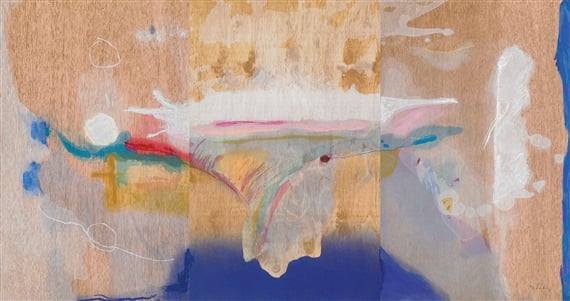
Expertenanalyse zu Helen Frankenthalers Triptych: Madame Butterfly
Stil: Abstract Expressionism, Lyrical Abstraction · Genre: abstract
Analysis of "Triptych: Madame Butterfly" by Helen Frankenthaler
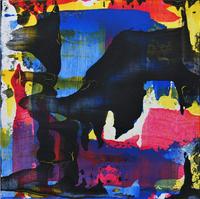
Helen Frankenthaler’s Triptych: Madame Butterfly stands as a landmark work at the intersection of Abstract Expressionism and Lyrical Abstraction. Executed during the height of her mature period, this piece exemplifies Frankenthaler’s revolutionary soak-stain technique—pouring thinned paint directly onto unprimed canvas so that the pigment sinks into the weave, creating translucent, atmospheric fields of color that seem to breathe with the canvas itself.
Significance within Abstract Expressionism:
While the Abstract Expressionist movement is often defined by gestural, action-driven painting (Pollock, de Kooning), Frankenthaler’s approach redefined the role of color and surface. Triptych: Madame Butterfly demonstrates a deliberate shift away from the aggressive physicality of “action painting” toward a more meditative, color-saturated immersion. The triptych format—three discrete but interconnected panels—allows Frankenthaler to explore temporal and spatial progression through pure abstraction, echoing the narrative arc of Puccini’s opera without resorting to illustration.
Significance within Lyrical Abstraction:
As a precursor to and exemplar of Lyrical Abstraction, this work emphasizes fluidity, spontaneity, and emotional resonance over rigid geometry. The title’s reference to Madame Butterfly infuses the abstract forms with a sense of poignant narrative—the melancholy of a love story, the fragility of cultural collision. Frankenthaler’s use of luminous washes (soft pink, deep crimson, floating indigo) suggests the opera’s shifting moods: the hopeful duet, the tragic finale. Yet the abstraction remains paramount; the viewer is invited to feel the music and drama through color and gesture rather than literal depiction.
What makes it significant:
- Technical innovation: The soak-stain method here is masterfully controlled, producing edges that dissolve and bloom—a technique that would profoundly influence Color Field painters like Morris Louis and Kenneth Noland.
- Narrative through abstraction: Frankenthaler proves that a complex story can be told through color, scale, and composition alone. The triptych’s three panels function like acts, each containing its own emotional temperature, yet together forming a unified symphonic whole.
- Gender and art history: At a time when Abstract Expressionism was dominated by male artists, Frankenthaler’s lyrical, stain-based abstraction offered a distinct, critically celebrated counterpoint—elegant yet powerful, subtle yet monumental.
In Triptych: Madame Butterfly, Frankenthaler achieves a rare synthesis: the emotional directness of Abstract Expressionism, the luminous delicacy of Lyrical Abstraction, and a quiet narrative resonance that elevates the work beyond mere decoration into a profound meditation on love, loss, and the fleeting nature of beauty. It remains a cornerstone of postwar American abstraction and a testament to Frankenthaler’s enduring influence.
Visuell ähnlich
20 Werke mit ähnlicher Komposition und Farbpalette
Tales of Genji VI
Helen Frankenthaler
Square One
Helen Frankenthaler
Skywriting
Helen Frankenthaler
It is time
Linde Martin
"Make No Mistake"
Roger Weik
Nude Woman in an Armchair
Salvador Dali
Untitled
Richards Ruben
Seal
Morris Louis
Auflösung V
Daniel Sambo-Richter
Beginnings
Helen Frankenthaler
When everything is a given.
Justin Earl Grant
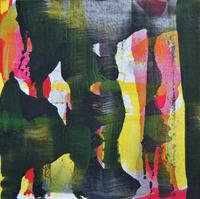
"Straight-Line"
Roger Weik
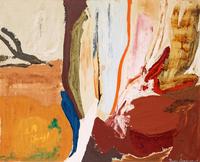
Narrow passage
Rune Jansson
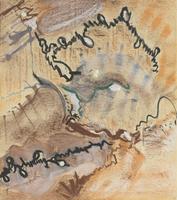
Untitled
Barnett Newman
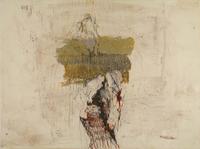
Untitled
Richards Ruben
"Following Question"
Roger Weik
Landscape (Mid-day)
Morris Louis
Untitled
Behjat Sadr
Glow II
Helen Frankenthaler
"Central Axis"
Roger Weik