
Analisi esperta di The Golden Robe di Miriam Schapiro
Stile: Feminist Art, P&D (Pattern and Decoration) · Genere: figurative
Expert Analysis: "The Golden Robe" by Miriam Schapiro
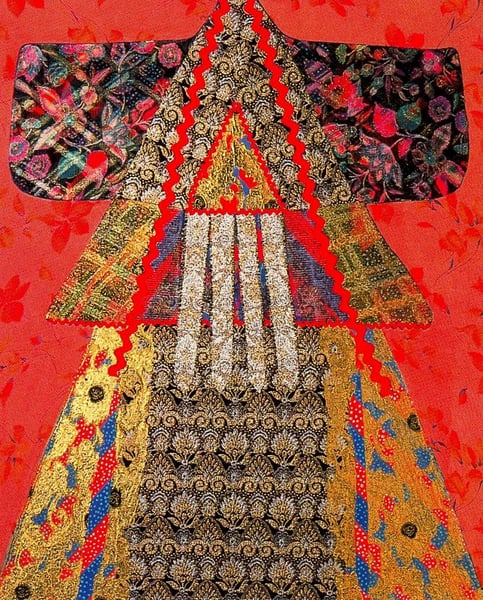
Miriam Schapiro’s “The Golden Robe” stands as a seminal work within both Feminist Art and the Pattern and Decoration (P&D) movement, merging figurative representation with a radical reclamation of craft traditions. As a leading figure in these overlapping movements, Schapiro challenged the hierarchical boundaries between “high” art and “decorative” domestic arts—often dismissed as women’s work. The work’s figurative genre is key: rather than a literal portrait, the robe form itself functions as a powerful symbol of female identity, presence, and the body, while simultaneously invoking the traditional female realm of clothing and textile production.
What makes “The Golden Robe” significant is its bold synthesis of abstraction and representation through pattern. The robe’s silhouette is filled with intricate, repetitive motifs and rich ornamentation, drawing directly from quilting, embroidery, and wallpaper design. By elevating these “decorative” elements to the status of fine art, Schapiro not only honors the labor of anonymous women artisans but also asserts that political and personal meaning can be embedded in pattern. The “golden” quality—likely achieved through metallic paint or opulent color—further transforms a humble garment into a sacred, iconic object, imbuing the feminine with monumentality and value. In this way, the artwork critiques patriarchal art history’s dismissal of decoration and crafts, while celebrating a distinctly feminist visual language. Within the P&D movement, “The Golden Robe” exemplifies how pattern could be both aesthetically radical and politically charged, making it a cornerstone of 1970s feminist art practice.
Visivamente simili
20 opere con composizione e palette affini
Costume for Mother Earth
Miriam Schapiro
Royal Presence
Miriam Schapiro
The Poet
Miriam Schapiro
One of the daughters of the dragon king who lives in the bottom of the sea
Utagawa Kuniyoshi
Murasaki Shikibu (detail)
Tosa Mitsuoki
Women in Daily Life
Ogata Gekko
The Heian Courtier
Utagawa Toyokuni
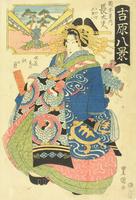
Courtesan Choto With Two Kamuro (Young Attendants) Behind Her
Utagawa Toyokuni II
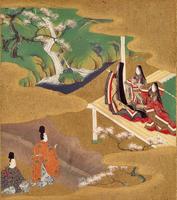
Illustration of the Genji Monogatari (Wakamurasaki)
Tosa Mitsuoki
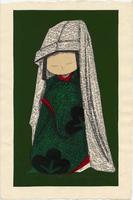
Dancing Figure (Snow Camellia)
Kaoru Kawano
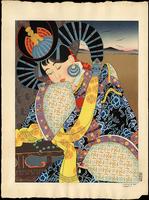
L'Etoile De Cobi. Mongole
Paul Jacoulet
Kabuki Actor Ichikawa Ebizō as Kudō Saemon Suketsune
Tōshūsai Sharaku
from the series Tôto meisho, Kokoro no nazo sugata awase
Keisai Eisen
Nakamura Nosio the second performs the dance "Dodzedzi"
Utagawa Toyokuni
Actor Bando Mitsugoro III as Ko no Moronao
Utagawa Toyokuni
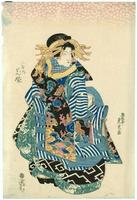
Hanamurasaki of theTamaya
Utagawa Sadatora
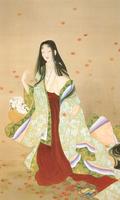
Flower Basket
Uemura Shoen
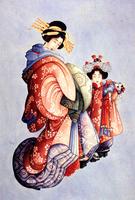
Oiran and Kamuro
Katsushika Hokusai
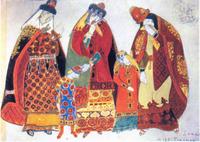
Boyarynia and children
Nicholas Roerich
Actor
Utagawa Kuniyoshi