
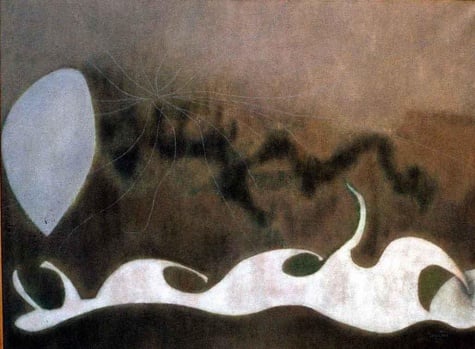
William Baziotes sanatçısının The Beach eseri hakkında uzman analizi
Tarz: Abstract Expressionism · Tür: abstract
Expert Analysis: "The Beach" by William Baziotes
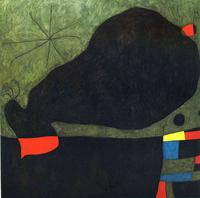
William Baziotes’s The Beach stands as a compelling example of how Abstract Expressionism could embrace a deeply personal, biomorphic vocabulary rather than the explosive gesturalism often associated with the movement’s New York School. Painted in the late 1940s or early 1950s, this work reveals Baziotes’s unique synthesis of Surrealist automatism and a meditative, almost oceanic calm.
Significance within Abstract Expressionism:
Baziotes was a pivotal figure in the first generation of Abstract Expressionists, yet his work consistently diverged from the heroic, large-scale action painting of Pollock or de Kooning. Instead, he developed a lyrical, enigmatic style rooted in organic abstraction—soft, floating forms that suggest marine life, primordial organisms, or ghostly botanical shapes. The Beach epitomizes this approach: its composition is hushed and totemic, with delicate, translucent shapes suspended in a shallow, luminous space. The palette—typically muted greys, greens, blues, and off-whites—evokes damp sand, sea spray, and the liminal zone between water and shore.
Key stylistic features:
- Biomorphic forms: The central shapes in The Beach recall the sinuous, root-like or tendril-like structures found in the works of Joan Miró and Arshile Gorky, whom Baziotes admired. Yet Baziotes renders them with a more diaphanous, almost scumbled surface, as if seen through fog or water.
- Atmospheric depth: Rather than a flat, all-over composition, Baziotes creates a subtle sense of recession through layers of thin paint and nuanced color gradations. This gives the painting a quiet, contemplative weight—an internal landscape that feels both primordial and personal.
- Emotional resonance: The title The Beach is deliberately evocative, not literal. Baziotes sought to capture a mood or memory rather than a specific location. The painting’s stillness and muted tension reflect his belief that abstract forms could channel subconscious imagery—what he called “the inner eye.”
Why it matters:
The Beach demonstrates that Abstract Expressionism was not a monolithic style. Baziotes’s work offers an alternative path: one that fused Surrealist automatism with a poetic, almost calligraphic restraint. In this painting, the abstract vocabulary becomes a vehicle for intimate reverie, bridging the European surrealist tradition and the emerging American avant-garde. It remains significant as a masterwork of “abstract interiority,” showing how a few floating, breathing shapes can evoke the vastness and solitude of the shore without ever depicting it.
Museum / Gallery
Görsel olarak benzer
İlişkili kompozisyon ve renk paletine sahip 20 eser
Still Life with Lamp
Joan Miro
The Flesh Eaters
William Baziotes
Jungle Night
William Baziotes
Green Semicircle with Orange
Vajda Lajos
Vajda Lajos Zöld Félkör Narancsal 1938
Vajda Lajos
Nudes
Pablo Picasso
Person Throwing a Stone at a Bird
Joan Miro
Tennis
Willi Baumeister
Dido
Norman Bluhm
Adam and Eve
Wifredo Lam
Dux et Comes IV
Edward Wadsworth
Les baigneuses
Georges Papazoff
Dusk
William Baziotes
Congo
William Baziotes
Composition
Joan Miro
Wind
Yves Tanguy
Landscape with Wheatgerm
Max Ernst
Moon Animal
William Baziotes
Water Forms
William Baziotes
Message from a Friend
Joan Miro