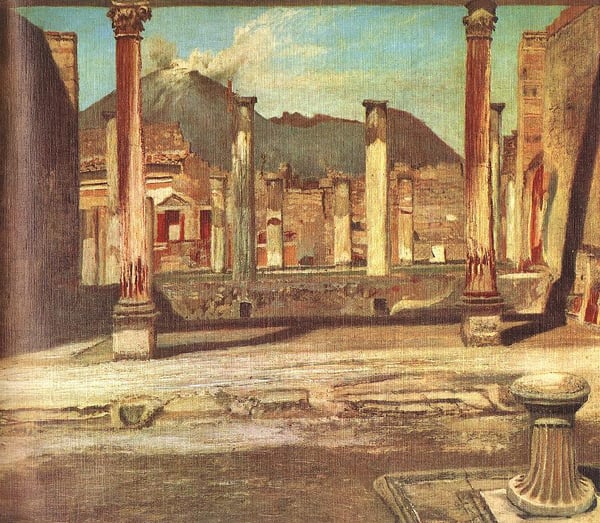
Expert analysis of Tivadar Kosztka Csontvary’s Pompeji Have (House of the Chirurgus with the Vesuv)
Style: Post-Impressionism · Genre: cityscape
As a Post-Impressionist cityscape, Tivadar Kosztka Csontvary's Pompeji Have (House of the Chirurgus with the Vesuv) derives its significance from the artist's distinctive approach to the genre within the movement's broader concerns. In this work, Csontvary employs the characteristic Post-Impressionist emphasis on personal expression and symbolic content, transforming a literal archaeological site into a meditation on temporality and nature's force. The architectural details of the House of the Chirurgus are rendered not merely as topographical facts but through a subjective, expressive palette and brushwork that imbue the ruins with emotional resonance. The inclusion of Mount Vesuvius in the composition serves as a potent symbolic counterpoint—the silent, ever-present threat that both destroyed and preserved the ancient city. This juxtaposition of the meticulously observed ruin with the looming volcanic form underscores the Post-Impressionist desire to move beyond surface representation toward a deeper, more psychological understanding of place and history. Csontvary's work thus stands as a significant example of how the style could revitalize the cityscape genre, turning a specific location into a universal statement about the fragility of civilization.
Visually similar
20 works with related composition and palette
From Pompeii, a father and son resting
Heinrich Hansen
Forum in Pompeii
Giuseppe De Nittis
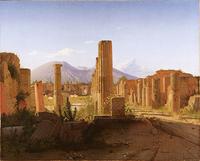
The Forum, Pompeii, with Vesuvius in the Distance
Christen Kobke
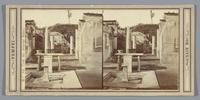
House of Cornelius Rufus in Pompeii, House of Russian princes
Roberto Rive
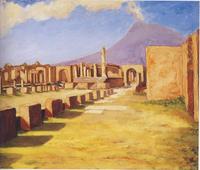
Vesuvius, From Pompeii
Winston Churchill
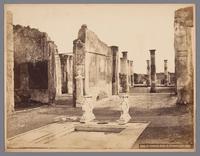
House of Cornelio Rufo of Pompeii
Roberto Rive
Transverse and longitudinal sections of the Temple of Isis and adjacent parts
Giovanni Battista Piranesi
Gladiators' Barracks - Pompeii
Roberto Rive
In den Ausgrabungen von Pompeji
Theodor Groll
Facade of the new Baths of Pompeii
Roberto Rive
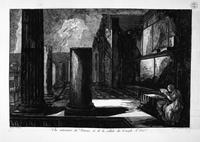
The Temple of Isis de face, with the two wings of his peristillo
Giovanni Battista Piranesi
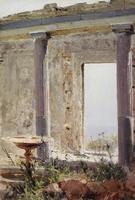
The ruins of of the palace in Palestine
Vasily Polenov
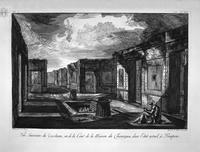
Split of the house aforesaid
Giovanni Battista Piranesi
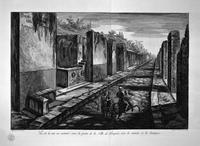
Inscriptions found in the buildings adjacent to the port city of Pompeii
Giovanni Battista Piranesi
Aphrodite Anadyomene from Pompeii (detail)
Apelles
Horace and Lydia
John Collier
Fresco from the Tomb of Judgment in Ancient Mieza, Greece (Warrior)
Ancient Greek Painting and Sculpture
View of the ruin of the basilica in Pompeii Basilica
Roberto Rive
Ruins of Pompeii
Fujishima Takeji
Meditation
William de Leftwich Dodge