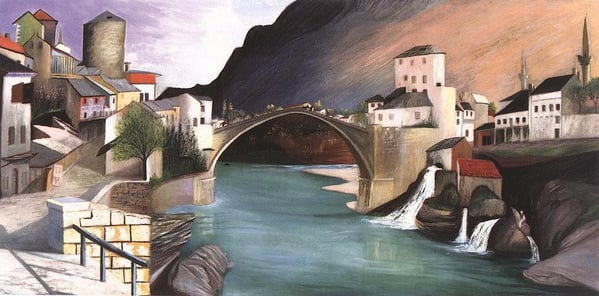
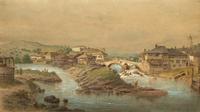
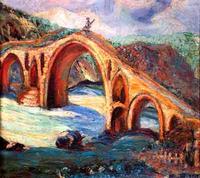
“Roman Bridge at Mostar” by Tivadar Kosztka Csontváry is a significant work within the Post-Impressionist movement, specifically in the cityscape genre. The painting exemplifies the Post-Impressionist departure from naturalistic representation, instead employing vivid, expressive color and bold, structured forms to convey emotional and symbolic resonance. Csontváry’s treatment of the historic bridge—a landmark bridging cultures—transforms a specific architectural subject into a universal emblem of endurance and harmony. The work stands out for its synthesis of precise architectural detail with the subjective intensity typical of Post-Impressionism, marking a distinctive contribution to the period’s exploration of how everyday scenes can be infused with deeper, personal meaning. This fusion of genre and style underscores Csontváry’s unique vision within the broader Post-Impressionist canon, making the painting a notable example of how the movement redefined the boundaries between observed reality and artistic expression.