Expert analysis of Luke Chueh’s Southpaw
Style: Lowbrow Art · Genre: figurative
Expert Analysis of "Southpaw" by Luke Chueh
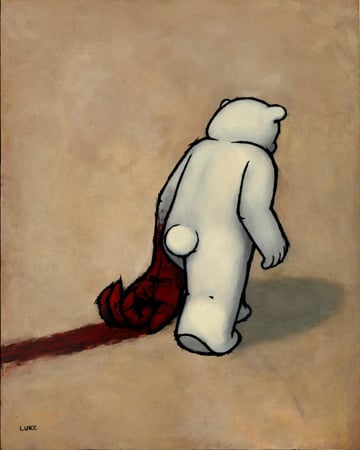
Luke Chueh’s "Southpaw" is a quintessential work within the Lowbrow Art movement—also known as pop surrealism—that deftly marries the visual language of cartoons, mass-produced illustration, and graffiti with the emotional gravity of fine art. The piece is a figurative composition, but its significance lies not in realistic depiction but in Chueh’s signature ability to reduce complex human emotions to stark, symbolic imagery.
Key Aspects of Significance within Lowbrow Art:
-
The “Cute/Creepy” Duality
Chueh’s figures—often anthropomorphic animals or featureless humanoids—appear deceptively simple, rendered in flat, bold colors with minimal shading. In "Southpaw," the title itself (a term for a left-handed boxer or a left-handed stance) suggests conflict or an unexpected angle. Chueh employs this “cute” aesthetic—large heads, round eyes, soft forms—as a Trojan horse for themes of vulnerability, loneliness, or quiet violence. The work’s significance comes from the discomfort of that contrast: a sweet visual style that belies a psychological punch. -
Minimalism as Emotional Amplifier
Lowbrow art often rejects the academic detail of traditional portraiture. Chueh’s figures occupy sparse, ambiguous backgrounds, forcing the viewer to focus on posture, expression (or lack thereof), and subtle cues. "Southpaw" likely uses a single gesture—a clenched fist, a turned shoulder, a sideways glance—to tell a story of anticipation, defeat, or resilience. This economy of form is a hallmark of Chueh’s work and elevates the piece from mere illustration to iconic emotional metaphor. -
Subversion of Innocence
Chueh’s characters are often placed in paradoxical situations: a teddy bear with a bloodstain, a bunny holding a knife. "Southpaw" likely continues this tradition, using the boxing stance as a metaphor for the defensive postures we adopt in everyday life. The left-handed angle (southpaw) is statistically rarer and often catches opponents off guard—a clever visual pun on being “different” or “marginalized.” This aligns Lowbrow Art’s interest in outsider perspectives and the blending of highbrow concept with lowbrow delivery. -
Cultural Commentary via Pop Iconography
By stripping his subjects to archetypes, Chueh taps into a universal emotional vocabulary. "Southpaw" is not about boxing; it is about the internal sparring of modern existence. The significance for Lowbrow Art is how Chueh takes a pop-culture reference (the cartoon character, the sports stance) and recontextualizes it into a poignant, almost melancholic meditation. The work exemplifies how Lowbrow artists like Chueh, Mark Ryden, and Gary Baseman use accessible imagery to explore sophisticated psychological terrain.
Conclusion:
"Southpaw" is significant because it crystallizes Luke Chueh’s mastery of emotional minimalism within the Lowbrow movement. It proves that a genre often dismissed as “cartoon art” can carry the same weight as expressionist or surrealist painting—by distilling human fragility into a single, unflinching figure, poised between cute and corrosive, ready to strike or be struck.
Genre
Style
Visually similar
20 works with related composition and palette
The Crush
Luke Chueh
Stitch & Cut
Luke Chueh
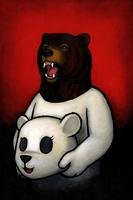
Bear in Mind
Luke Chueh
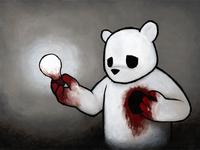
Inspiration (Bright Ideas from the Hole in My Soul)
Luke Chueh
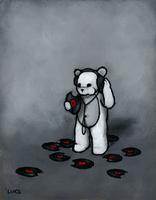
Sound-Bite
Luke Chueh
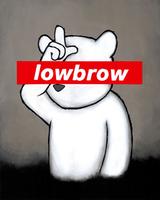
Lowbrow (And Still the Loser) (Label Series)
Luke Chueh
Bruin asleep in the Blueberry Bushes
Theodor Severin Kittelsen
Uheldig Boernejakt En
Theodor Severin Kittelsen
Abominable
Mark Ryden
Two naked women on the beach
Pablo Picasso
Those Above and Those Below
Antonia Eiriz
Untitled
Don Kenn
Le jeu du sterne et de la mer
Rene Duvillier
Untitled
Don Kenn
Untitled
Kinder Album
Figure
Nikos Nikolaou
Uncle Sam And Company (Toy #3)
Gabriele Munter
Man Flag
Kateryna Lysovenko
Untitled
Don Kenn
Study of a Child
Louis le Brocquy