Searching
Expert analysis of Romul Nutiu’s Searching
Style: Tachisme · Genre: abstract
Analysis of "Searching" by Romul Nutiu
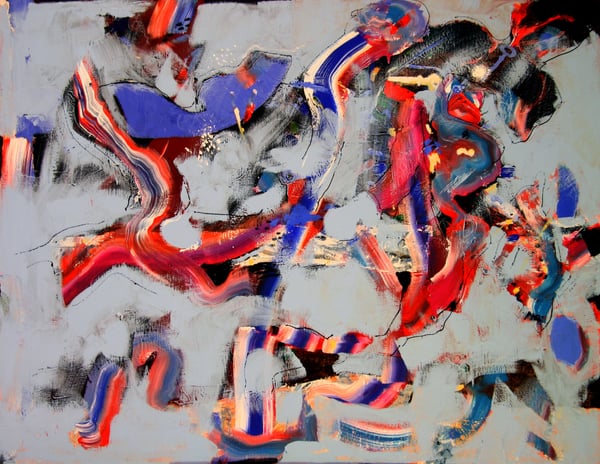
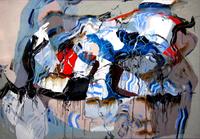
Romul Nutiu’s "Searching" stands as a compelling example of Tachisme—a post‑war European abstract movement that prioritizes spontaneous gesture, irregular blotches, and the raw materiality of paint. While Tachisme is often associated with French artists like Jean Fautrier or Hans Hartung, Nutiu’s work is significant for its contribution to the transnational spread of this style, particularly within the Eastern European avant‑garde context.
What makes this artwork significant?
-
Embodiment of Tachiste principles: The painting’s title, "Searching," explicitly aligns with the Tachiste emphasis on process over predetermined form. The compositions are built from accidental‑looking drips, smears, and patches of color—what the critic Michel Tapié called the “art informe” (unformed art). Nutiu avoids hard edges or recognizable shapes, instead allowing pigment to interact with the canvas in a way that suggests an ongoing, open‑ended exploration.
-
Expressive materiality: The surface of "Searching" is likely marked by thick impasto and thin washes, typical of Nutiu’s practice. This tactile variety creates a sense of depth and movement, inviting the viewer to trace the artist’s gestures. The rawness of the application reflects the existential anxiety and spontaneity valued by European Informel artists, who saw the act of painting as a direct index of emotion.
-
Contribution to Romanian Abstract Art: Nutiu (1932‑2012) was a key figure in the “Cluj School” of painting, and his Tachiste works represent a moment when Romanian artists actively engaged with Western European modernist currents despite political constraints. "Searching" demonstrates how Nutiu infused a local sensibility—often described as meditative and lyrical—into the gestural vocabulary of Tachisme. His use of subdued, earthy tones mixed with subtle luminous accents distinguishes his work from the more aggressive American Abstract Expressionism, offering a quieter, more introspective variant.
-
Dialogue with the title: The word “Searching” is not merely a label but a conceptual anchor. In Tachisme, the final image is a record of the artist’s quest for meaning rather than a depiction of an object. Nutiu’s painting embodies this search through unresolved formal tensions: patches of color that seem to advance and recede, lines that trail off into nothing. The viewer is left with a sense of perpetual becoming—the painting’s significance lies not in what it says, but in the probing, restless energy it retains.
In summary, "Searching" is significant because it captures the essential Tachiste ethos of process‑over‑product while also marking Romul Nutiu as a bridge between Western European Informel and Eastern European abstraction. The work’s spontaneous marks and raw surface turn the canvas into a field of pure perceptual inquiry, making it a resonant artifact of mid‑20th‑century existential art.
Visually similar
20 works with related composition and palette
Toujours vivre
Andre Lanskoy
Whose Name Was Writ in Water
Willem de Kooning
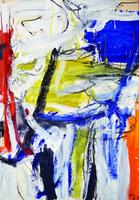
Mahogany Road
Mary Abbott
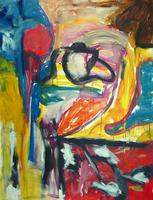
Arabesque - by BenFo
Fons Heijnsbroek
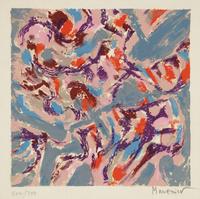
Early Spring
Alfred Manessier
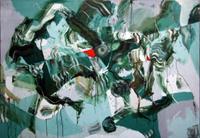
Route of the Snail
Romul Nutiu
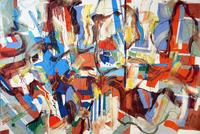
Invasion of the Colors (from the series Memory Pyramid)
Romul Nutiu
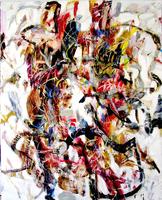
Ball Agenda II
Romul Nutiu
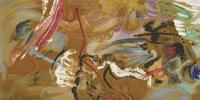
Untitled
Friedel Dzubas
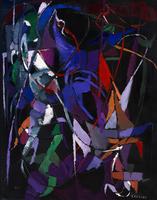
L'eclair magique
Andre Lanskoy
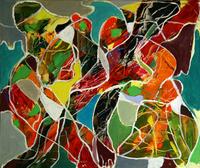
The Brawl
Romul Nutiu
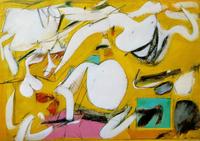
Fire Island
Willem de Kooning
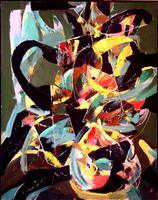
Dynamic Universe II
Romul Nutiu
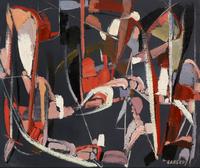
Composition sur fond ardoise
Andre Lanskoy
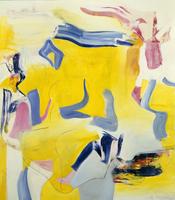
Untitled III
Willem de Kooning
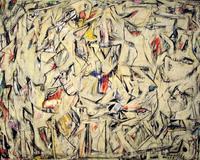
Excavation
Willem de Kooning
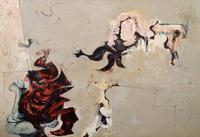
Untitled
Hassel Smith
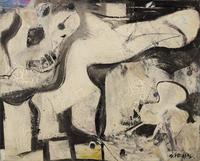
Night
Willem de Kooning
Untitled
Romul Nutiu
Armageddon
Artin Demirci