Expertenanalyse zu Ellsworth Kellys Study for Tiger
Stil: Hard Edge Painting · Genre: abstract
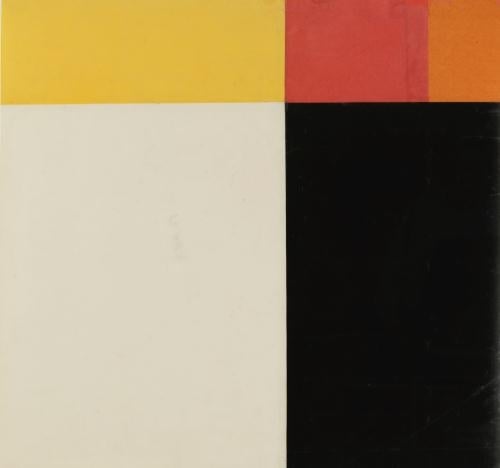
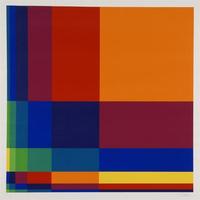
"Study for Tiger" is a significant work within the Hard Edge Painting movement, a style that emerged in the 1950s–60s as a counterpoint to Abstract Expressionism. As an abstract study by Ellsworth Kelly, it exemplifies the core tenets of Hard Edge: sharply defined contours, flat planes of unmodulated color, and rigorous formal economy. The piece is notable for how it reduces natural or observed forms—suggested by the title "Tiger"—to their barest geometric or biomorphic essence, a method Kelly often employed. This study, in particular, reveals his process of distilling complex shapes into pure, non-hierarchical color fields. Its significance lies in its demonstration of Kelly’s pivotal role in pushing abstraction toward a radical simplicity and clarity, where the painting’s impact comes solely from the relationship between color, shape, and edge.
Visuell ähnlich
20 Werke mit ähnlicher Komposition und Farbpalette
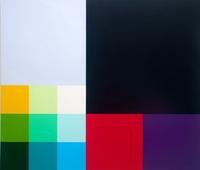
Untitled, 6 x 7-05
Robert Swain
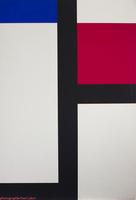
Composition II
Michel Seuphor
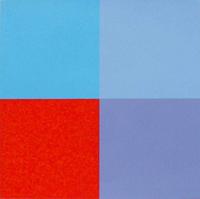
Un rouge trois bleus
Aurelie Nemours
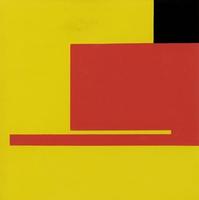
Negativo-Positivo
Bruno Munari
Composição Sobre Fundo Cinza
Rubem Ludolf

Untitled, 6x4-04, 6’x4’
Robert Swain
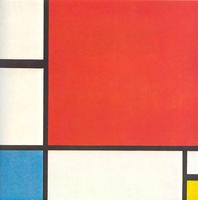
Composition with Red, Blue and Yellow
Piet Mondrian
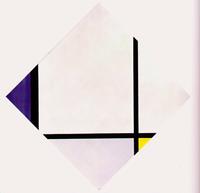
Lozenge Composition 3 Lines Blue Gray Yellow
Piet Mondrian
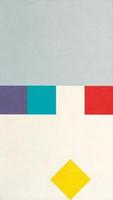
Yellow Detached From the Row
Camille Graeser
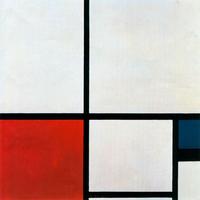
Composition N. 1 with Red and Blue
Piet Mondrian
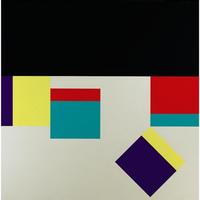
Elements in Movement
Camille Graeser
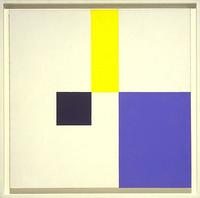
First Theme #29
Burgoyne Diller
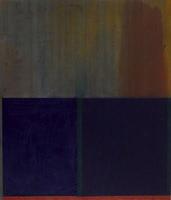
12.12.68
John Hoyland
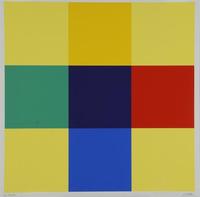
Kreuz aus Gleichung und Kontrast
Richard Paul Lohse
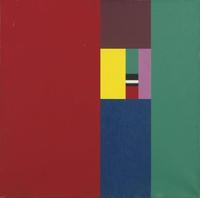
Regression in Movement
Camille Graeser
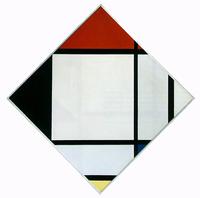
Lozenge Composition with Red, Black,Blue and Yellow
Piet Mondrian
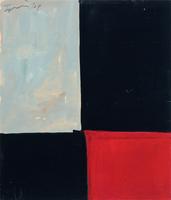
Untitled (04.B.0101)
Gunther Forg
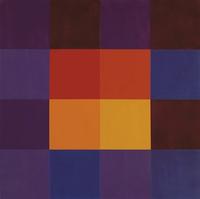
Stabilisierter kern
Max Bill
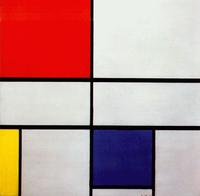
Composition C (No.III) with Red, Yellow and Blue
Piet Mondrian
Sechs vertikale systematische Farbreihen mit orangem Quadrat rechts oben
Richard Paul Lohse