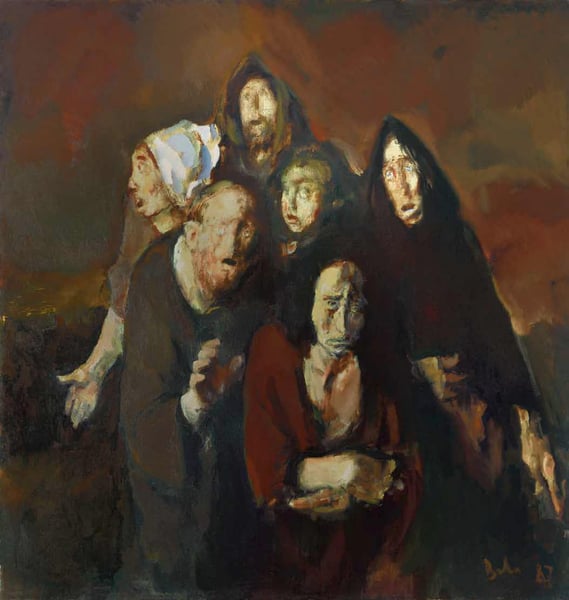
Expert analysis of Corneliu Baba’s The Fear (Homage to Francisco Goya)
Style: Expressionism · Genre: genre painting
Corneliu Baba’s "The Fear (Homage to Francisco Goya)" is a significant example of mid-20th-century Expressionist genre painting, notable for its psychological intensity and direct dialogue with the darker visions of Francisco Goya. Baba, a leading Romanian modern painter, channels Goya’s capacity to expose human dread not through grand historical drama but through an intimate, everyday moment—a hallmark of genre painting transformed by Expressionist urgency.
The work’s significance lies in its fusion of two traditions: the genre scene (depicting ordinary people in a plausible setting) and the Expressionist imperative to externalize inner emotion. Baba distorts form and space not for decorative effect but to amplify a state of anxiety, making the mundane feel ominous. By directly invoking Goya—particularly the latter’s late “Black Paintings” and The Disasters of War—Baba situates his work within a lineage of art that confronts irrational fear. Where Goya used allegory and grotesque imagery, Baba roots the same terror in the recognizable present: a group of figures huddled in a dim interior, their bodies contracted, faces stripped of individuality to become universal masks of dread. The palette is subdued, the brushwork deliberately coarse, suppressing detail to prioritize raw emotional charge.
This homage is also a meta-commentary on how fear persists across centuries—an Expressionist update of Goya’s “the sleep of reason produces monsters.” Baba’s painting demonstrates that genre painting, in the hands of an Expressionist, can transcend anecdote to become a vehicle for timeless existential unease, firmly linking Romanian modernism to the broader European tradition of psychological realism.
Genre
Style
Visually similar
20 works with related composition and palette
Fellow Citizens
Corneliu Baba
Pietà
Corneliu Baba
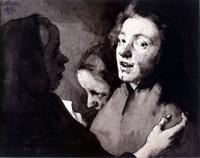
Conversation Piece: Three Heads
Theodule Ribot
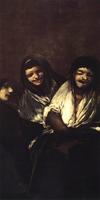
Young People Laughing
Francisco Goya
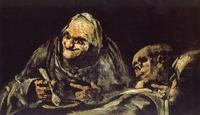
Two Old Ones Eating Soup / The Witchy Brew
Francisco Goya
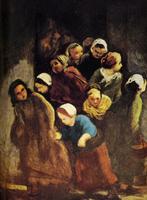
Leaving School
Honore Daumier
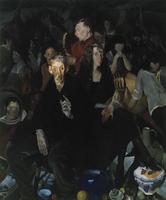
An Anniversary
Edwin Dickinson
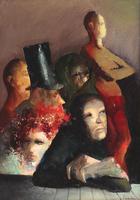
Cabaret (Visul lui Omero)
Jules Perahim
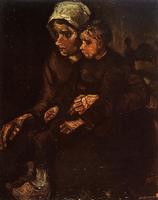
Peasant Woman with a Child in Her Lap
Vincent van Gogh
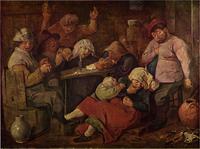
Inn with drunken peasants
Adriaen Brouwer
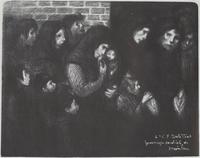
Les Veuves De Courrieres
Theophile Steinlen
Two Sculptors
Honore Daumier
Mother and her Children, holding him a hurdy gurdy
Alexandre Antigna
Two Disciples at the Tomb
Henry Ossawa Tanner
Jacob, having recognized the tunic of Joseph that his son reported to him tinged with blood, think that he is dead and abandons himself in his grief (Genesis XXXVII, 31-35)
Marc Chagall
Maternity
Corneliu Baba
The Flower Seller
Julian Alden Weir
Comedy scene (scene from Molière)
Honore Daumier
A Wagon of the Third Class
Honore Daumier
Maternity
Chaim Soutine