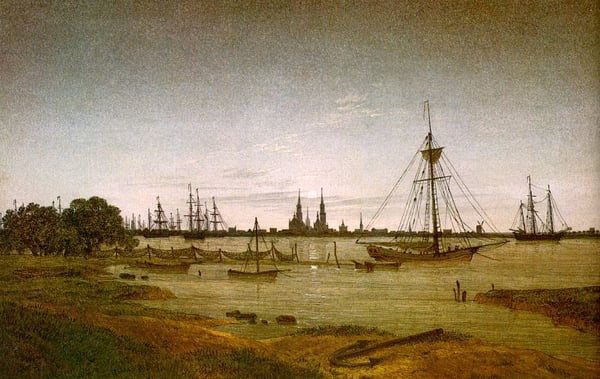
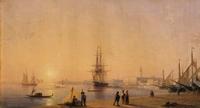
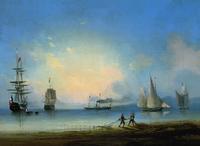
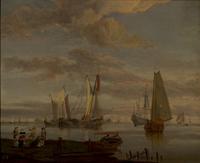
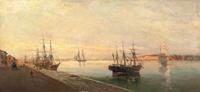
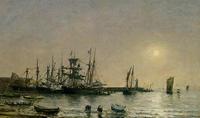
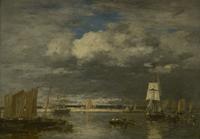
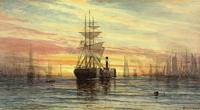
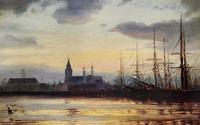
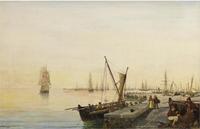
"Port by Moonlight" by Caspar David Friedrich is a quintessential work of Romanticism, rendered in the genre of marina. Its significance lies in how it exemplifies the Romantic fascination with the sublime and the emotional power of nature.
As a marina, the painting depicts a harbor at night, but Friedrich transforms this everyday scene into a meditation on human insignificance and divine mystery. The moonlight—a recurring Romantic motif—filters through clouds, casting a ghostly glow on the water and silhouetting the ships and port structures. This use of nocturnal light evokes a sense of longing, solitude, and the infinite, key Romantic themes.
Within the Romantic period, Friedrich was a master at using landscape to reflect inner states. Here, the quiet, still marina becomes a threshold between the material world (the dock, the anchored boats) and the transcendent (the vast, glowing sky and sea). The absence of human activity heightens the contemplative mood, inviting viewers to experience the awe and spiritual yearning that define the Romantic quest. This work is significant for its ability to merge the specificity of a harbor scene with a universal, almost religious atmosphere—a hallmark of Friedrich's genius and of Romanticism's enduring legacy.