This analysis focuses exclusively on the structured facts provided.
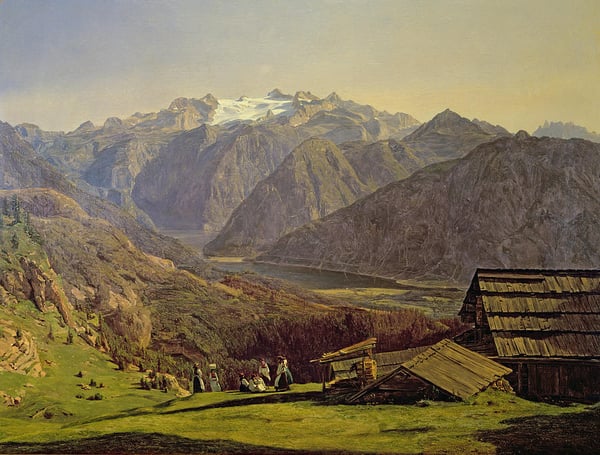
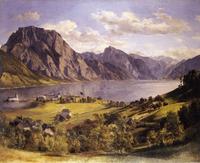
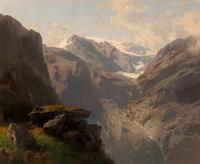
Expert Analysis: "View of the Dachstein with the Hallstättersee from the Hütteneckalpe at Ischl" by Ferdinand Georg Waldmüller
As a work of Romanticism in the landscape genre, this painting is significant for how it embodies the Romantic fascination with the sublime power of nature while simultaneously demonstrating Waldmüller's distinctive, highly observational approach within that movement.
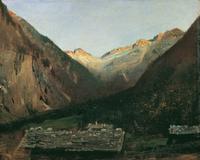
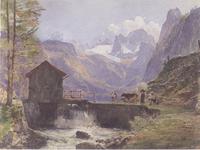
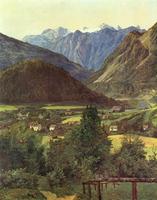
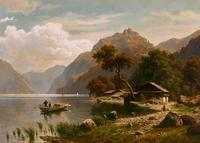
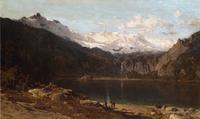
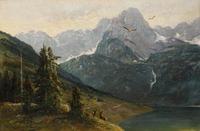
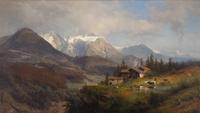
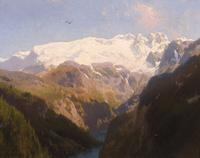
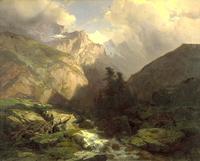
The composition directly engages the Romantic ideal of the "mountain sublime": the formidable mass of the Dachstein (a iconic Alpine peak) dominates the background, while the serene Hallstättersee occupies the midground. The specific vantage point—from the Hütteneckalpe at Ischl—anchors the scene in a real, named location, a hallmark of Romantic landscape painting that sought to find spiritual transcendence in specific, often dramatic, natural settings. The viewer is positioned as a solitary observer before an overwhelming vista, a classic Romantic trope meant to evoke a sense of awe, humility, and the profound insignificance of humanity against nature's vast scale.
What makes this artwork significant within Romanticism is its careful balance between raw, untamed nature (the rocky, snow-capped Dachstein) and the pastoral, inhabited landscape of the lake and foreground meadow. Unlike the more overtly dramatic or storm-laden landscapes of some contemporaries, Waldmüller’s Romanticism is one of luminous clarity and detailed observation. The sunlight, likely rendered as a soft, atmospheric glow, unifies the space, suggesting a harmonious, even divine, order within the seemingly chaotic grandeur of the Alps. This work thus stands as a key example of how Romantic landscape painting could express the sublime not through chaos, but through an almost reverential, optical truthfulness—a defining characteristic of Waldmüller’s contribution to the period.