Expert analysis of Ferdinand Georg Waldmüller’s Meeting in the woods
Style: Biedermeier · Genre: genre painting
Expert Analysis of "Meeting in the woods" by Ferdinand Georg Waldmüller
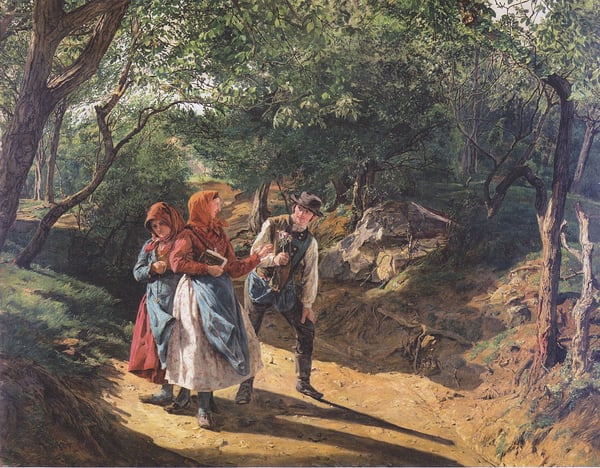
Ferdinand Georg Waldmüller’s Meeting in the woods stands as a quintessential example of Biedermeier genre painting, capturing the era’s fascination with intimate, everyday life and the harmonious relationship between people and nature. The work’s significance lies in how it embodies the core values of the Biedermeier period—domestic calm, moral clarity, and a subtle celebration of bourgeois simplicity—while also showcasing Waldmüller’s masterful attention to naturalistic detail.
As a genre scene, the painting presents a seemingly unremarkable encounter in a woodland setting, likely depicting a moment of polite social interaction or a chance meeting. This choice reflects the Biedermeier rejection of grand, heroic or dramatic subjects in favor of the quiet, relatable moments that defined the lives of the middle class. The forest setting itself is crucial: it is not a wild, Romantic wilderness but a managed, inviting grove, mirroring the period’s idealization of a controlled, orderly nature that served as a backdrop for gentle human connection.
Waldmüller’s technical skill elevates the work beyond mere anecdote. His precise rendering of foliage, light filtering through the trees, and the textures of clothing demonstrates his commitment to optical realism—a hallmark of his style that often blurred the line between genre painting and plein-air study. This dedication to verisimilitude gives the scene a sense of immediate truthfulness, making the viewer feel like a silent witness to a private, unguarded moment.
Within the Biedermeier context, Meeting in the woods is significant because it encapsulates the era’s psychological atmosphere: a longing for security, sincerity, and the simple pleasures of life in the aftermath of the Napoleonic Wars. Waldmüller’s ability to invest a modest subject with such quiet dignity and observational precision makes this work a key document of the Biedermeier spirit, where the everyday was celebrated as a site of both beauty and moral value.
Visually similar
20 works with related composition and palette
The lovers at a crossroads. Return from work
Ferdinand Georg Waldmüller
Age does not protect against stupidity
Ludwig Knaus
The violets pickers (Early Spring in the Wienerwald)
Ferdinand Georg Waldmüller
The little fountain (July 1876)
Léon Augustin Lhermitte
Peasants pausing on a country lane
Enrico Nardi
Church attendance in the spring
Ferdinand Georg Waldmüller
The expected woman
Ferdinand Georg Waldmüller
The little girl with a special nanny
Aurelio Tiratelli
The midday break
Theodore Gerard
At the plum harvest
Felix Schlesinger
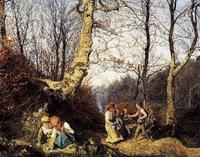
Early Spring in the Wienerwald
Ferdinand Georg Waldmüller
Young peasant girl at rest
Alexandre Antigna
Angelus
Anton Romako
Three children picking berries in the forest
Felix Schlesinger
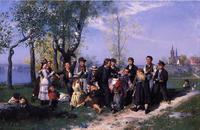
Traditional Swedish dance
August Malmstrom
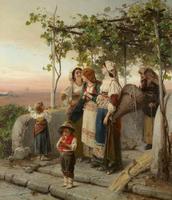
There comes the train
Gerolamo Induno
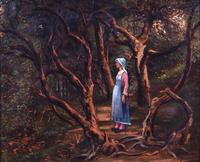
Worried Waiting
Clovis Trouille
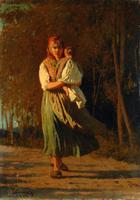
Peasant woman
Vincenzo Cabianca
Ritorno Dal Villaggio
Pasquale Celommi
Two Roman ladies and their children
Penry Williams