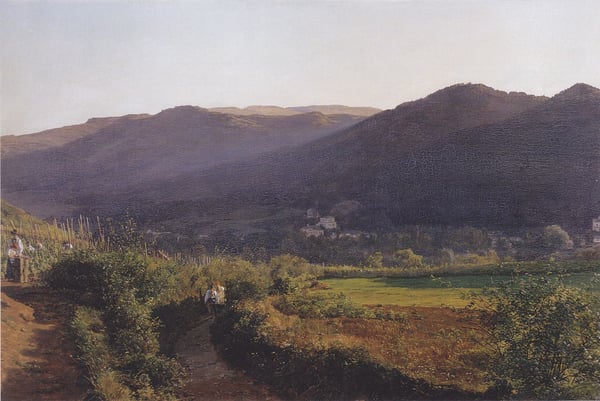
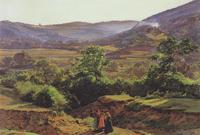
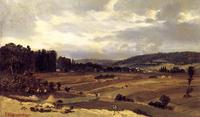
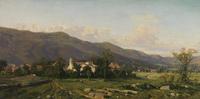
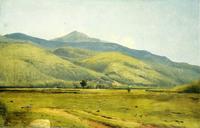
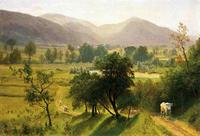
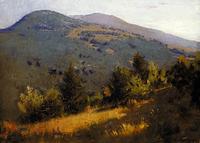
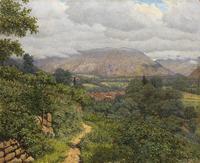
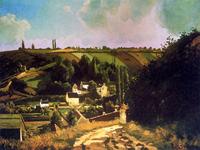
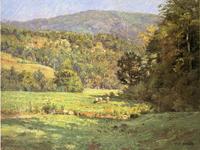
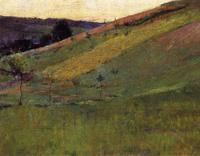
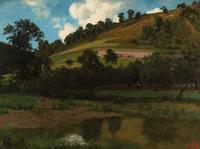
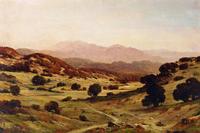
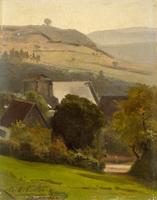
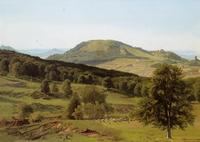
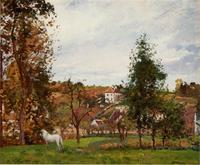
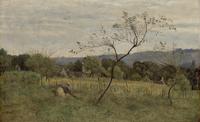
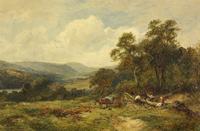
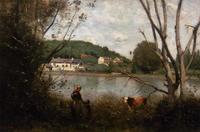
As a Romantic landscape painting by Ferdinand Georg Waldmüller, Mountain landscape with vineyard exemplifies the movement's reverence for nature while subtly engaging with human presence. The work's significance lies in its synthesis of two Romantic preoccupations: the sublime grandeur of mountainous terrain and the pastoral harmony of cultivated land (the vineyard). Waldmüller, working within Romanticism, brings a meticulous observation of natural detail—a hallmark of his approach—that aligns with the era's desire to capture both the majesty and the tangible reality of the landscape. The inclusion of the vineyard introduces a note of human industry that coexists with the wild mountain setting, reflecting Romanticism's complex view of humanity's relationship with the natural world—neither fully dominant nor subservient, but integrated. This balance, set within a genre that Romanticism elevated to convey emotional and spiritual depth, makes the artwork a noteworthy example of how the period explored nature as both a physical and symbolic subject.