
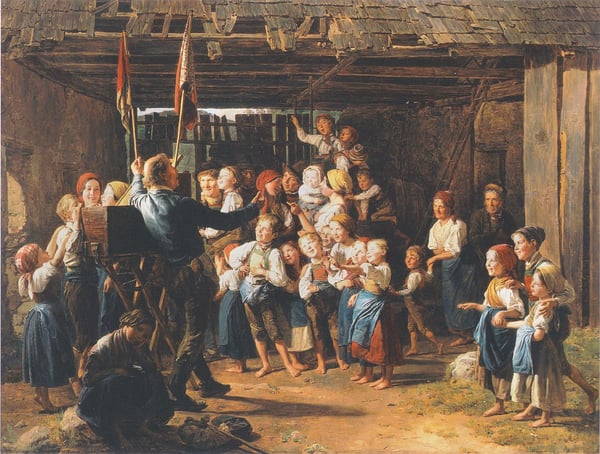
Analisi esperta di The peep-show man di Ferdinand Georg Waldmüller
Stile: Biedermeier · Genere: genre painting
This analysis focuses exclusively on the structured facts provided.
Artwork: The Peep-Show Man by Ferdinand Georg Waldmüller
Style: Biedermeier
Genre: Genre painting
Expert Analysis of Significance
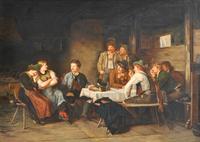
Within the Biedermeier style, The Peep-Show Man exemplifies the movement’s central preoccupation with the quiet, orderly, and morally instructive moments of middle-class life. As a genre painting, it captures a slice of everyday existence rather than history, myth, or aristocratic portraiture, and Waldmüller’s treatment elevates this humble subject into a meditation on the era’s values.
Significance in Biedermeier Context:
- Domestic Virtue and Simple Pleasures: The peep-show man, a traveling entertainer, represents a form of modest, communal amusement typical of Biedermeier culture—one that emphasizes wholesome curiosity and shared experience over lavish spectacle. Waldmüller’s choice of subject highlights the period’s appreciation for quiet, unpretentious joys.
- Moral Observation and Social Hierarchy: Genre scenes in Biedermeier often carried subtle moral lessons. The children gathered around the peep-box, likely from different social backgrounds, demonstrate the era’s interest in education and the innocent wonder of discovery, while the showman himself stands as a symbol of honest itinerant labor. The painting quietly reinforces a social order where hard work and simple entertainment are valued.
- Technical Precision and Atmospheric Realism: Waldmüller was renowned for his meticulous rendering of textures, light, and human expression. In keeping with Biedermeier’s emphasis on precise, almost photographic detail, The Peep-Show Man likely uses natural light to model the figures and objects, creating a convincing, intimate space. This technical mastery makes the ordinary scene feel timeless and authoritative.
Conclusion: The work is significant because it condenses the core Biedermeier ideals—domesticity, moral clarity, social harmony, and technical virtuosity—into a single, everyday encounter. By portraying a humble peep-show man with the same care a history painter might lavish on a battle scene, Waldmüller validates the beauty and dignity of common life, a defining achievement of both the artist and the Biedermeier sensibility.
Genere
Stile
Visivamente simili
20 opere con composizione e palette affini
After school
Ferdinand Georg Waldmüller
The veneration of St. John Nepomuk
Ferdinand Georg Waldmüller
Grandfathers Birthday
Ferdinand Georg Waldmüller
The worship of St. John
Ferdinand Georg Waldmüller
The sleight of hand in the barn
Ludwig Knaus
Merrymakers in an Inn
Adriaen van Ostade
The departure of the conscript
Ferdinand Georg Waldmüller
The Congratulations To Grandfather's Birthday
Ferdinand Georg Waldmüller
Helgal, Lootsen Family
Rudolf Jordan
Maid with garland
Ferdinand Georg Waldmüller
Barber Extracting of Tooth
Adriaen van Ostade
The Penny Wedding
David Wilkie
Seizure
Ferdinand Georg Waldmüller
Tavern scene
Johann Baptist Pflug
Homecoming into the fathers house
Ferdinand Georg Waldmüller
Parting of the parents - the oldest child takes care of brothers and sisters in the absence of parents
Ferdinand Georg Waldmüller
Return from the Church Fair
Ferdinand Georg Waldmüller
The sleight of hand in the barn
Ludwig Knaus
The fanatics
Adolph Tidemand
Salontiroler
Franz Defregger