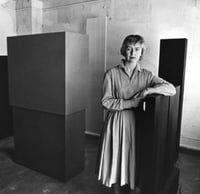
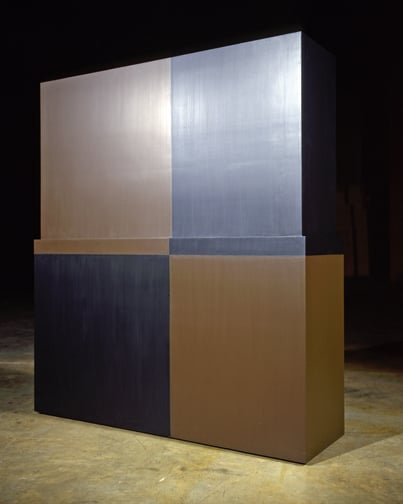
Expert analysis of Anne Truitt’s Bloomsday
Style: Minimalism · Genre: sculpture
Expert Analysis: "Bloomsday" by Anne Truitt
As a Minimalist sculpture, Anne Truitt’s "Bloomsday" (1973) marks a pivotal departure from the movement’s dominant male canon—offering a distinctly personal, color-driven approach to geometric abstraction. While many Minimalists of the 1960s (e.g., Donald Judd, Carl Andre) emphasized industrial materials, serial repetition, and phenomenological austerity, Truitt hand-painted her wooden forms in meticulously layered acrylic colors, reintroducing nuance, memory, and emotional resonance into the rigorous vocabulary of Minimalism.
Significance within Minimalism / 20th‑century sculpture:
-
Color as Structure, Not Decoration – Truitt’s color is structural, not applied. In "Bloomsday," the vertical wooden column is painted in subtle, modulated hues—often pale blue, white, or a soft gray-green—that change with light. This chromatic sensitivity activates the object’s surface and volume, creating an embodied perceptual experience. It challenges the Minimalist convention of color as a secondary property, asserting instead that color is the form.
-
The “Hand” in Minimalism – Truitt’s process (sanding, priming, painting multiple thin coats) counters the industrial fabrication typical of Judd or Andre. This manual, intuitive approach imbues the sculpture with a quiet, human presence, bridging Minimalism’s neutrality with personal history. "Bloomsday" feels both stark and intimate, a paradox that made Truitt’s work initially misunderstood by critics yet now recognized as essential to the style’s evolution.
-
Verticality and the Body – Like many of Truitt’s “columns,” "Bloomsday" stands human-height, engaging the viewer’s own scale. Its slender, upright form echoes a standing figure, a totem, or a memory of a tree—but simplified into pure geometry. This anthropomorphic quality distinguishes her work from the more purely architectural or industrial concerns of her peers.
-
Title as Evocation – “Bloomsday” alludes to Joyce’s Ulysses, referencing a day in the life of a writer/perceiver. The title opens the sculpture to narrative and subjective time, explicitly resisting the art-for-art’s-sake detachment often associated with Minimalism. It signals Truitt’s belief that abstraction can carry lived experience.
Conclusion: "Bloomsday" is significant because it expands Minimalism’s boundaries—proving that extreme reduction need not exclude emotion, color can be a primary structural element, and a sculpture’s presence can be both absolute and redolent of the artist’s inner world. Truitt’s work reclaims Minimalism for a more sensual, personal, and feminine sensibility, making her a crucial, if initially overlooked, figure in the movement.
Visually similar
20 works with related composition and palette
Gloucester
Anne Truitt
Catawba
Anne Truitt
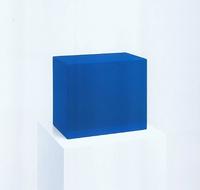
Untitled (Blue Box)
John McCracken
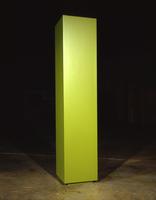
Pith
Anne Truitt
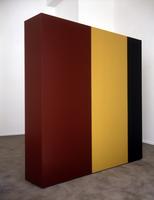
Knight's Heritage
Anne Truitt
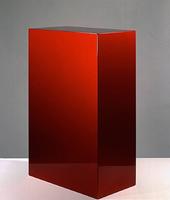
Sangre
John McCracken
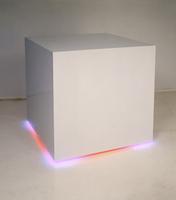
The White Cube
Stephen Antonakos
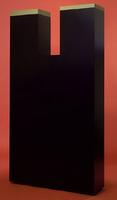
Keep
Anne Truitt
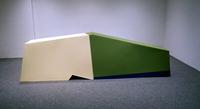
Sea Garden
Anne Truitt
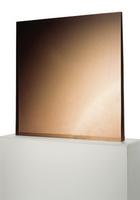
Square Grey Dapple to Black
De Wain Valentine
Sculpture No. 9
Jules Olitski
A Wall for Apricots
Anne Truitt
Untitled
Donald Judd
Spatial Composition II
Katarzyna Kobro
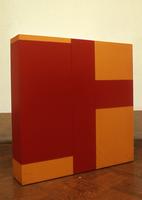
Spanish Main
Anne Truitt
Australian Spring
Anne Truitt
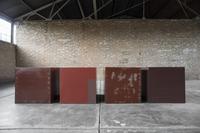
Untitled (Repair Tests)
Donald Judd
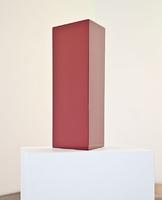
Break
John McCracken
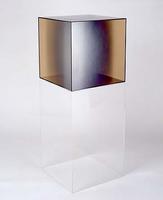
Cube #31 (Amber)
Larry Bell
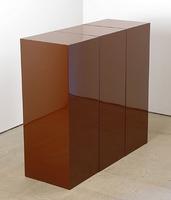
Brown Block in Three Parts
John McCracken