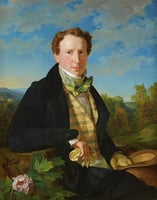
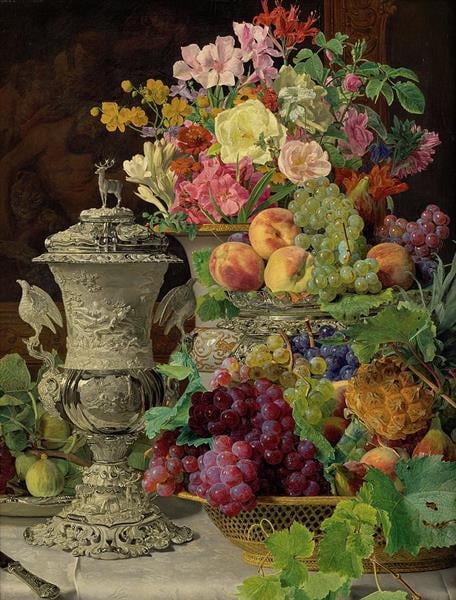
Analisi esperta di Still Life with Morning Cup di Ferdinand Georg Waldmüller
Stile: Biedermeier, Romanticism · Genere: still life
Expert Analysis: Ferdinand Georg Waldmüller’s Still Life with Morning Cup
Ferdinand Georg Waldmüller’s Still Life with Morning Cup is a quintessential example of Biedermeier still-life painting, a style that flourished in Central Europe between 1815 and 1848. Within the broader context of Romanticism, the Biedermeier aesthetic emphasizes domestic serenity, moral order, and the quiet dignity of everyday life—qualities that this work embodies with remarkable clarity.
Significance within Biedermeier and Romanticism
The painting’s significance lies in its ability to transform a humble daily ritual into a contemplative, almost reverent scene. The “morning cup” (likely coffee or tea) serves as a focal point for the Biedermeier ideal of Gemütlichkeit—a sense of cozy, comfortable contentment. Waldmüller’s meticulous attention to texture and light (the gleam of porcelain, the soft glow on a bread roll, the translucent quality of a glass) demonstrates the period’s devotion to precise observation, a legacy of Dutch still-life traditions filtered through a Romantic sensibility.
Yet unlike the more dramatic, nature-infused Romanticism of earlier decades, Waldmüller’s work is restrained and intimate. The composition is simple: a cup, a small loaf, a cut lemon, perhaps a flower or a napkin. This modesty is deliberate. In Biedermeier culture, such objects symbolize the virtues of home, moderation, and the appreciation of small pleasures—a reaction against the upheavals of the Napoleonic era. The morning cup is not merely a drink but a moment of pause, a meditation on the sacredness of the ordinary.
Artistic Achievement
Waldmüller was a virtuoso of light and surface. In Still Life with Morning Cup, he achieves a luminous clarity that makes each object feel tangible yet suffused with a gentle, almost spiritual warmth. This blend of illusionism and emotional resonance places the work at the intersection of Romanticism’s desire for transcendence and Biedermeier’s commitment to reality. The painting thus stands as a bridge: it preserves Romanticism’s attention to mood and atmosphere while anticipating the hyper-detailed realism that would emerge later in the 19th century.
Why It Matters
The work endures as a masterful statement of Biedermeier values: understated, unhurried, and deeply human. In a period when still life was often dismissed as a minor genre, Waldmüller elevates it to a vehicle for philosophical reflection. Still Life with Morning Cup is not just a depiction of objects—it is an invitation to find beauty in the pause before the day begins, and a reminder that the most profound art can arise from the simplest of scenes.
Visivamente simili
20 opere con composizione e palette affini
Fruit Piece
Jan van Huysum
Still life
Jean-Baptiste Monnoyer
Prunkstilleben
Adalbert Schaffer
Flowers
Frederic Bazille
Still Life with Silver
Alexandre-Francois Desportes
Bouquet of Flowers in a Terracotta Vase with Peaches and Grapes
Anne Vallayer-Coster
The birthday table
Ferdinand Georg Waldmüller
Still Life
Abraham van Beyeren
Still Life with a Basket of Fruit and Flowers
Tobias Stranover
A Still Life With Fruit, Roses And A Pitcher Set On A Marble Ledge
Adalbert Schaffer
Grapes, Peaches, and a Pineapple in a Basket on a Stone Ledge
Wybrand Hendriks
Stillleben Mit Früchten, Rosen, Prunkkelch Und Vogel
Adalbert Schaffer
Fruit, a Nest and Insects in a Wood
Rachel Ruysch
Still Life with Flowers and Gold Cups of Honor
Clara Peeters
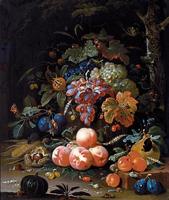
A STILL LIFE
Abraham Mignon
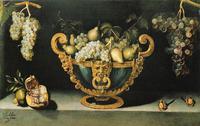
Große Fruchtschale Mit Granatäpfeln Und Hängenden Trauben
Juan van der Hamen
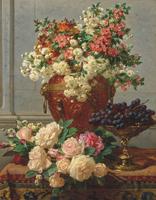
Flowers in a decorated vase and fruit in an elegant cup
Jean-Baptiste Robie
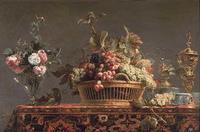
Grapes in a basket and roses in a vase
Frans Snyders
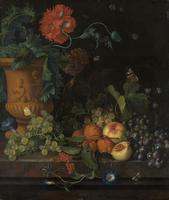
Terracotta Vase with Flowers and Fruits
Jan van Huysum
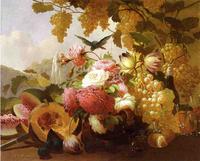
Still Life with roses and Wine Glasses
Thomas Hill