Экспертный разбор работы «Twining Court I» художника Anne Truitt
Стиль: Minimalism · Жанр: sculpture
Expert Analysis of Twining Court I by Anne Truitt
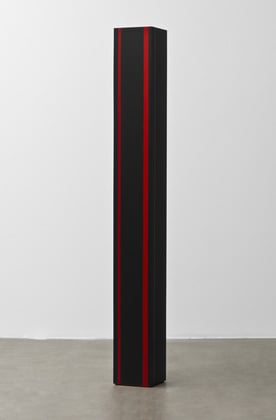
Anne Truitt’s Twining Court I occupies a pivotal position within the history of Minimalist sculpture, offering a distinct counterpoint to the industrial, often austere works of her male contemporaries such as Donald Judd or Robert Morris. Created in the mid-1960s, this piece exemplifies Truitt’s signature approach: hand-painted wooden forms that are rigorously geometric yet deeply personal.
Significance within Minimalism and Genre
Truitt’s work is significant for several reasons:
-
Color as Structure: Unlike many Minimalists who used color as a secondary, applied surface, Truitt treated color as an integral, structural element. In Twining Court I, the vivid, layered hues (often built up over weeks of sanding and painting) are not merely decorative; they create an optical and emotional presence that animates the sculpture’s volume. The hand-painted surface introduces a tactile, human quality that subverts the machined perfection typical of 1960s Minimalism.
-
Verticality and Presence: The sculpture’s tall, upright form (characteristic of Truitt’s “columns” and “courts”) commands space through its silent, vertical stance. Rather than rejecting pedestals, Truitt often placed her works directly on the floor, inviting the viewer to confront the object as a sentient presence. Twining Court I thus bridges Minimalism’s call for “specific objects” with an almost architectural, sentient quality.
-
Gender and Innovation: As one of the few women recognized early in the Minimalist canon, Truitt’s work challenges the movement’s typical narrative of depersonalized, rational production. Her pieces are meticulously crafted by her own hand, encoding a subtle autobiography within their precise geometries. Twining Court I demonstrates how Minimalism could be both rigorously formal and intimately expressive.
What Makes It Stand Out
In the broader context of the period, Twining Court I is a key example of how Minimalist sculpture could engage with light, shadow, and environment without falling into theatricality. The careful choice of color and proportion creates a quiet tension—the work appears simple at first glance, but its subtle asymmetries and layered paint reward sustained viewing. It is a sculpture that holds space with dignity, asserting its own reality without seeking to dominate the viewer.
In summary, Twining Court I is significant not only as a masterwork of Minimalist form but as a testament to Anne Truitt’s unique voice within that tradition—one that married the movement’s rigorous abstraction with a deeply felt, personal sensibility.
Визуально похожие
20 работ с близкой композицией и палитрой
Twining Court II
Anne Truitt
Energy
John McCracken
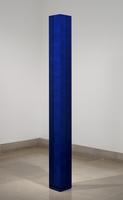
Come Unto These Yellow Sands II
Anne Truitt
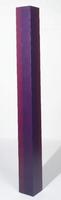
Toth
Anne Truitt
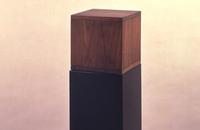
Box with the Sound of Its Own Making
Robert Morris
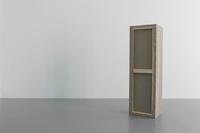
dé-finition/méthode #511: peinture-tombeau
Claude Rutault
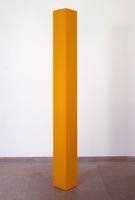
Swannanoa
Anne Truitt
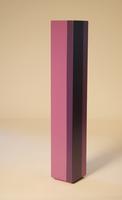
Parva XXXVIII
Anne Truitt
Parva LXX
Anne Truitt
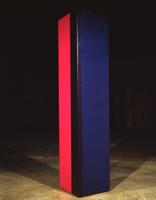
Quipe
Anne Truitt
Curve XXXVI
Ellsworth Kelly
Sentinel
Anne Truitt
Colonne Perse
Ettore Spalletti
Kian
John McCracken
Prima
Anne Truitt
Glacier
John McCracken
Twilight Fold
Anne Truitt
Return
Anne Truitt
Seed and Root
Anne Truitt
Sun Flower
Anne Truitt