Analisi esperta di L’Orpheline di Jean Paul Lemieux
Stile: Expressionism · Genere: portrait
Expert Analysis of "L’Orpheline" by Jean Paul Lemieux
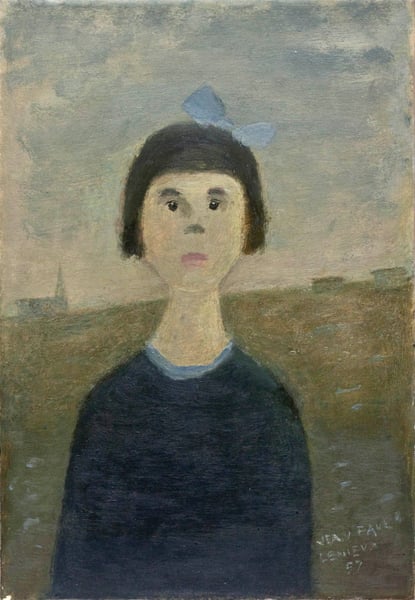
Jean Paul Lemieux’s L’Orpheline (French for “The Orphan Girl”) stands as a poignant example of mid-20th‑century Canadian Expressionism, marrying the emotional intensity of that style with the social and existential themes that define the artist’s mature period. Although the provided facts are limited to the work’s title, artist, style (Expressionism), and genre (portrait), the significance of the piece can be understood through Lemieux’s broader artistic context and the conventions of Expressionist portraiture.
Expressionistic Treatment of Solitude
Expressionism prioritizes the revelation of inner emotional states over naturalistic representation. In L’Orpheline, Lemieux likely distills the sitter’s features into simplified, almost mask-like forms—a hallmark of his style after 1950. The figure is typically isolated against a flat, stark background, often rendered in muted blues, greys, or earthy tones. This spatial emptiness heightens the psychological weight of the portrait, turning the orphan into a universal symbol of alienation and loss. Rather than depicting a specific child, Lemieux uses the orphan archetype to probe the melancholy of the human condition, a recurring theme in his post‑World War II work.
Significance within Lemieux’s Oeuvre
Lemieux’s portraits are not mere likenesses but meditations on memory and place. As a Québécois artist deeply influenced by the region’s vast, often desolate landscapes, he frequently placed solitary figures in settings that echo the isolation of rural life. L’Orpheline aligns with his iconic series of “figures in space,” where the subject seems suspended between presence and absence. The painting’s significance lies in how it collapses the boundary between portrait and landscape—the orphan’s emotional emptiness mirrors the frozen, snow‑covered fields of Lemieux’s Quebec, making the psychological state feel both personal and geographical.
Expressionist Techniques and Their Impact
True to Expressionist principles, Lemieux likely employs deliberate distortions: elongated or squared torsos, large, expressionless eyes, and a frontal, confrontational pose that demands empathy from the viewer. The palette may rely on contrasts between warm skin tones and cold surroundings, reinforcing the dichotomy between life and desolation. Brushwork would be controlled yet visibly applied, avoiding detail in favor of emotional resonance. These choices elevate the orphan from a mere subject to a vessel for collective grief—especially potent in the context of post‑war Quebec, where themes of orphanhood resonated with a society grappling with modernization and loss of tradition.
Stylistic Legacy
While Lemieux is often categorized as a modernist figurative painter, L’Orpheline exemplifies how he adapted Expressionism to convey specifically Canadian emotions: reticence, stoicism, and a quiet melancholy. The work anticipates later figurative movements by maintaining a humanistic core without succumbing to sentimentality. It stands as a key example of how Expressionism, typically associated with European angst, could be translated into a North American idiom focused on spatial loneliness.
In summary, L’Orpheline is significant because it uses the expressive power of portrait painting to transform a specific figure into a timeless emblem of isolation. Through Lemieux’s distinctive handling of form, color, and negative space, the work achieves the primary goal of Expressionism: making emotion visible and universal.
Visivamente simili
20 opere con composizione e palette affini
Refugee
William H. Johnson
Portrait of a Young Woman
Amedeo Modigliani
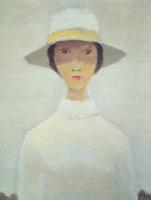
La femme au chapeau blanc
Jean Paul Lemieux
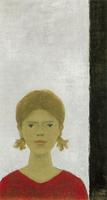
Jeune fille au chandail rouge
Jean Paul Lemieux
Modok Mária, Lány Portré
Modok Mária
Portrait of a Woman
Amedeo Modigliani
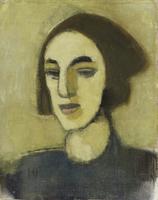
Girl from Loviisa
Helene Schjerfbeck
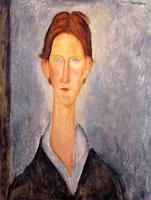
Young Man (Student)
Amedeo Modigliani
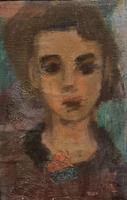
Modok Mária, Női Portré Rózsával 1940,
Modok Mária
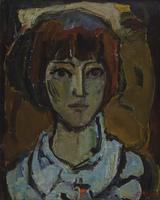
Portrait of Anna
Anatoli Papian
Nahui Olin
Dr. Atl
Blond Woman
Helene Schjerfbeck
Woman with Dark Hair
Henri Matisse
Karl
Biruta Baumane
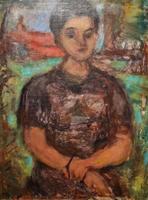
Annus
Bela Czobel
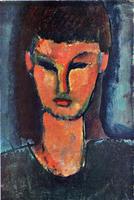
Young Woman
Amedeo Modigliani
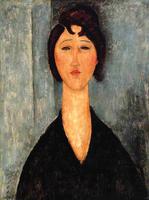
Portrait of a Young Woman
Amedeo Modigliani
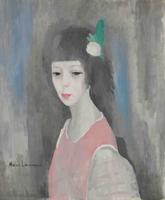
Self-Portrait
Marie Laurencin
Woman's Head with Beauty Spot
Amedeo Modigliani
Forester's Son
Nicolae Tonitza