
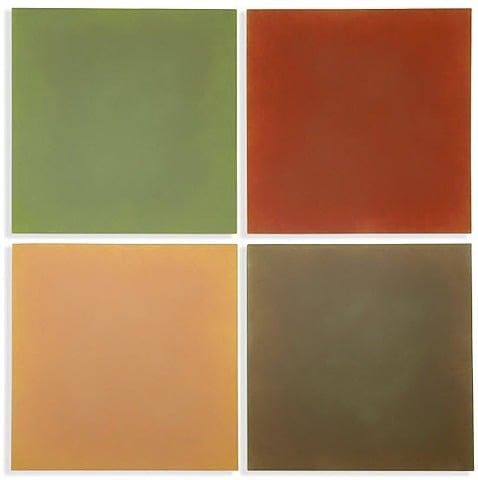
Expertenanalyse zu Anne Applebys Requiem for a Ponderosa Pine
Stil: Color Field Painting · Genre: abstract
Expert Analysis: "Requiem for a Ponderosa Pine" by Anne Appleby
Anne Appleby’s Requiem for a Ponderosa Pine stands as a compelling contemporary reinterpretation of Color Field painting. While the classic Color Field movement (exemplified by Mark Rothko, Barnett Newman, and Helen Frankenthaler) was primarily concerned with pure abstraction, emotional resonance, and the optical effects of large, unmodulated color planes, Appleby subtly reorients this tradition toward ecological and memorial concerns.
Significance within the Style/Period:
-
Reanimation of Color Field through Environmental Subjectivity
Where mid-century Color Field painters often sought universal, transcendent emotions through color, Appleby’s title anchors the work in a specific, vanishing natural landmark: the ponderosa pine. The word “Requiem” transforms the abstract field into a space of mourning and reverence. This is a key evolution: the atmospheric “color as experience” becomes “color as testimony.” The painting is not just about perception but about loss—an elegy for a tree, and by extension, for the American West’s old-growth forests. -
Sublime Reduction with Botanical Precision
Appleby’s palette, though abstract, is derived from close observation of light on the pine’s bark and needles. She distills these natural tones into luminous, barely graduated washes—a hallmark of Color Field technique—but each hue carries a distinct sensory memory. This bridges the gap between the movement’s non-representational ethos and a deep, almost scientific attention to ecological detail. The work thus feels simultaneously meditative and urgent. -
Formal Innovation: The Unstable Edge
Unlike the crisp, hard-edged fields of Barnett Newman or the soft, stained clouds of Frankenthaler, Appleby’s boundaries are often soft, permeable, and organic—mimicking the slow decay of a living thing. The composition likely contains a vertical central “spine” of cool, fading green-brown, surrounded by warmer, dissipating tones, suggesting both the tree’s presence and its dissolution. This formal unease creates a tension between stasis and decline, a hallmark of late Color Field abstraction that has moved into conceptual and ecological terrain. -
Legacy and Continuation
Appleby (b. 1952) belongs to a later generation that inherited Color Field’s formal language but rejected its air of detached purity. By giving her abstract field a specific, poignant subject, she demonstrates that the movement’s techniques remain potent for addressing contemporary themes—climate grief, species loss, and the spiritual dimension of landscape. Requiem for a Ponderosa Pine is significant because it proves that Color Field painting is not a historical relic but a living, adaptive mode of perception and protest.
Conclusion:
This work is a quiet manifesto. It uses the visual vocabulary of Color Field to speak directly to the Anthropocene, transforming an abstract field into a memorial. Appleby’s genius lies in making us feel the stillness of a tree about to vanish—through color alone.
Visuell ähnlich
20 Werke mit ähnlicher Komposition und Farbpalette
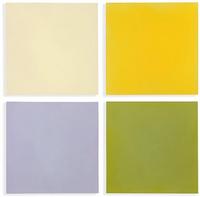
Crocus
Anne Appleby
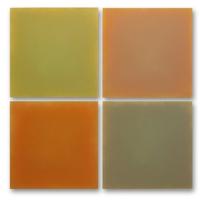
Susquehanna
Anne Appleby
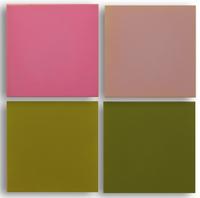
Faded Sweet Pea
Anne Appleby
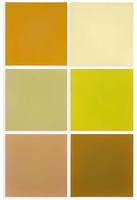
Winter Honeysuckle
Anne Appleby

Willow and Aspen
Anne Appleby
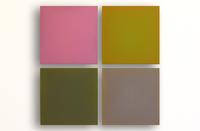
Redbud
Anne Appleby
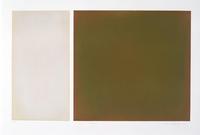
Jasmine
Anne Appleby
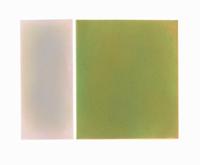
Winter
Anne Appleby

Painting 98-19
Rudolf de Crignis
The Colors Touch Each Other
Ettore Spalletti
Red-Green
Anne Appleby

Double Céphéide
Claude Tousignant
Kinnikinnick
Anne Appleby
Verona Variation #1
Anne Appleby
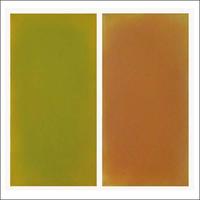
Verona Variation #7
Anne Appleby
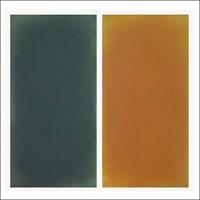
Verona Variation #10
Anne Appleby

Blue Painting
Joseph Marioni

Bright Orange with Green
Peter Joseph

Au Centre
Brice Marden
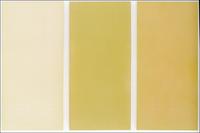
August
Anne Appleby