Expertenanalyse zu Mark Rothkos No. 7 (Dark Over Light)
Stil: Color Field Painting · Genre: abstract
Expert Analysis of "No. 7 (Dark Over Light)" by Mark Rothko
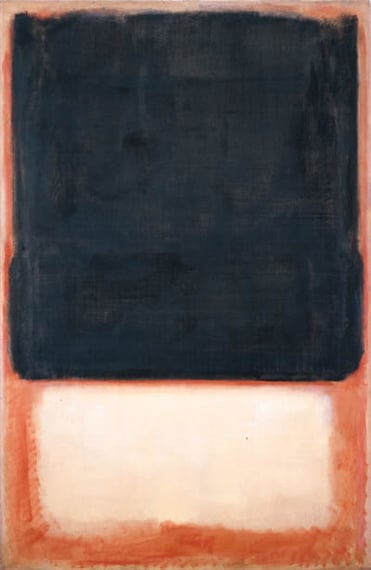
As a quintessential work of the Color Field Painting movement, Mark Rothko’s No. 7 (Dark Over Light) exemplifies the style’s radical shift from gestural abstraction to the expressive power of large, simplified areas of color. Painted during his mature period, this canvas strips representation to its essence: two stacked rectangular fields—dark above, light below—hovering against a faintly modulated ground.
Significance within Color Field Painting and Modern Art:
-
Emancipation of Color as Subject: Rothko, alongside Barnett Newman and Clyfford Still, championed color as the primary vehicle for emotion. Here, the stark vertical stacking of a dense, almost black rectangle over a luminous, warm-toned block creates a sense of gravity and buoyancy. The “dark over light” structure evokes both tension and release, a quality central to Rothko’s aim to elicit profound, often tragic, human responses.
-
Optical and Spatial Innovation: Unlike the hard-edge abstraction of later Color Field painters, Rothko’s edges are soft and blurred—achieved through thin, layered washes of pigment. This technique causes the forms to breathe and vibrate, as if the colors are not painted on the canvas but suspended within an atmospheric field. The darker upper rectangle seems to weigh down on the lighter lower area, yet the subtle halos of color around their boundaries suggest a luminous, spiritual interchange.
-
Scale and Intimacy: Although the exact dimensions are not provided, Rothko typically worked on large canvases intended to envelop the viewer. No. 7 likely commands a physical presence that forces close engagement. He famously said he wanted the viewer to feel “totality of experience” and to “cry” before the work. The dark-over-light composition here achieves that by pairing the somber, introspective weight of the dark region with the softer, warmer expanse below—a visual metaphor for hope or transcendence emerging from shadow.
-
Legacy in Abstract Expressionism: This painting represents the culmination of Rothko’s journey from surrealist figuration to pure abstraction. In the context of the New York School, No. 7 demonstrates how Color Field painting diverged from Pollock’s all-over drip painting by embracing stillness, subtlety, and the emotive resonance of hue relationships. The work stands as a testament to the belief that abstract forms could communicate universal, wordless truths—a defining ambition of mid-20th-century American art.
In summary, No. 7 (Dark Over Light) is significant because it distills Rothko’s mature vision: a direct, almost sacramental confrontation between color and feeling, where the simplest arrangement of two chromatic rectangles achieves a monumental emotional and spiritual presence, solidifying his role as a master of Color Field abstraction.
Genre
Visuell ähnlich
20 Werke mit ähnlicher Komposition und Farbpalette
Red, Orange, Tan and Purple
Mark Rothko
No.9 (Dark over Light Earth)
Mark Rothko
Green and Tangerine on Red
Mark Rothko
No.3/No.13 (Magenta, Black, Green on Orange)
Mark Rothko
Composition
Mark Rothko
Blue, Orange, Red
Mark Rothko
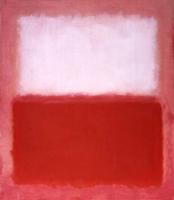
White Over Red
Mark Rothko
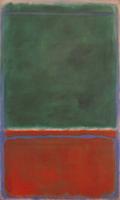
Green and Maroon
Mark Rothko
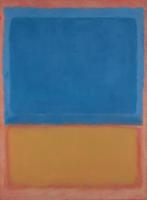
Untitled (Red, Blue, Orange)
Mark Rothko
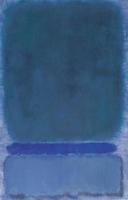
Untitled (Green on Blue)
Mark Rothko
No.18
Mark Rothko
Yellow, Charcoal, Brown
Mark Rothko
No.20
Mark Rothko
Four Darks in Red
Mark Rothko
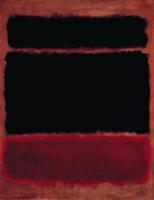
Black in Deep Red
Mark Rothko
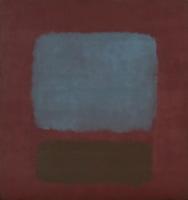
No. 37/No. 19 (Slate Blue and Brown on Plum)
Mark Rothko
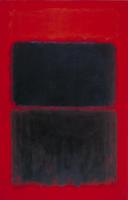
Light Red Over Black
Mark Rothko
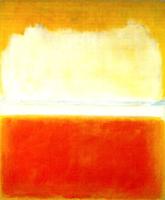
No.8
Mark Rothko
Untitled
Mark Rothko
Untitled (No. 17)
Mark Rothko