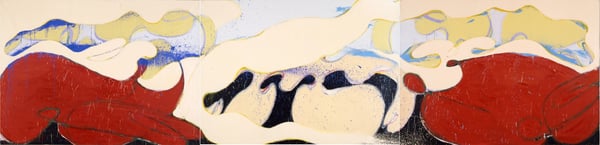
Expert analysis of Norman Bluhm’s Coney Island Beauty
Style: Lyrical Abstraction · Genre: abstract
The artwork Coney Island Beauty by Norman Bluhm is a significant example of Lyrical Abstraction, a style that emerged in the 1960s and 1970s as a more fluid, expressive counterpoint to the rigid geometry of Minimalism and Color Field painting. As an abstract work, it embodies the movement’s emphasis on spontaneous gesture, vibrant color, and personal emotion. What makes it notable within Bluhm’s oeuvre and the style is its direct invocation of a specific, culturally resonant locale—Coney Island—transforming a real-world sensory experience (the energy, light, and popular spectacle of the amusement park) into a purely visual language of sweeping brushstrokes and luminous hues. By merging the immediacy of gestural abstraction with a title that evokes a recognizable American landmark, Bluhm bridges the gap between high-art formalism and everyday life, a key ambition of Lyrical Abstraction. The work thus stands as a testament to the movement’s rejection of strict abstraction in favor of a more open, evocative relationship between title, viewer, and painted surface.
Genre
Style
Visually similar
20 works with related composition and palette
Easter Morning
Norman Bluhm
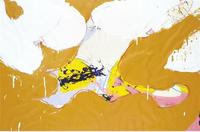
Round About
Norman Bluhm
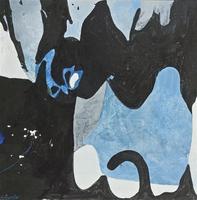
Erberon
James Brooks
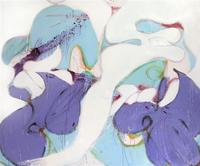
Claudia
Norman Bluhm
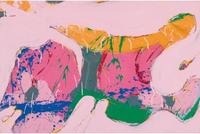
Uranus
Norman Bluhm
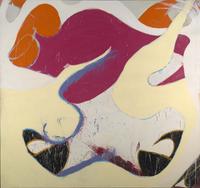
Dido
Norman Bluhm
Minnesota
Joan Mitchell
Erythea
Norman Bluhm
Pygmalion
Norman Bluhm
Screen, three sheets, composing on brown background
Fernand Leger
Io
Norman Bluhm
Airborn
Morris Louis
Yarsboro
James Brooks
Bay of Angels
Melissa Meyer
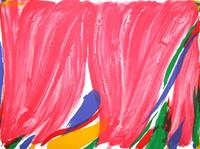
Paysage Rouge
Olivier Debre
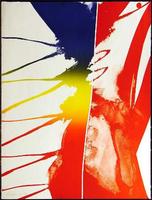
Continental Divide
Paul Jenkins
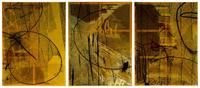
Untitled (Triptych)
Sigmar Polke
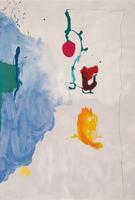
Eve
Helen Frankenthaler
Para III
Morris Louis
Untitled
Helen Frankenthaler