Analisi esperta di Man on a Balcony (Portrait of Dr. Théo Morinaud) di Albert Gleizes
Stile: Cubism · Genere: portrait
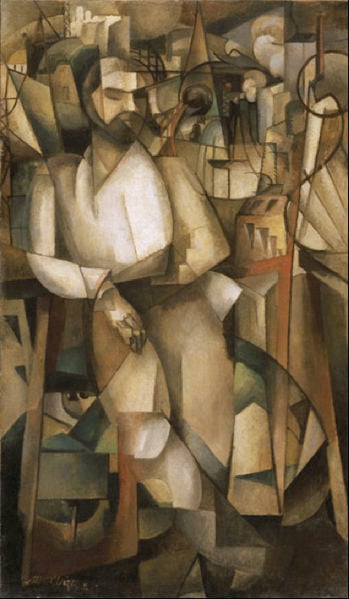
Expert Analysis: Man on a Balcony (Portrait of Dr. Théo Morinaud) by Albert Gleizes
Given the structured facts provided—Cubist style, portrait genre, and artist Albert Gleizes—this work’s significance lies in its embodiment of the radical break from traditional portraiture that defined the Cubist movement.
-
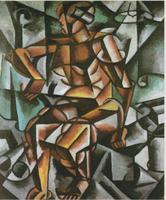
Cubist Innovation: As a leading figure of the Salon Cubists, Gleizes pushed the boundaries of representation. In this portrait, the subject is not depicted through naturalistic likeness but is fractured into geometric planes, multiple viewpoints, and interlocking facets. The balcony setting (suggested by the title) likely becomes a structural element, merging the sitter’s form with the surrounding space—a hallmark of Cubism’s drive to depict objects as they are conceived rather than merely seen.
-
Modernist Portraiture: Traditional portrait conventions (single viewpoint, illusionistic depth, psychological expression) are replaced by a dynamic, almost architectural reorganization of the face and body. The painting exemplifies how Cubism transformed the human figure into a vehicle for formal exploration, emphasizing rhythm, light, and spatial ambiguity over verisimilitude. This makes the work significant as a document of the shift from 19th-century naturalism to 20th-century abstraction.
-
Gleizes’s Role: Albert Gleizes was both a practitioner and theorist of Cubism. His portraits, including this one, often retain a recognizable human presence while dismantling its form—a tension that defines the movement’s early phase. Man on a Balcony thus stands as a key example of how Cubism redefined the portrait genre, making it not a mirror of identity but a constructed, analytical experience.
In sum, the work’s significance rests precisely in its Cubist treatment of portraiture: it challenges viewers to engage with the subject as a construct of vision and intellect, rather than a simple likeness.
Visivamente simili
20 opere con composizione e palette affini
Quirinal Stables
Carlo Carra
Žena S Vějířem
Emil Filla
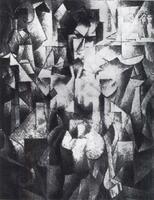
Nu à la cheminée
Jean Metzinger
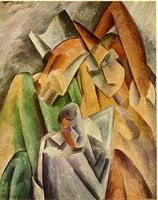
Harlequin's family
Pablo Picasso
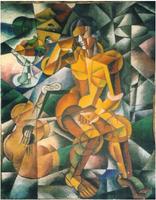
Seated figure
Lyubov Popova
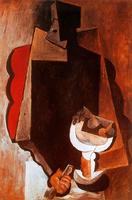
Figure with fruit dish
Pablo Picasso
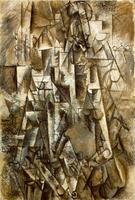
Poet
Pablo Picasso
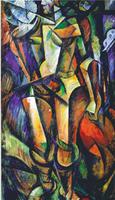
Figura
Lyubov Popova
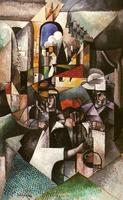
Femmes cousant
Albert Gleizes
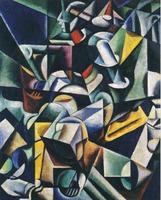
Seated Figure
Lyubov Popova
Yellow Landscape
Hale Woodruff
I gatuvimlet
Gosta Adrian-Nilsson
King and Queen surrounded by swift nudes
Marcel Duchamp
Nude with Idol
M. H. Maxy
Composition (Seated Nude)
Arthur Beecher Carles
Man with guitar
Pablo Picasso
Diváci
Emil Filla
L'Oiseau bleu (The Blue Bird)
Jean Metzinger
Seated Female Nude
Lyubov Popova
Vanity Box
Kazimir Malevich