Analisi esperta di Saint Augustine di Ronnie Landfield
Stile: Abstract Expressionism · Genere: abstract
Expert Art Historical Analysis: "Saint Augustine" by Ronnie Landfield
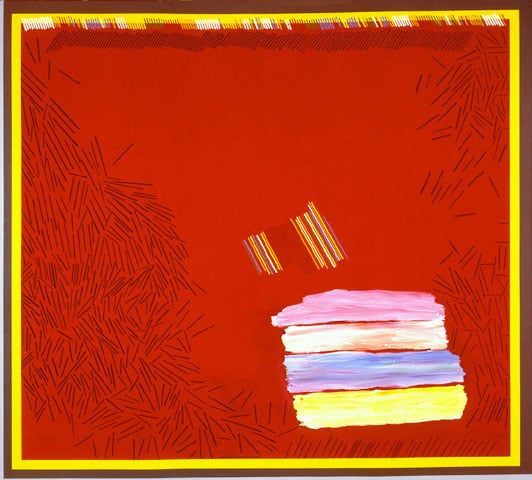
Ronnie Landfield’s Saint Augustine is a compelling example of late-stage Abstract Expressionism, specifically the lyrical, color-driven branch often associated with the Color Field movement. Created during a period when Landfield—still in his early twenties—was helping to redefine American abstraction, this work demonstrates the artist's signature technique of staining raw canvas with thin, luminous washes of pigment. The title, invoking the seminal Christian theologian, adds a layer of philosophical and spiritual resonance that distinguishes the piece from purely formalist abstraction.
Significance within Abstract Expressionism
What makes Saint Augustine significant is its synthesis of two seemingly opposing impulses: the grand, existential gesture of Abstract Expressionism and the meditative, all-over color saturation of the Color Field painters. Landfield, influenced by both the action painting of de Kooning and the chromatic fields of Rothko, achieves a rare balance. The painting’s poured, fluid bands of color—often veering between sharp demarcation and atmospheric blur—create a sense of both movement and stillness. This tension between control and spontaneity is a hallmark of Landfield’s best work and marks a transition from the heroic, angst-ridden abstraction of the 1950s to a more contemplative, sensual mode of the 1960s and ’70s.
Composition and Technique
In Saint Augustine, Landfield likely employs a horizontal, landscape-like format, with layers of translucent color stacked or interwoven across the canvas. The staining technique allows the weave of the fabric to remain visible, suggesting an organic, almost watercolor-like delicacy, while the bold, often contrasting hues (e.g., deep blues, fiery oranges, and soft greens) assert a strong optical presence. This combination of fragility and vibrancy is central to Landfield’s contribution: he treats abstraction not as a denial of representation but as a vehicle for emotional and conceptual depth.
Theological and Cultural Context
The reference to Saint Augustine is not incidental. Landfield has frequently drawn on literary, historical, and spiritual themes, embedding his abstracts with a narrative or meditative dimension. Here, the title may evoke Augustine’s own journey from worldly desire to divine contemplation—a metaphor for the painting’s own push-and-pull between material pigment and ethereal light. By anchoring an abstract work to a specific intellectual figure, Landfield challenges the notion that abstraction must be entirely non-referential, offering instead a “painted meditation” that mirrors Augustine’s introspective writings.
Legacy
Saint Augustine stands as a testament to Landfield’s role in revitalizing Abstract Expressionism at a moment when Pop and Minimalism were ascendant. While his peers often stripped painting of expressive touch, Landfield retained a lyrical, humanistic quality. This work, with its fusion of radiant color, atmospheric space, and intellectual allusion, exemplifies why he is considered a key figure in the second generation of Abstract Expressionists—one who kept the movement’s emotional core alive while pushing it toward new, radiant territories.
Visivamente simili
20 opere con composizione e palette affini
Untitled
Makinti Napanangka
Untitled
Makinti Napanangka
Untitled
Makinti Napanangka
Red Painting For Romania
Ronnie Landfield
Orange Line Painting
Ronnie Landfield
Lupulnga
Makinti Napanangka
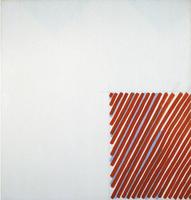
76-77-C-147,5x140
Martin Barre
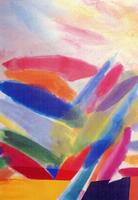
When We Were Young Again
Ronnie Landfield
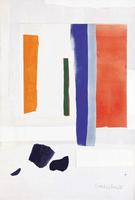
Untitled
Esteban Vicente
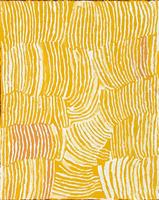
Lupulnga Rocksite
Makinti Napanangka
Untitled
Makinti Napanangka
Lupulnga
Makinti Napanangka
Antithesis to Malevich's Black Square
Yuri Zlotnikov
For William Blake
Ronnie Landfield
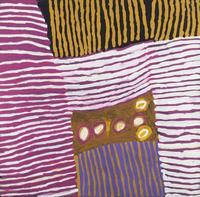
My Country
Makinti Napanangka
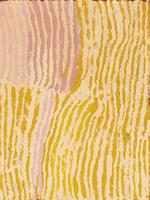
Untitled (Designs Associated with the Site of Lupulnga)
Makinti Napanangka
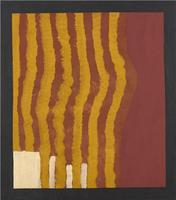
Body Paint Design
Emily Kame Kngwarreye
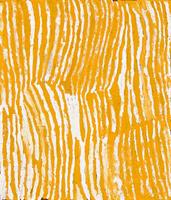
Untitled
Makinti Napanangka
Untitled
Makinti Napanangka
Autumnal Brown Gesture
Stanley Boxer